The 5 Best Creatine Monohydrate Supplements (2026 Buyer's Guide)
Creatine monohydrate is the most researched sports supplement on the planet — hundreds of studies, decades of data, and a safety record most prescription drugs would envy. It works for strength and power, it's cheap, and it's nearly impossible to mess up.
This guide is for informational purposes only and isn't medical advice. Talk to your doctor before starting any supplement.
So naturally, the supplement industry invented ways to overcomplicate it: creatine HCl, buffered creatine, creatine ethyl ester, "advanced creatine matrices" — all marketed as upgrades, none of them better supported by research than plain monohydrate. You don't need the fancy version. You need pure creatine monohydrate from a manufacturer that puts what's on the label in the tub.
This guide is research-based, not sponsored. Every pick below is pure creatine monohydrate at roughly 4.5 stars or better across large Amazon review counts, actively sold in 2026, with third-party testing noted wherever it exists. No proprietary blends, no "muscle matrix" fairy dust — just the one ingredient that works, from brands you can trust.
The short version of the science: creatine helps your muscles regenerate ATP, your cells' rapid-energy currency. That means a few more reps on heavy sets, better performance across repeated efforts, and over months, measurably more strength and lean mass. It's not magic — it's the closest thing to a free lunch in sports nutrition.
What Actually Matters: Creatine Specs Worth Knowing
Why Monohydrate — and Only Monohydrate
Every alternative creatine form exists to solve a problem monohydrate doesn't have. Creatine HCl, Kre-Alkalyn, ethyl ester: all charge 3–5x more per serving with no better evidence. Monohydrate is the form used in virtually every clinical trial showing strength and muscle gains. Buy monohydrate. That's the whole story.
Micronized vs. Standard
Micronized creatine is ground into smaller particles, which means it dissolves better in water instead of sinking to the bottom of your shaker in a gritty pile. It doesn't absorb better or work better — it's purely a mixability upgrade. Owners consistently report micronized versions are easier to drink daily, and since consistency is everything with creatine, it's worth preferring. All five picks below are micronized or ultra-fine.
Third-Party Testing and Creapure Sourcing
Two quality signals matter here:
- Third-party testing (NSF Certified for Sport, Informed Choice, or independent batch testing) — verifies the tub actually contains 5g of pure creatine per serving and screens for contaminants and banned substances.
- Creapure — the German-manufactured creatine monohydrate that's the industry purity benchmark (99.9%+). Brands that use it tend to advertise it, because it costs more.
Creatine is a single, cheap ingredient, so adulteration is rarer than in protein — but testing still matters, especially for competitive athletes. Where a pick is certified or Creapure-sourced, we say so.
Loading vs. Maintenance: the Dosing Reality
The research-backed maintenance dose is 3–5g per day, every day, including rest days. A "loading phase" (20g/day split into 4 doses for 5–7 days) saturates your muscles faster, but it's optional — 5g daily gets you to the same place in about a month. Skip the loading if big doses upset your stomach. And timing doesn't matter much; take it whenever you'll remember, ideally with food or your protein shake.
The One-Ingredient Rule
A creatine label should have exactly one ingredient: creatine monohydrate. No flavors, no sweeteners, no "absorption blends," no fillers. If the tub lists anything else, you're paying for marketing. Every pick below passes the one-ingredient rule.
Creatine and Water Weight: the Honest Talk
Creatine pulls water into muscle cells — that's part of how it works, and it's why the scale usually ticks up 2–4 lbs in the first month. This is intracellular water in the muscle, not bloating, and owners consistently report it makes muscles look fuller, not puffy. If you're cutting and scale-obsessed, be aware of it; otherwise, it's a feature.
Our Picks: The Best Creatine Monohydrate Supplements
Best Overall: Optimum Nutrition Micronized Creatine Monohydrate Powder
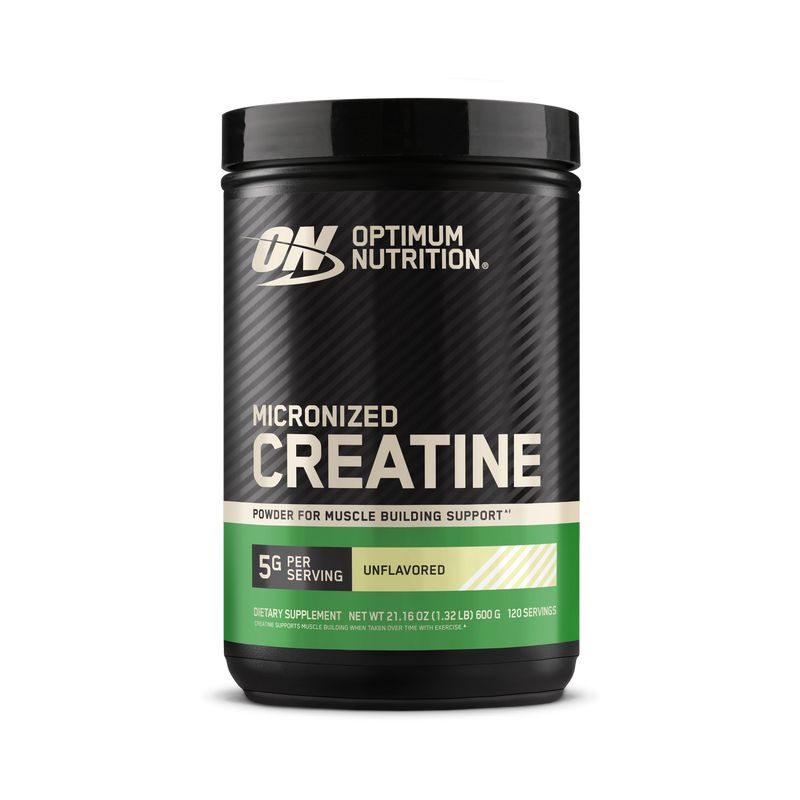
The same brand that owns the protein category makes the default creatine pick. ON's micronized creatine is pure monohydrate at 5g per serving, dissolves cleanly, and carries one of the largest review histories in the category — roughly 4.6 stars across 80,000+ Amazon ratings. It's the "just buy this and stop thinking about it" option: big brand, consistent manufacturing, unflavored, and usually around $25–30 for 120 servings.
Key specs: 5g creatine monohydrate per serving, micronized, unflavored, 120 servings per tub, third-party tested for banned substances.
Pros: - Massive, long-term owner review history — consistency tub after tub - Micronized for genuinely good mixability — no grit at the bottom of the glass - Excellent price per serving from a top-tier brand
Cons: - Not NSF Certified for Sport — competitive athletes may want a certified option - Packaging varies between batches (cosmetic only)
Best for: lifters who want the proven default — big brand, clean powder, fair price, zero decisions.
Check current price: Optimum Nutrition Micronized Creatine Monohydrate Powder
Best Bulk Value: BulkSupplements Creatine Monohydrate Powder
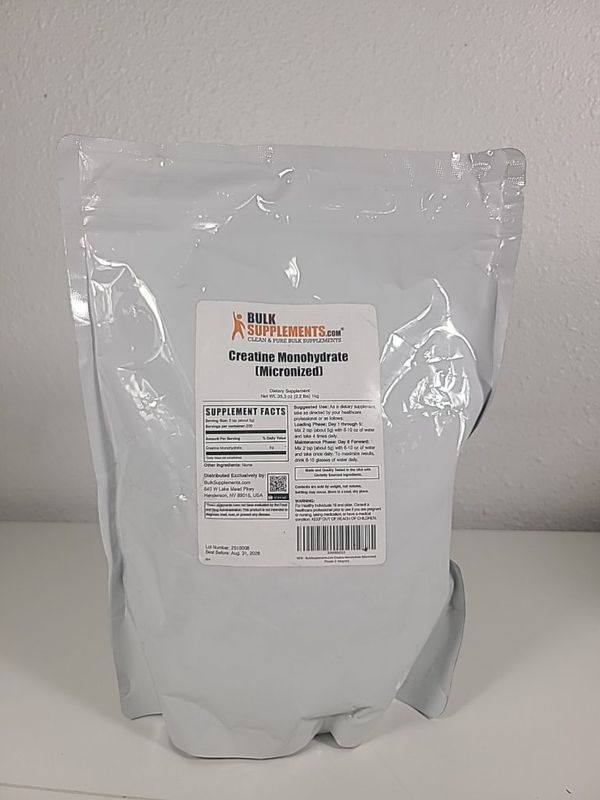
BulkSupplements built its name on exactly this: one ingredient, big bags, third-party tested, no branding tax. Their creatine monohydrate is micronized, gluten-free, made in a cGMP facility, and every batch is third-party tested. The 1kg (2.2 lb) bag delivers 200 servings at roughly 4.6 stars across 30,000+ Amazon ratings — usually around $25, which is about as cheap as quality creatine gets. Owners consistently report it mixes well and does exactly what creatine is supposed to do.
Key specs: 5g creatine monohydrate per serving, micronized, unflavored, up to 200 servings (1kg bag), third-party tested, cGMP facility, gluten-free.
Pros: - Lowest cost per serving among the quality picks - Third-party batch testing stated on the label - Resealable bulk bags in 500g and 1kg sizes
Cons: - Minimalist packaging — no scoop-quality frills, pure function - Not a sport-certified (NSF/Informed Choice) product
Best for: lifters who buy in bulk and want the most creatine per dollar without sacrificing testing.
Check current price: BulkSupplements Creatine Monohydrate Powder
Best Premium / For Tested Athletes: Thorne Creatine Monohydrate Powder
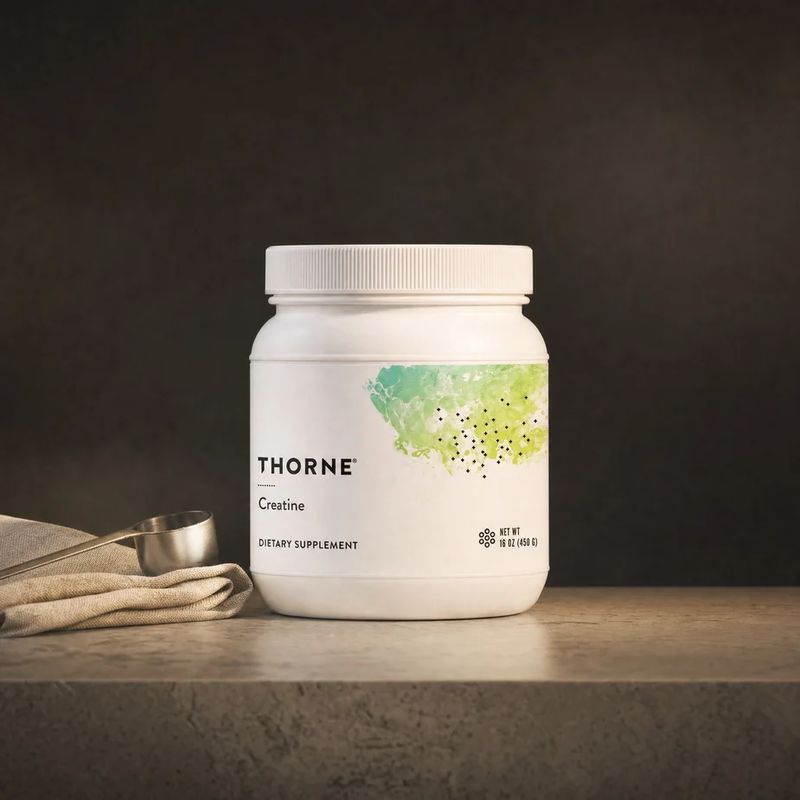
Thorne is the clinician's supplement brand — recommended by healthcare practitioners, trusted by 100+ professional sports teams — and their creatine carries the full NSF Certified for Sport badge, meaning every batch is tested for label accuracy and nearly 300 banned substances. It's micronized, unflavored, 5g per serving, and sits around 4.6 stars on Amazon. At roughly $35–45 for 90 servings it's the priciest pick here, but for tested athletes or anyone who wants the strongest purity guarantee in the category, it's the answer.
Key specs: 5g creatine monohydrate per serving, micronized, unflavored, 90 servings, NSF Certified for Sport, gluten-free.
Pros: - NSF Certified for Sport — the strongest third-party credential available - Trusted by pro teams and clinicians; batch-to-batch consistency is the brand's whole identity - Owners consistently report excellent mixability with zero taste
Cons: - Premium price — roughly double the cost per serving of the budget picks - Fewer servings per tub (90) at that price
Best for: competitive athletes subject to drug testing, and anyone who wants maximum certainty about what's in the tub.
Check current price: Thorne Creatine Monohydrate Powder
Best Budget: MuscleTech Platinum Creatine Monohydrate Powder
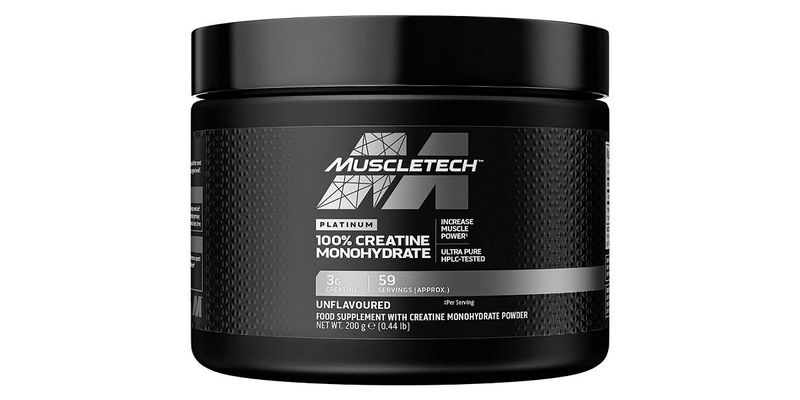
Platinum Creatine is the value play from a mainstream giant: 5g of micronized creatine monohydrate per serving, 80 servings per tub, and a street price that regularly dips near $20 — sometimes less on sale. It holds roughly 4.6 stars across 30,000+ Amazon ratings, with owners consistently reporting good mixability and the expected strength effects. (Note: MuscleTech's protein line was excluded from our protein guide over past amino-spiking litigation — but that issue was specific to protein labeling, and this is a single-ingredient creatine with no such history.)
Key specs: 5g creatine monohydrate per serving, micronized, unflavored, 80 servings, no fillers or sugar.
Pros: - Cheapest per-tub entry point among reputable brands - Huge review history — 30,000+ ratings at 4.6 stars - Frequently discounted; excellent sale hunter's pick
Cons: - No third-party sport certification - Smaller serving count per tub (80) than the bulk options
Best for: budget lifters and first-time creatine buyers who want a mainstream brand at the lowest price.
Check current price: MuscleTech Platinum Creatine Monohydrate Powder
Best Mainstream Value: Nutricost Creatine Monohydrate Powder
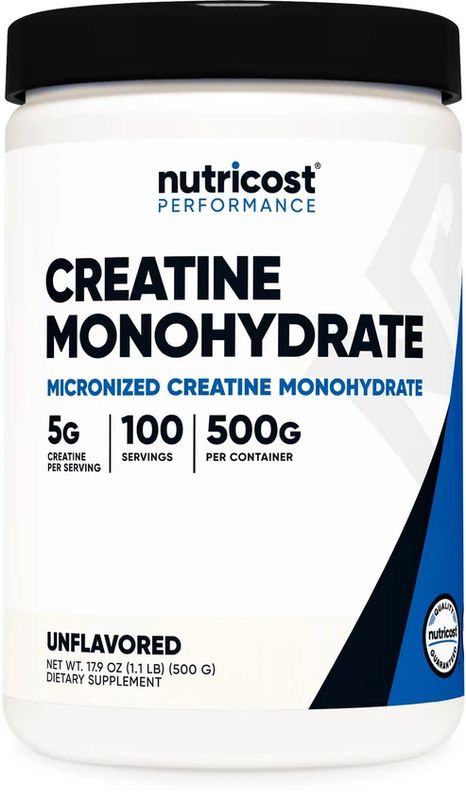
Nutricost has quietly become one of Amazon's best-selling creatine brands by doing the basics right: pure micronized creatine monohydrate, 5g per serving, third-party tested, non-GMO and gluten-free, in a clean single-ingredient formula. It holds roughly 4.6 stars as an Amazon bestseller, typically around $20–25 for a 500g (100-serving) tub, with 1kg options for heavier users. Owners consistently praise the value and report the standard strength and fullness effects within a few weeks. (Nutricost also sells a Creapure-sourced variant for purity maximalists, though it has a smaller review history.)
Key specs: 5g creatine monohydrate per serving, micronized, unflavored, 100 servings (500g), third-party tested, non-GMO, gluten-free.
Pros: - Amazon bestseller with a strong rating — huge real-world track record - Third-party tested at a budget-friendly price - Clean label: non-GMO, gluten-free, no fillers
Cons: - No NSF or Informed Choice sport certification - Some owners report minor clumping in humid conditions (store it sealed)
Best for: lifters who want third-party tested quality at a near-budget price — the sweet spot between cheap and certified.
Check current price: Nutricost Creatine Monohydrate Powder
Comparison Table
| Creatine | Creatine / Serving | Servings | Third-Party Tested | Approx. Price | Best For |
|---|---|---|---|---|---|
| Optimum Nutrition Micronized Creatine | 5g | 120 | Banned-substance tested | ~$25–30 | Best overall |
| BulkSupplements Creatine Monohydrate | 5g | 200 (1kg) | Third-party batch tested | ~$25 | Best bulk value |
| Thorne Creatine | 5g | 90 | NSF Certified for Sport | ~$35–45 | Tested athletes, premium |
| MuscleTech Platinum Creatine | 5g | 80 | — | ~$20 | Best budget |
| Nutricost Creatine Monohydrate | 5g | 100 (500g) | Third-party tested | ~$20–25 | Best mainstream value |
How to Choose: A 60-Second Decision Guide
- "Just tell me which one to buy." → Check current price: Optimum Nutrition Micronized Creatine Monohydrate Powder.
- "I want the cheapest quality creatine per serving." → Check current price: BulkSupplements Creatine Monohydrate Powder (1kg bag).
- "I compete in drug-tested sports." → Check current price: Thorne Creatine Monohydrate Powder — NSF Certified for Sport.
- "I want the lowest price from a big brand." → Check current price: MuscleTech Platinum Creatine Monohydrate Powder.
- "I want tested quality without the premium price." → Check current price: Nutricost Creatine Monohydrate Powder.
And the universal advice: take 5g daily, every day, and give it a month. Creatine rewards consistency, not clever timing.
FAQ
How much creatine should I take per day?
5g per day is the research-backed maintenance dose for most adults. You can optionally "load" with 20g/day (split into 4 doses) for 5–7 days to saturate muscles faster, but it's not required — 5g daily reaches full saturation in about a month. Take it daily, including rest days.
Is creatine safe?
Creatine monohydrate is the most studied sports supplement in existence, with a strong safety record in healthy adults over decades of research. That said, this guide isn't medical advice — if you have kidney disease, take medications affecting the kidneys, or have any health condition, talk to your doctor first. It's also not recommended for anyone under 18 without a doctor's guidance.
Will creatine make me bloated?
Creatine draws water into muscle cells, which typically adds 2–4 lbs of scale weight in the first month — but that's intracellular water in the muscle, not subcutaneous bloating. Owners consistently report muscles look fuller, not puffy. Staying well-hydrated minimizes any digestive discomfort.
Do I need to cycle creatine?
No. There's no evidence-based reason to cycle creatine — long-term daily use at 5g is the studied protocol. The "cycle off" advice is bro-science left over from the 90s.
Creatine monohydrate vs. creatine HCl — which is better?
Monohydrate. Creatine HCl is marketed as needing a smaller dose, but there's no quality evidence it's more effective, and it costs several times more per serving. Every major clinical trial showing creatine's benefits used monohydrate. Don't pay the premium.
Can I mix creatine with my protein shake?
Yes — it's the easiest way to take it consistently. Creatine is unflavored and stable in liquid for the time it takes to drink a shake. Just don't pre-mix it hours ahead; drink it within a reasonable time.
Verdict
For most lifters, the Check current price: Optimum Nutrition Micronized Creatine Monohydrate Powder is the right buy: pure monohydrate, micronized for easy mixing, 5g per serving, an 80,000+ review track record, and a price around $25–30 for four months of servings. It's the default for a reason.
Want the absolute lowest cost per serving? The Check current price: BulkSupplements Creatine Monohydrate Powder is third-party tested and costs about the same as the ON tub for nearly twice the creatine. Competing in tested sports? The Check current price: Thorne Creatine Monohydrate Powder with NSF Certified for Sport is worth the premium. On a tight budget, Check current price: MuscleTech Platinum Creatine Monohydrate Powder gets you in the door near $20. And the Check current price: Nutricost Creatine Monohydrate Powder sits in the sweet spot — third-party tested quality at a mainstream price.
Whichever tub you grab, the protocol is the same: 5g a day, every day, with water and patience. The guys who benefit from creatine aren't the ones who bought the fanciest version — they're the ones still taking it in month three.