The 5 Best Dash Cams for Daily Driving (2026 Buyer's Guide)
Every commute is a coin flip. Some mornings you glide through traffic. Others, a distracted driver swerves into your lane and you're left arguing about fault with nothing but your word. A dash cam ends the argument before it starts — recorded video beats recalled memory every single time.
This guide isn't a rehash of press releases. Every pick below comes from digging through manufacturer spec sheets, current 2026 model lineups, and thousands of long-term owner reviews. Nobody paid us to be here, and we haven't tested anything hands-on — we're synthesizing what owners consistently report after months of daily use.
What we looked for: cameras that are still actively sold today (dash cam models churn fast, and half the "best of" lists online are recommending discontinued hardware), sensors that hold up at night when it actually matters, and heat tolerance that survives a parked car in August.
What Actually Matters: The Specs Worth Reading
Resolution: 4K vs 1080p
4K sounds like a no-brainer, but it's not that simple. What actually catches a license plate at 40 mph is the sensor, the lens, and HDR — not the resolution number on the box. A good 2K or 1080p camera with a Sony STARVIS 2 sensor and real HDR will embarrass a cheap "4K" camera at night. That said, genuine 4K front sensors (like the IMX678) do give you more pixels to crop into when you need to zoom on a plate. Rule of thumb: sensor quality first, resolution second.
Front-Only vs Dual-Channel
A front camera covers the fender benders and intersection disputes. A rear camera covers the guy who rear-ended you and then claimed you stopped short. For a daily driver, dual-channel is the smart default — the incremental cost is small and rear-end collisions are the most common accident type. Three-channel (adding a cabin camera) is mainly for rideshare drivers.
Parking Mode
Parking mode keeps the camera watching while the engine is off, drawing power either from a hardwire kit to the fuse box or a small external battery pack. The better implementations use buffered parking mode: they continuously record in a loop and save the seconds before an impact is detected, so you see the hit coming, not just the aftermath. If your car sits in lots and garages all day, this is arguably the most important feature.
GPS
GPS stamping bakes your speed and location into every clip. It can exonerate you — or incriminate you — so know what you're signing up for. Most cameras let you disable the speed overlay while keeping the location track. For insurance purposes, having location metadata on your footage is nearly always a plus.
Supercapacitor vs Lithium Battery
This is the hidden reliability spec. Lithium batteries degrade in heat, and a dash cam bakes on your windshield all summer. Supercapacitors handle extreme temperatures far better and last years longer. If you live anywhere the car interior hits 140°F, prioritize a supercapacitor model and treat battery-powered cameras as suspect.
Our Picks
VIOFO A229 Pro — Best Overall 4K Dual-Channel
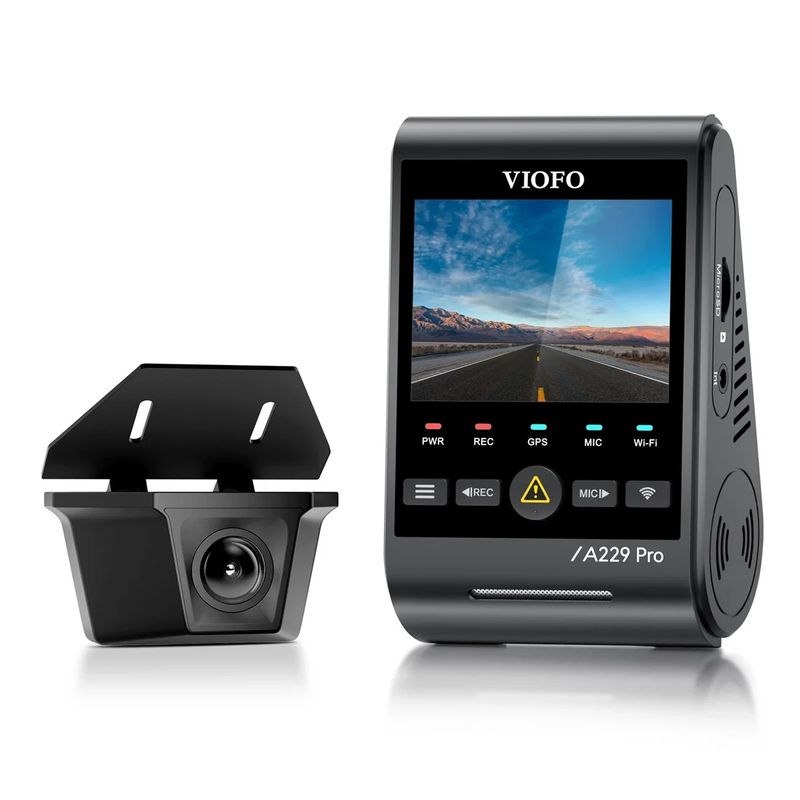
The A229 Pro is the current flagship of VIOFO's lineup and the camera that expert roundups keep putting at the top of their 4K lists. The spec sheet lists a Sony STARVIS 2 IMX678 front sensor recording true 4K at 30fps and an IMX675 rear sensor at 2K, both with real HDR — not software trickery. Owners consistently report that license plates stay readable at night and in rain, which is the entire point of the thing.
It comes loaded: 5GHz Wi-Fi for fast phone transfers, GPS, voice control, a Bluetooth remote button for manually saving clips, and buffered parking mode with a hardwire kit. The app experience is better than most of the Chinese-brand competition, which matters when you actually need to pull footage on the side of the road.
Key specs: True 4K front (IMX678) + 2K rear (IMX675), Sony STARVIS 2, HDR, 5GHz Wi-Fi, GPS, buffered parking mode, supercapacitor.
Pros: - Sharpest video of any dash cam in this price tier, day and night - Buffered parking mode captures the seconds before an impact - 5GHz Wi-Fi makes transferring big 4K clips painless - Supercapacitor handles summer windshield heat
Cons: - Needs a hardwire kit (sold separately) for real parking surveillance - Larger than discreet wedge cams — you'll notice it on the glass - 4K files eat microSD cards fast; budget for a high-endurance card
Best for: Drivers who want the best evidence-quality footage they can buy without stepping into pro-fleet territory.
Check current price: VIOFO A229 Pro
Garmin Dash Cam Mini 3 — Most Discreet
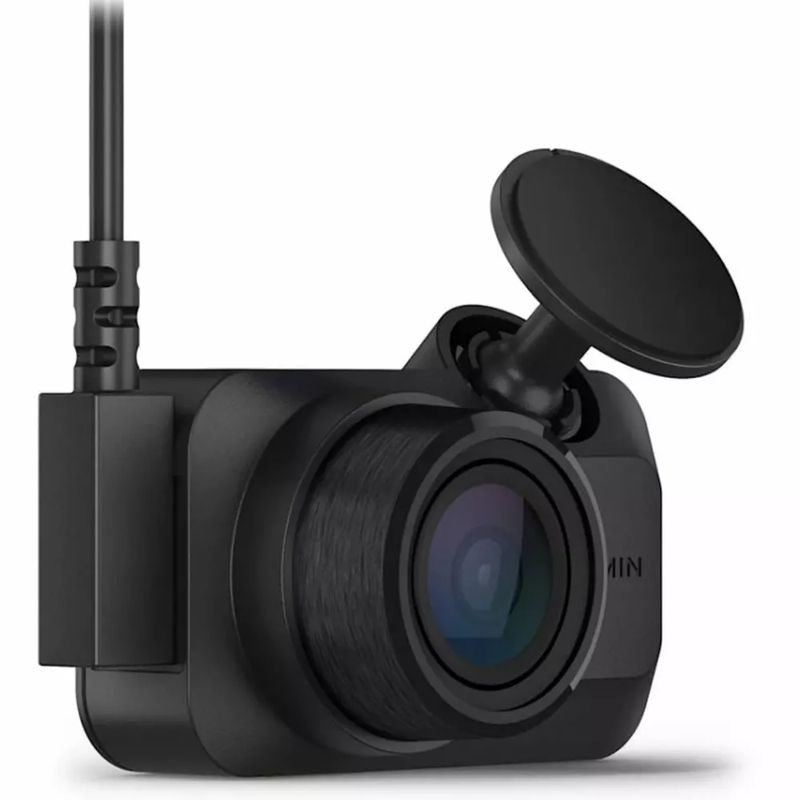
Garmin's Dash Cam Mini 3 is barely bigger than a car key fob, and that's the whole appeal. The spec sheet lists 1080p HD recording with Garmin's Clarity polarizer built in, which cuts windshield glare without a bolt-on filter. Owners consistently report that it's the one dash cam you can stick behind the rearview mirror and genuinely forget about.
Don't let the tiny body fool you: it has voice control, GPS, automatic incident detection, and it syncs to the Garmin Drive app and Garmin Vault cloud storage. The trade-off is the 1080p sensor — fine for daytime evidence and close-range plates, but it won't match a 4K camera when you need to crop into distance footage.
Key specs: 1080p HD, 140° field of view, built-in polarizer, voice control, GPS, Garmin Vault cloud, no screen.
Pros: - Invisible on the windshield once installed - Garmin's software and cloud ecosystem is genuinely good - Set-and-forget simplicity — no screen to fiddle with - Around $130 makes it an easy gift or first dash cam
Cons: - 1080p only; less cropping room than 4K competitors - No screen means phone app is required for setup and playback - No parking mode worth relying on without external power management
Best for: Drivers who want a record-it-and-forget-it camera that doesn't clutter the windshield.
Check current price: Garmin Dash Cam Mini 3
Rove R2-4K Dual — Best Value
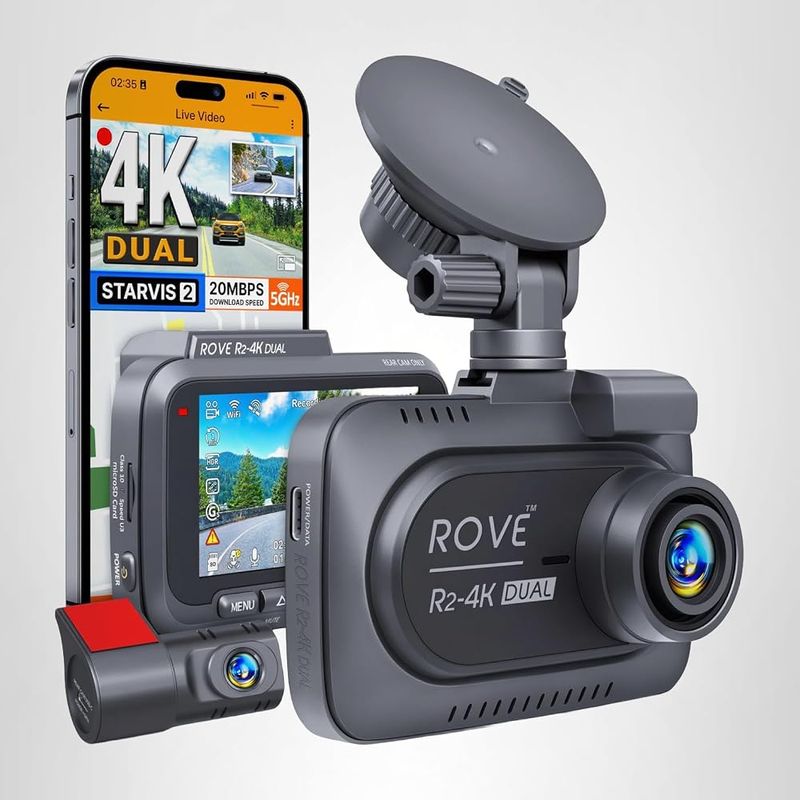
The Rove R2-4K Dual is Amazon's perennial bestseller for a reason: it packs genuine 4K front recording (Sony STARVIS 2 IMX675) plus 1080p rear into a kit that ships with a free 128GB card and CPL filter for around $150. Expert roundups consistently flag it as the value king — you're getting 80% of the flagship experience for half the money.
Owners report surprisingly strong night vision for the price, plus GPS, Wi-Fi 6, a 150° front lens, and 24-hour parking mode. Rove's customer support also gets unusually high marks in owner reviews, which counts for a lot with electronics.
Key specs: 4K front + 1080p rear, Sony STARVIS 2, GPS, Wi-Fi 6, 150° lens, 24-hour parking mode, 128GB card and CPL filter included.
Pros: - Unmatched feature-per-dollar at around $150 - Ships with a 128GB card and polarizer — no hidden extras needed - Wi-Fi 6 and a solid app for the price class - Massive owner base means every problem has a documented fix
Cons: - The front sensor upscales to 4K; purists note it's not a native 4K chip like the IMX678 - Build quality is good, not great — the mount gets occasional complaints - Menu system is functional but clunky
Best for: Budget-minded commuters who want front-and-rear coverage without spending flagship money.
Check current price: Rove R2-4K Dual
Vantrue N4 Pro — Best for Rideshare and 3-Channel Coverage
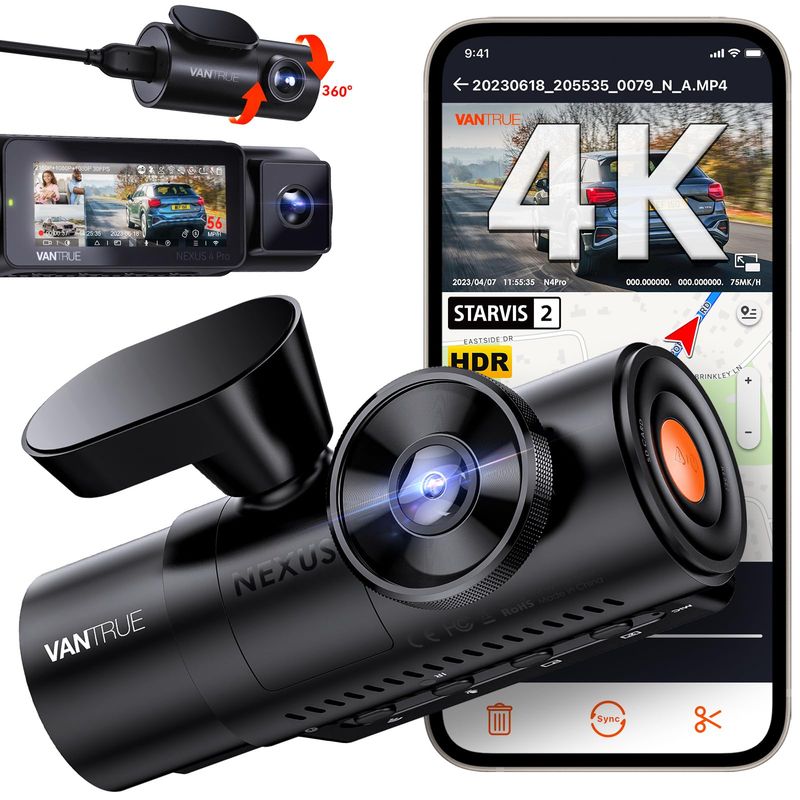
The Vantrue N4 Pro covers every angle at once: 4K front, 2.5K rear, and 1080p cabin with infrared night vision. That third lens is why rideshare and delivery drivers buy it — it records the passenger compartment in full darkness, which settles every dispute about what happened in the back seat.
The spec sheet also lists GPS, Wi-Fi, a supercapacitor instead of a battery for heat safety, and 24-hour parking surveillance. Vantrue has also rolled out the newer N4 Pro S variant with its PlatePix processing for plate readability, so check which version you're buying — both are current. Around $360, it's the priciest pick here, but three cameras in one housing is still cheaper than three separate ones.
Key specs: 4K front + 2.5K rear + 1080p IR cabin, GPS, Wi-Fi, supercapacitor, 24-hour parking mode.
Pros: - The only pick with an infrared cabin camera — essential for rideshare - Supercapacitor shrugs off summer heat - Buffered parking mode across all three channels - Records everything in one unit, one mount, one memory card
Cons: - Around $360 — significantly more than dual-channel options - Bigger housing is harder to hide - Three video streams generate enormous files; big memory card required
Best for: Uber/Lyft drivers, delivery drivers, and anyone who wants full cabin coverage alongside front and rear.
Check current price: Vantrue N4 Pro
Nexar Beam2 — Best Connected App Experience
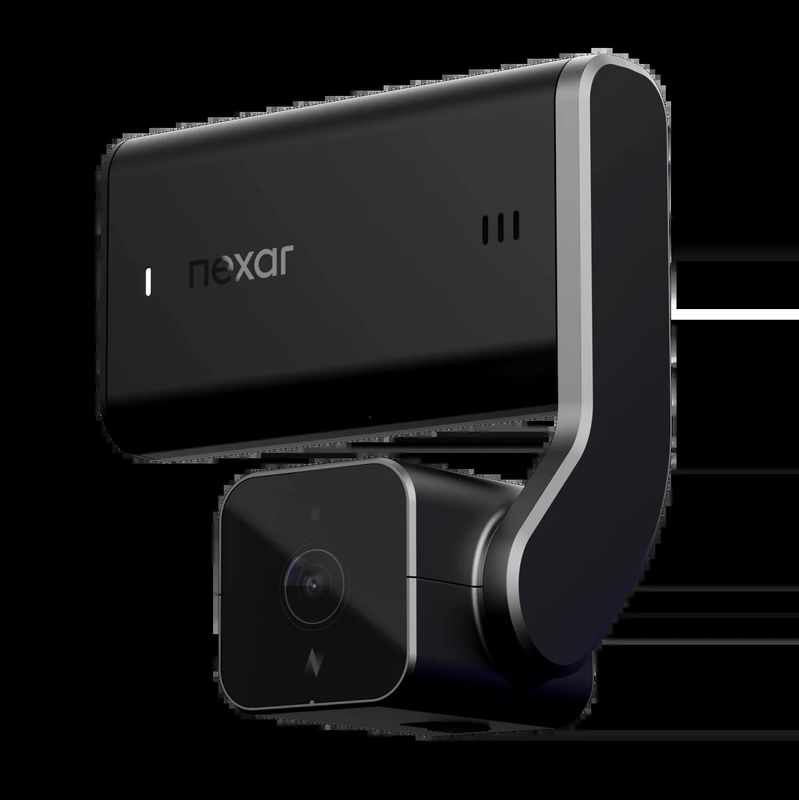
Nexar comes from the software side of the industry, and it shows. The Beam2 is the company's current model (the older Nexar Pro has been phased out) and it pairs with what owners consistently describe as the best dash cam app in the business: automatic cloud backup of incident clips, one-tap sharing to insurance, and live GPS tracking.
The camera itself records solid 1080p with a wide dynamic range sensor and built-in GPS, and it's priced around $150. The connected features are the real product here — if you want footage automatically backed up so a stolen or destroyed camera doesn't take your evidence with it, this is the pick.
Key specs: 1080p, built-in GPS, Wi-Fi, automatic cloud backup of incident clips, live GPS tracking, parking mode.
Pros: - Best-in-class app and automatic cloud backup - One-tap clip sharing to insurance adjusters - Solid hardware for the price - Stolen-camera insurance: incidents upload before anyone can grab the cam
Cons: - 1080p only — no 4K option in the lineup - Some connected features require a subscription - Cloud backup depends on your phone being in the car
Best for: Drivers who want their footage automatically in the cloud and an app that doesn't fight them.
Check current price: Nexar Beam2
Comparison Table
| Model | Channels | Front Resolution | Night Performance | Parking Mode | Power Type | Approx. Price |
|---|---|---|---|---|---|---|
| VIOFO A229 Pro | Front + Rear | 4K (IMX678) | Excellent (STARVIS 2 + HDR) | Buffered | Supercapacitor | ~$250 |
| Garmin Dash Cam Mini 3 | Front only | 1080p | Good | Basic | Battery | ~$130 |
| Rove R2-4K Dual | Front + Rear | 4K (IMX675) | Very good | 24-hour | Supercapacitor | ~$150 |
| Vantrue N4 Pro | Front + Rear + Cabin | 4K front / 2.5K rear | Very good (IR cabin) | 24-hour buffered | Supercapacitor | ~$360 |
| Nexar Beam2 | Front only | 1080p | Good | Standard | Supercapacitor | ~$150 |
How to Choose: A 60-Second Decision Guide
- You want the sharpest evidence footage available: Get the VIOFO A229 Pro. The IMX678 sensor and real HDR are the best in this price class.
- You want it invisible on your windshield: Get the Garmin Dash Cam Mini 3. Key-fob sized, set-and-forget.
- You want front and rear coverage for minimum money: Get the Rove R2-4K Dual. It's the value king and includes the memory card.
- You drive rideshare or deliveries: Get the Vantrue N4 Pro. The infrared cabin camera is non-negotiable for passenger disputes.
- You want footage backed up to the cloud automatically: Get the Nexar Beam2. Best app, automatic incident uploads.
- Your car bakes in summer heat: Stick to the supercapacitor picks — everything here except the Garmin.
FAQ
Do I actually need 4K, or is 1080p enough?
1080p is enough for most fender benders — you can identify the other car, the plate at close range, and the sequence of events. 4K earns its keep when you need to zoom into distant footage: a plate 50 feet away that would be mush in 1080p stays readable in 4K. If you drive highways at speed, 4K is worth the upgrade.
Will a dash cam drain my car battery in parking mode?
A hardwired dash cam in parking mode draws very little power, and quality hardwire kits include a voltage cutoff that shuts the camera down before your battery gets too low to start the car. If you park for weeks at a time, an external battery pack is the safer route.
Is it legal to record audio inside the car?
Video recording of public roads is legal everywhere in the US. Audio recording is murkier — some states require two-party consent for audio. If you drive rideshare in a two-party-consent state, disable audio recording or post a notice. Check your state's wiretapping law before enabling cabin audio.
How big a memory card do I need?
4K dual-channel cameras burn through storage fast — plan on at least 128GB, and buy a high-endurance card rated for continuous recording (standard cards die quickly under 24/7 write cycles). 256GB is the comfortable sweet spot for 4K.
Can I install it myself?
Yes, if you're comfortable tucking a cable behind trim panels. The 12V plug installation takes ten minutes. Hardwiring for parking mode is moderately harder — add-a-fuse kits make it a 30-minute job, but if you're not confident around fuse boxes, any car audio shop will do it cheap.
Do dash cams work in extreme heat?
They can fail in extreme heat, which is exactly why supercapacitor models exist. Lithium-battery cameras swell and die on hot windshields; supercapacitor cameras keep running. In desert climates, also consider a windshield sunshade — no camera likes 160°F.
Will my insurance give me a discount for a dash cam?
A few insurers offer small discounts, but the real value is in claims. Fault disputes get settled in days instead of months when you hand the adjuster a video. Ask your insurer — it costs nothing to ask, and the footage pays for the camera the first time someone lies about a collision.
Verdict
For most daily drivers, the Check current price: VIOFO A229 Pro is the camera to beat. True 4K front recording, a 2K rear, STARVIS 2 sensors with real HDR, and buffered parking mode — it's the complete package at a price that undercuts the big-name flagships. If your budget is tighter, the Check current price: Rove R2-4K Dual delivers remarkable value at around $150, and if you need the smallest possible footprint, the Check current price: Garmin Dash Cam Mini 3 disappears behind your mirror while still recording rock-solid 1080p.
One last word: buy the high-endurance memory card. The camera is only as reliable as the storage it's writing to, and a dead card means a dead dash cam. Get the cam, get the card, hardwire it if you can, and then forget about it until the day you need it — that's the whole point.