The 6 Best EDC Knives Under $50 (2026 Buyer's Guide)
The budget knife world quietly caught up. Ten years ago, fifty bucks bought you a flimsy gas-station folder. Today it buys D2 tool steel, ball-bearing pivots, and fit-and-finish that would have cost $150 a decade ago. The cheap end of the market isn't a compromise anymore — it's a discount, mostly in brand name and country of manufacture.
This guide is built from manufacturer spec sheets and long-term owner reports, not hands-on testing and not sponsorships. Every knife below is a current model, actively sold in 2026, and priced under fifty bucks — the knives that experienced carriers actually recommend when someone asks "what should I buy first?"
What Actually Matters: The Specs Worth Reading
Blade Steel: D2, 14C28N, 8Cr13MoV
These three steels cover everything under $50, and knowing the trade-offs saves you from marketing noise. D2 is a semi-stainless tool steel with excellent edge retention — it stays sharp through a lot of cardboard — but it can spot-rust if you neglect it, and it's harder to sharpen. 14C28N (Sandvik's budget stainless) is the balanced pick: good corrosion resistance, decent edge retention, easy to sharpen. 8Cr13MoV is the classic Chinese budget stainless: soft, sharpens in minutes, but needs touching up more often. None of them are "bad" — they just ask different things of you.
Lock Type: Liner, Frame, and Crossbar
The liner lock is the workhorse — a steel liner flexes behind the blade tang. Simple, proven, everywhere. The frame lock uses the handle frame itself as the lock bar; stronger, but usually pricier. Crossbar/axis-style locks (like on the CJRB Feldspar) are ambidextrous and let you close the knife without putting fingers in the blade path — the safest one-handed close in the business. Avoid back locks and slip joints for hard use; they're fine for light duty but slower to operate.
Blade Length Laws
Know your local law before you carry. A common threshold is 3 inches — several states and many cities restrict blades over that, and some workplaces and transit systems have their own rules. All six knives here sit at or near 3 inches specifically because that's the sweet spot: useful blade, legally unremarkable in most places. Check your state and city ordinances anyway — knife law is a patchwork.
Pocket Clip
A deep-carry wire clip rides low and invisible; a standard clip leaves an inch of handle showing. Most of these knives ship with a reversible clip for left or right carry, tip-up. If you wear dress pants, prioritize a deep-carry clip — nobody at the office needs to see your knife.
Weight
Anything under 4 ounces disappears in a pocket; over that, you'll notice it. All six picks here land between 2.4 and 4 ounces. Weight usually correlates with handle material — G10 and micarta are light, steel liners and metal handles add heft.
Our Picks
Civivi Elementum — Best Overall
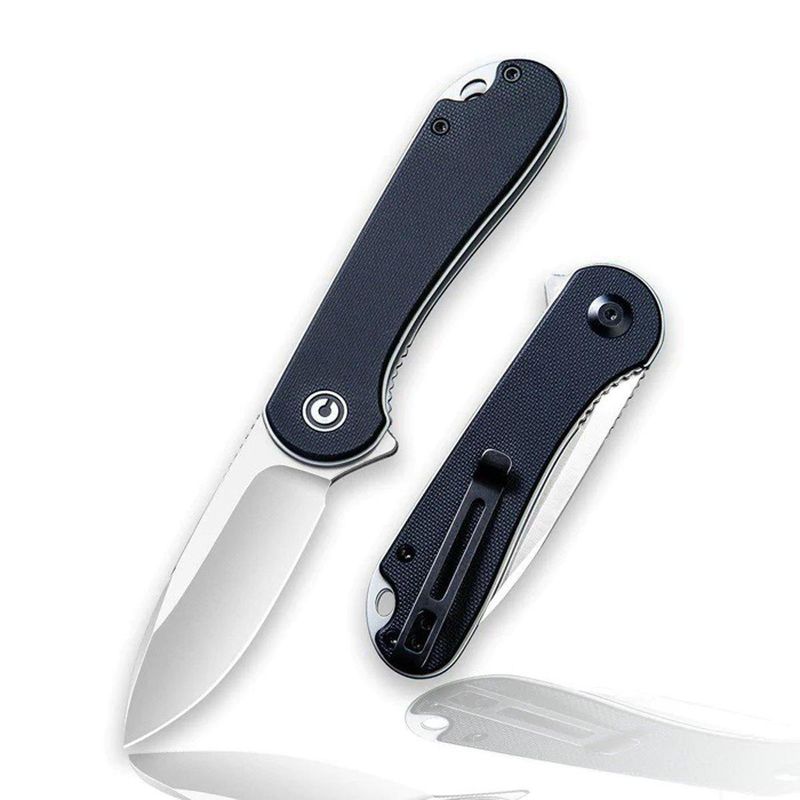
The Elementum is the knife that broke the budget category. Built in the same Yangjiang factory that produces $400 WE Knife blades, it pairs a 2.96-inch D2 drop-point blade with a liner lock, G10 or micarta scales, and a caged ball-bearing pivot that owners consistently describe as the smoothest action under $50 — some say under $100.
The design is clean and neutral: no aggressive styling, no gimmicks, just a well-proportioned folder that does everything. At around $50 street price (standard configurations), it sits right at the top of this budget. If you buy exactly one knife on this list, buy this one.
Key specs: 2.96" D2 drop-point blade, liner lock, G10/micarta scales, caged ball-bearing pivot, ~2.9 oz, reversible deep-carry clip.
Pros: - Fit, finish, and action that embarrasses knives twice the price - D2 blade holds an edge through serious cardboard duty - Neutral design works in any setting — office to trailhead - Huge aftermarket: scales, clips, and parts are everywhere
Cons: - D2 can spot-rust if neglected — wipe it down after wet use - At ~$50 it's the priciest knife here (some configurations creep over) - Liner lock is good, not great — the lock bar engagement varies by unit
Best for: Anyone buying their first serious EDC knife, or their tenth. It's the default recommendation for a reason.
Check current price: Civivi Elementum
Ontario RAT Model II — Most Proven Workhorse
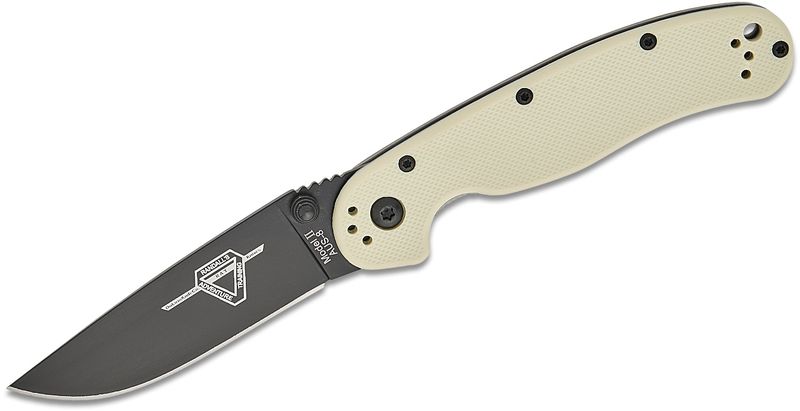
The RAT II has been in pockets for over a decade, and it earned every bit of that tenure. The spec sheet lists a 3-inch AUS-8 drop-point blade, dual thumb studs, a liner lock, nylon handle scales, and a four-position pocket clip. No flipper, no bearings, no assisted anything — just a simple, honest folder.
Owners consistently report the same thing: it's the knife that never lets you down. AUS-8 is softer than D2, so it sharpens in minutes on any stone, and the ergonomics are widely considered the best in the budget class. At around $45, it's the knife you hand to a friend who keeps borrowing yours. The full-size RAT Model 1 exists if you want more handle, but the Model II's 3-inch blade hits the legal sweet spot.
Key specs: 3" AUS-8 drop-point blade, liner lock, nylon scales, thumb-stud deployment, 2.75 oz, four-position clip.
Pros: - A decade of owner reports with almost no complaints - AUS-8 sharpens fast and takes a keen edge - Excellent ergonomics — the handle just fits - Simple enough to disassemble, clean, and maintain yourself
Cons: - AUS-8 needs more frequent touch-ups than D2 - Plain looks — it's a tool, not jewelry - Nylon scales feel basic next to G10
Best for: Hard-use daily carry where reliability beats refinement — work knives, truck knives, tackle-box knives.
Check current price: Ontario RAT Model II
Kershaw Leek 1660 — Best Slim Dress-Carry Knife
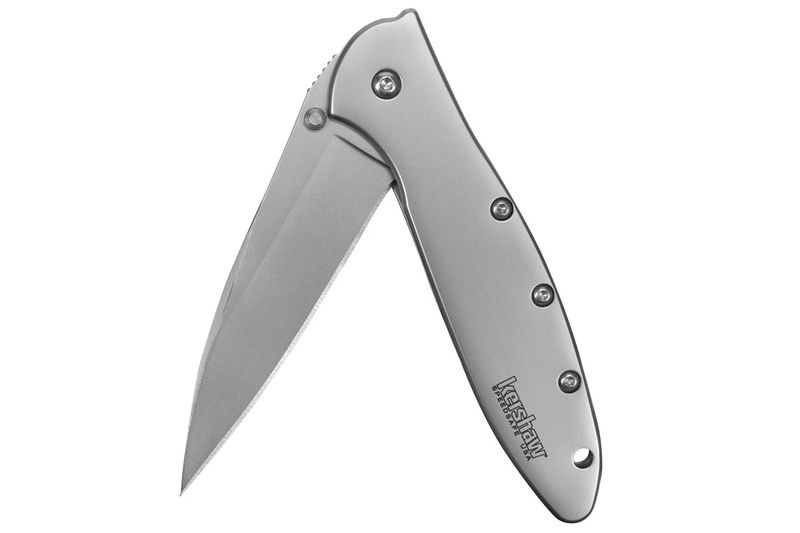
The Leek has been in Kershaw's lineup for twenty years because the formula works: a 3-inch Sandvik 14C28N wharncliffe-style blade, SpeedSafe assisted opening, and a slim aluminum handle that slides into a dress-pant pocket like it was made for it. At around $45, it's the knife for people who need a blade at the office.
The assisted opening is the headline feature — the torsion bar snaps the blade open the instant you nudge the flipper, and owners consistently report that it stays snappy for years. The 14C28N blade is the balanced steel here: stainless, easy to sharpen, decent edge retention. Note the frame lock and the tip-lock slider that keeps the blade shut in-pocket — a nice safety touch most budget knives skip.
Key specs: 3" 14C28N blade, SpeedSafe assisted opening, 410 stainless frame lock, aluminum handle, 3 oz, tip-lock safety.
Pros: - Slimmest knife here — disappears in dress pants - SpeedSafe assisted opening is fast and reliable - 14C28N is the easiest steel here to live with - Made in the USA, backed by Kershaw's warranty
Cons: - Assisted opening is illegal in some jurisdictions — check your local laws - Narrow handle isn't great for hard cutting tasks - The tip is fine and precise, but fragile if abused
Best for: Office carry and dress-pant EDC where slim and discreet matter more than hard-use capability.
Check current price: Kershaw Leek 1660
CRKT Pilar — Best Compact and Fidget-Friendly
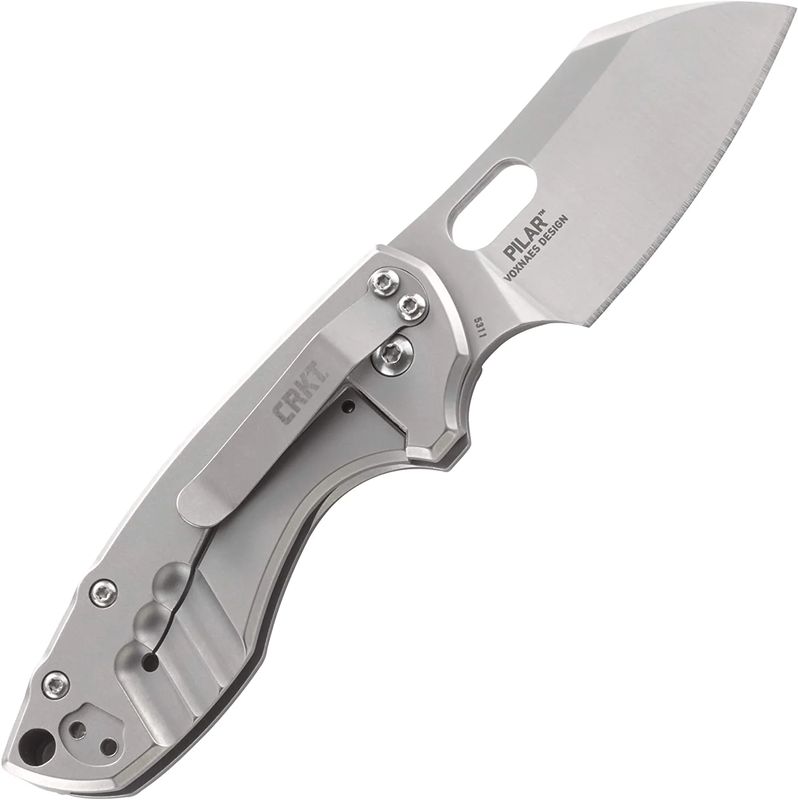
The Pilar is the little knife with a big personality. Jesper Voxnaes's design packs a 2.4-inch 8Cr13MoV sheepsfoot blade into a 6-inch overall package with a frame lock and a wide, comfortable handle. It looks like a cleaver had a baby with a pocket knife, and owners consistently report two things: the ergonomics punch way above the size, and the action is stupidly fun to fidget with.
At around $40, it's the knife you buy because you want something different. The sheepsfoot blade shape is excellent for utility cuts — box tops, tape, cordage — with a strong tip that won't snap. The 8Cr13MoV steel is the softest here, so expect to touch up the edge regularly, but it sharpens in about two minutes.
Key specs: 2.4" 8Cr13MoV sheepsfoot blade, frame lock, stainless/G10 handle options, 4 oz, ~6" overall.
Pros: - Unique design that stands out in a sea of drop points - Excellent ergonomics for such a small knife - Frame lock at this price is rare - Great utility blade shape for boxes and packaging
Cons: - 2.4-inch blade is short for general EDC tasks - 8Cr13MoV needs the most frequent sharpening of any steel here - Heavier than it looks — 4 oz for a small knife
Best for: Compact carry, box-duty at work, and anyone who wants a knife with character.
Check current price: CRKT Pilar
QSP Penguin — Best Fit and Finish for the Money
The QSP Penguin is the knife that makes reviewers ask how it's this cheap. A 3.1-inch D2 sheepsfoot blade, brass or steel liners, micarta or G10 scales, and a fit and finish that owners consistently say beats knives costing double. The Penguin looks and feels like a $80 knife that someone mislabeled at $35.
The sheepsfoot blade is a utility monster — strong tip, long straight edge, great for push cuts. The action runs on washers rather than bearings, which means it's slightly less glassy than the Elementum but dead reliable and easy to maintain. At around $30–$40 depending on configuration, it's the value pick of this entire list.
Key specs: 3.1" D2 sheepsfoot blade, liner lock, micarta/G10 scales, washer pivot, ~3.4 oz, reversible clip.
Pros: - Best fit and finish per dollar on this list - D2 blade with excellent edge retention - Sheepsfoot shape is ideal for utility work - Multiple handle materials and colors to choose from
Cons: - Washer pivot is reliable but less silky than ball bearings - Slightly larger in pocket than the Elementum - The brand is less known, so resale value is lower
Best for: Buyers who want premium feel on a strict budget — the most knife per dollar here.
Check current price: QSP Penguin
CJRB Feldspar — Best Ambidextrous Lock
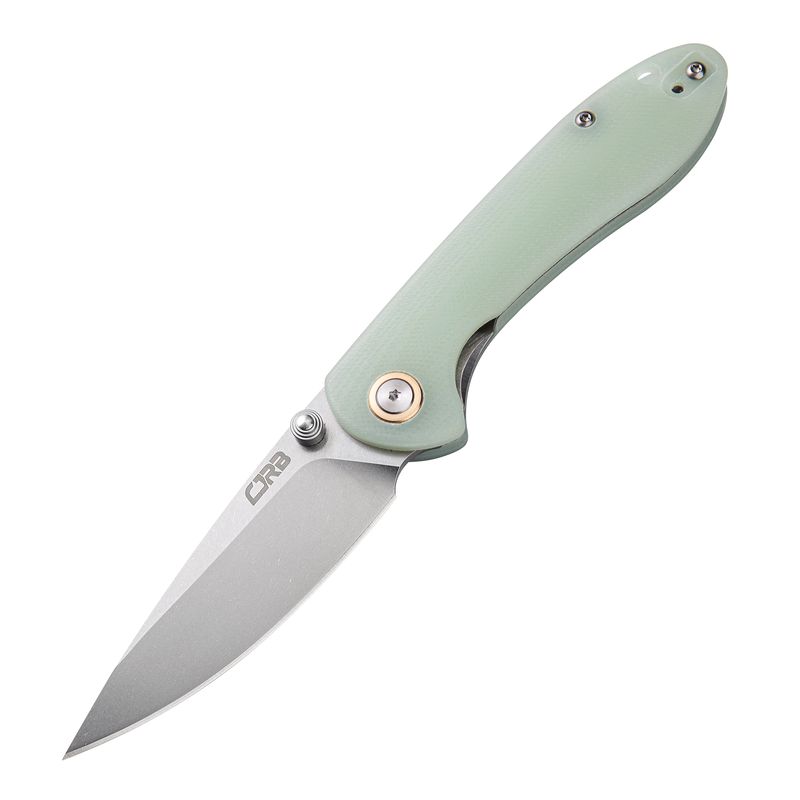
The Feldspar brings a crossbar lock to the under-$50 bracket, and that's a big deal. Crossbar locks (the style Benchmade made famous with the AXIS) are fully ambidextrous and let you close the blade with your fingers completely clear of the edge — the safest one-handed operation of any lock type. Getting that at around $40, in a knife with a 3.5-inch D2 drop-point blade and G10 scales, is remarkable.
Owners consistently report that the action is excellent out of the box and the lock is rock solid. The 3.5-inch blade is the longest here, which is great for utility but worth a second thought in jurisdictions with strict length limits. If you want the safest, most fidget-friendly lock under $50, this is it.
Key specs: 3.5" D2 drop-point blade, crossbar lock, G10 scales, ~4 oz, ambidextrous operation.
Pros: - Crossbar lock is the safest, most ambidextrous lock type — rare at this price - Long 3.5-inch D2 blade for serious cutting tasks - Excellent action and solid lockup per owner reports - True lefty-friendly carry
Cons: - 3.5-inch blade may exceed legal limits in some cities — check before carrying - Largest and heaviest knife on this list - Newer brand with less long-term track record than Ontario or Kershaw
Best for: Left-handed carriers, lock snobs, and anyone who wants the safest one-handed close under $50.
Check current price: CJRB Feldspar
Comparison Table
| Model | Blade Steel | Blade Length | Lock | Weight | Approx. Price |
|---|---|---|---|---|---|
| Civivi Elementum | D2 | 2.96" | Liner | ~2.9 oz | ~$50 |
| Ontario RAT Model II | AUS-8 | 3.0" | Liner | 2.75 oz | ~$45 |
| Kershaw Leek 1660 | 14C28N | 3.0" | Frame | 3.0 oz | ~$45 |
| CRKT Pilar | 8Cr13MoV | 2.4" | Frame | 4.0 oz | ~$40 |
| QSP Penguin | D2 | 3.1" | Liner | ~3.4 oz | ~$35 |
| CJRB Feldspar | D2 | 3.5" | Crossbar | ~4.0 oz | ~$40 |
How to Choose: A 60-Second Decision Guide
- You just want the best one: Get the Civivi Elementum. It's the consensus pick for a reason.
- You beat the hell out of your knives: Get the Ontario RAT Model II. Simple, proven, easy to sharpen and maintain.
- You carry in dress pants or an office: Get the Kershaw Leek 1660. Slim, discreet, assisted opening.
- You want maximum knife for minimum money: Get the QSP Penguin. Premium feel at around $35.
- You open a lot of boxes: Get the CRKT Pilar. The sheepsfoot blade is made for it.
- You're left-handed or lock-obsessed: Get the CJRB Feldspar. Crossbar lock under $50 is the headline.
FAQ
Is D2 steel good for a beginner?
D2 is great steel but demanding: it holds an edge for a long time, then takes real effort to resharpen, and it can spot-rust if neglected. Beginners are often happier starting with 14C28N (Kershaw Leek) or 8Cr13MoV (CRKT Pilar) — both sharpen in minutes on a basic stone — then stepping up to D2 once they own a sharpener and some technique.
Are assisted-opening knives legal?
It depends entirely on where you live. Assisted openers like the Kershaw Leek are legal in most US states but banned or restricted in several, plus many cities have their own rules. Manual folders (everything else on this list) face far fewer restrictions. Check your state and local laws before carrying an assisted knife.
What's the best blade length for EDC?
Three inches is the sweet spot for a reason: long enough for real work — food prep, box breakdown, cordage — but short enough to stay legal in most jurisdictions and discreet in a pocket. All but two knives here sit right around 3 inches.
How do I maintain a budget EDC knife?
Keep it simple: wipe the blade after use, add a drop of oil to the pivot every few months, and touch up the edge before it gets truly dull — a few passes on a ceramic rod or strop takes a minute. D2 blades benefit from a light coat of oil in humid climates. Don't overthink it; these knives are built to be used.
Liner lock vs frame lock — which is better?
For most users, it doesn't matter much. Frame locks are theoretically stronger and have a cleaner profile; liner locks are lighter, cheaper, and more common. Both are perfectly safe when properly made. The crossbar lock on the CJRB Feldspar is the standout for ambidextrous use and safe one-handed closing.
Can I fly with an EDC knife?
No — not in carry-on luggage, ever. TSA prohibits all knives in the cabin. Pack your folder in checked baggage and you'll be fine. This trips up more people than any other knife rule.
Why are these knives so cheap if they're this good?
Mostly manufacturing economics. Chinese factories in Yangjiang now produce at a quality level that was impossible at these prices a decade ago, and brands like Civivi, QSP, and CJRB sell direct-style without the markup of legacy American brands. You're paying for the knife, not the heritage.
Verdict
If you're buying one knife, buy the Check current price: Civivi Elementum. It's the consensus best EDC knife under $50 — D2 steel, ball-bearing action, and build quality that embarrasses knives twice the price. On a tighter budget, the Check current price: QSP Penguin delivers shocking fit and finish at around $35, and for a proven workhorse that'll outlast your interest in knives, the Check current price: Ontario RAT Model II has a decade of owner reports backing it up.
Whichever you pick, learn to sharpen it. A $35 knife with a fresh edge out-cuts a $200 knife that's gone dull — and the habit is worth more than the hardware.