Best Fixed-Blade Survival Knives (2026 Buyer's Guide)
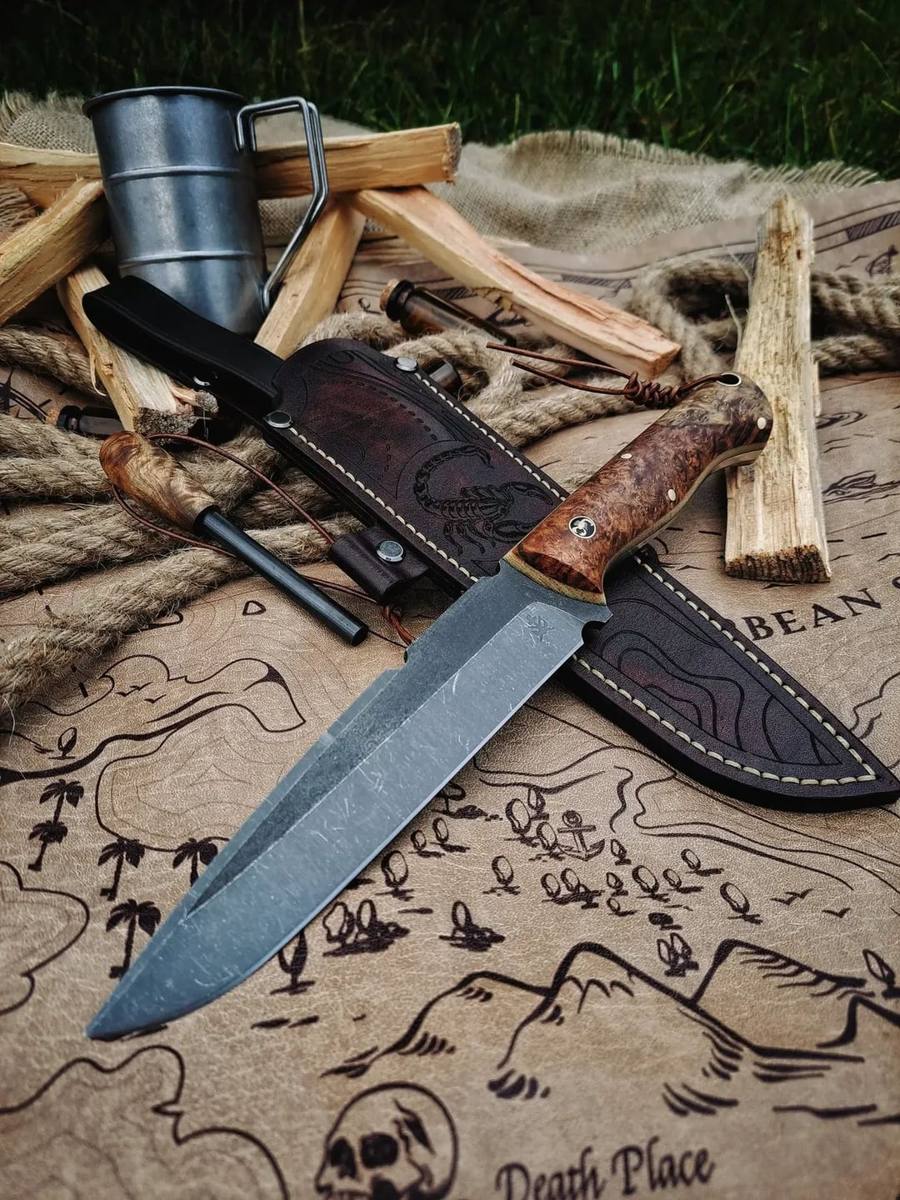
A folding knife is a convenience. A fixed-blade survival knife is a commitment. When you're miles from the truck and you need to baton firewood, build a shelter, or process game, there is no pivot, no lock bar, no spring to fail — just one solid piece of steel running from tip to pommel. That's the whole point.
This guide covers five fixed blades that have earned their reputations the hard way: through years of owner abuse documented in forums, long-term reviews, and professional use by military, bushcraft instructors, and backcountry guides. No sponsored placements, no untested hype. Every pick below is a current-production model you can buy today, evaluated on the specs that actually determine whether a knife survives contact with the real world.
What actually matters
Full tang, non-negotiable. The steel should run the full length and width of the handle in one piece. Partial tangs, rat-tail tangs, and hidden tangs have no business on a knife you're going to baton through hardwood. Every pick in this guide is full tang.
Blade steel is a trade-off. High-carbon steels like 1095 are tougher and easier to sharpen in the field, but they rust if you look at them wrong. Stainless steels like Sandvik 14C28N resist corrosion far better but can be more brittle and harder to touch up with a pocket stone. Budget stainless like 420HC sits in the middle — decent corrosion resistance, easy to sharpen, but it won't hold an edge as long. There is no perfect steel, only the right compromise for your environment. Wet climate? Lean stainless. Dry country and you don't mind oiling your blade? Carbon steel rewards you.
Blade length: 4.5 to 6.5 inches. Shorter than 4.5" and you lose chopping authority and batoning leverage. Longer than 6.5" and the knife gets unwieldy for fine work like feather sticks and food prep. The sweet spot for a do-everything survival blade is 5 to 6 inches.
Blade thickness: 3/16" to 1/4". Thinner blades slice better; thicker blades split wood better and shrug off lateral stress. For a survival knife, err thick — 3/16" (.188") is the practical minimum, and 1/4" is the "practically unbreakable" zone.
Grind matters more than most people think. A Scandi grind (single bevel, no secondary edge) bites into wood aggressively and is dead simple to sharpen — ideal for bushcraft. A flat grind slices more efficiently and is stronger behind the edge. A saber/hollow grind looks sleek but is weaker for hard use. For general survival work, flat or Scandi grinds win.
Handle and sheath. Micarta and G10 handle scales are the gold standard — grippy when wet, nearly indestructible, and they don't swell or crack. Rubberized handles are comfortable but can degrade over a decade. For sheaths, Kydex and molded polymer are the modern standard: they retain the knife securely, drain water, and survive abuse. Leather looks great and carries quietly but rots in wet environments. Bonus points for sheaths with multiple carry options (belt, MOLLE, scout carry) and ferro-rod loops.
Weight. A survival knife lives on your belt or pack. Anything under 12 ounces (knife only) is reasonable; over a pound and you'll feel it by mile six.
ESEE 6 — Best Overall Survival Knife
If you could only own one survival knife, this is the one the bushcraft and preparedness communities keep coming back to. The ESEE 6 has been in continuous production for well over a decade, and its reputation is built on an almost absurd warranty: break it, and ESEE replaces it. No receipt, no interrogation, no fine print about "normal use." That warranty exists because the knife almost never breaks.
The specs are exactly what a survival blade should be. The 6.5-inch drop-point blade is cut from 1095 carbon steel hardened to 55-57 HRC — tough enough to baton through hardwood without chipping, soft enough to touch up with a basic field stone. At .188" thick with a full flat grind, it balances slicing efficiency and splitting strength about as well as any production knife manages. Canvas Micarta handle scales provide a grip that only gets better when wet or bloody, and the molded polymer sheath carries securely with multiple mounting options.
Owner feedback is remarkably consistent across years of forum threads and long-term reviews: the ESEE 6 is the knife people reach for when they don't know what the day will demand. It chops adequately, carves well, batons confidently, and the edge is easy to maintain. The main criticisms are the ones inherent to the design — 1095 will rust if neglected, so it demands a wipe-down and occasional oiling, and at roughly 12 ounces it's not an ultralight backpacking blade. Neither is a surprise; both are the price of admission for a carbon-steel workhorse.
Made in the USA, widely available from knife retailers, and backed by the best warranty in the business. If the "buy once, cry once" philosophy appeals to you, start here.
Ka-Bar Becker BK2 Campanion — Toughest Blade for the Money
The BK2 is the knife equivalent of a sledgehammer that happens to have an edge. Designed by Ethan Becker and built by Ka-Bar in the USA, its defining feature is a 5.25-inch blade milled from 1095 Cro-Van steel at a full quarter-inch thick. That is an almost comical amount of steel for a blade this size, and it's the reason the BK2 has a cult following among people who treat their knives badly on purpose. Batoning, prying, chopping — tasks that would snap or bend lesser blades are the BK2's native habitat.
The 1095 Cro-Van formulation adds small amounts of chromium, vanadium, and nickel to standard 1095, which improves edge retention and toughness slightly over plain 1095. The blade wears a black epoxy powder coat that protects most of the surface from corrosion (the exposed edge still needs care). The handle is Ka-Bar's Grivory — a glass-filled nylon that's effectively indestructible and comfortable in extended use, removable if you ever want to swap to Micarta scales. It ships with a hard plastic sheath that's functional, if unglamorous.
The trade-off for all that toughness is weight and slicing performance. At around 16 ounces, the BK2 is the heaviest knife on this list, and a quarter-inch-thick blade will never slice like a thinner one. Owners consistently describe it as a "sharpened pry bar" — and they mean it as a compliment. If your survival philosophy is "the knife must survive me," nothing in this price range touches it. Street prices typically run well under the ESEE 6, making it arguably the best value in American-made survival knives.
Check current price: Ka-Bar Becker BK2 Campanion
Morakniv Garberg — Best Bushcraft and Stainless Pick
Not everyone wants to oil their blade after every trip. If you'd rather have a knife that shrugs off rain, humidity, and salt air, the Garberg is the answer — and it happens to be one of the best bushcraft knives ever made at any price.
The Garberg is Morakniv's full-tang flagship, and it represents a different design philosophy from the American survival knives above. The 4.3-inch blade is ground with a true Scandi grind — a single wide bevel with no secondary edge — which makes it an absolute wood-processing machine. Feather sticks, fuzz sticks, notches, and carving tasks feel effortless. More importantly, a Scandi grind is the easiest edge geometry in the world to maintain: lay the bevel flat on a stone and work it until it's sharp. No angle-guessing, no guided system required.
You get two steel choices, both excellent. The stainless version uses Sandvik 14C28N, a Swedish steel with genuinely impressive toughness for a stainless — it holds an edge well and laughs at corrosion. The carbon version uses a high-carbon steel that's tougher still and even easier to sharpen, for those who don't mind maintenance. Both come with Morakniv's Multi-Mount sheath system, which is one of the most versatile in the business — belt, MOLLE, and accessory mounting are all supported.
At around 9.6 ounces, it's the lightest knife here, and the sub-$150 street price makes it the value champion of this list. The only real limitation is size: 4.3 inches of blade won't chop or baton large wood like the bigger knives. Pair it with a folding saw or small axe and you have a backcountry cutting system that weighs less than a BK2 alone.
Check current price: Morakniv Garberg
Gerber StrongArm — Best Budget USA-Made Pick
Seventy-five dollars for a USA-made, full-tang survival knife with a MOLLE-compatible sheath sounds like a typo. It isn't. The Gerber StrongArm has been one of the best-selling fixed blades in America for years, and it's the easiest recommendation on this list for someone buying their first serious outdoor knife.
The 4.8-inch drop-point blade is 420HC stainless — not a super steel, but a sensible one. It resists rust well, sharpens easily on anything, and the black Cerakote finish adds another layer of protection. Gerber heat-treats its 420HC respectably, and owner reports consistently describe edge retention as "fine for the price" — you'll touch it up more often than the 1095 blades here, but you'll never fight it. The rubberized diamond-textured grip is genuinely excellent: secure in wet, cold, and gloved hands, with a strike pommel and lanyard hole at the rear.
The sheath is the StrongArm's party trick. It's a three-way system — vertical MOLLE mount, horizontal belt carry, or drop-leg — with snap-fit retention that owners describe as confidence-inspiring. Few sheaths at any price offer this much carry versatility.
The honest weaknesses: 420HC won't hold an edge like the premium steels here, and the blade stock is thinner than the true brutes on this list, so it's not the knife for aggressive batoning through knotty hardwood. But as a camp knife, truck knife, or first survival blade, it's absurdly good value. Buy it, beat on it, and you'll understand why it shows up in every "best budget" roundup year after year.
Check current price: Gerber StrongArm
TOPS Knives BOB Fieldcraft — Best Dedicated Bushcraft Knife
The BOB (Brothers of Bushcraft) Fieldcraft was designed with input from professional bushcraft instructors, and it shows in every detail. This is the knife for the person who has moved past "a big blade that can do everything" and wants a tool purpose-built for woodcraft.
The 4.625-inch blade is 1095 carbon steel at 3/16" thick with a Scandi grind — the classic bushcraft formula, executed by one of America's most respected hard-use knife makers. TOPS' 1095 heat treat has a strong reputation among people who actually test edge retention and toughness rather than just reading spec sheets. The canvas Micarta handles are contoured for long carving sessions without hot spots, and the 90-degree spine is ground sharp specifically for striking ferro rods — a detail many "survival" knives get wrong.
The Kydex sheath is excellent, with a built-in ferro rod loop and multiple carry configurations. TOPS includes a whistle and ferro rod with many configurations, which tells you exactly who this knife is for: the practitioner, not the collector.
The price is the obvious hurdle — typically over $200, it's the most expensive knife here. And like all 1095 blades, it demands maintenance. But owner reviews from the bushcraft community are about as close to unanimous as knife opinions get: if woodcraft is your primary use case, the BOB Fieldcraft is the production knife to beat.
Check current price: TOPS Knives BOB Fieldcraft
Comparison Table
| Knife | Blade Steel | Blade Length | Thickness | Weight (knife) | Sheath | Typical Price |
|---|---|---|---|---|---|---|
| ESEE 6 | 1095 carbon | 6.5" | .188" | ~12 oz | Molded polymer | ~$155 |
| Ka-Bar Becker BK2 Campanion | 1095 Cro-Van | 5.25" | .250" | ~16 oz | Hard plastic | ~$110–130 |
| Morakniv Garberg | 14C28N stainless / carbon | 4.3" | .128" | ~9.6 oz | Multi-Mount polymer | ~$100–135 |
| Gerber StrongArm | 420HC stainless | 4.8" | .190" | ~7.2 oz | MOLLE multi-mount | ~$75 |
| TOPS BOB Fieldcraft | 1095 carbon | 4.625" | .188" | ~10.4 oz | Kydex w/ ferro loop | ~$200–230 |
Prices fluctuate by retailer and configuration. Verify current pricing before buying.
Frequently Asked Questions
What's the best blade steel for a survival knife? There isn't one — there's the best steel for your environment and maintenance habits. 1095 carbon steel is tougher and easier to field-sharpen but rusts if neglected. Stainless steels like Sandvik 14C28N resist corrosion far better with a small toughness penalty. For most people in most climates, either works; the bigger factor is whether you'll actually maintain the blade.
How long should a survival knife blade be? Five to six inches is the sweet spot for a primary survival blade. Shorter blades (4–4.5") excel at carving and detail work but lack chopping power. Longer blades (7"+) chop well but get clumsy for fine tasks. If you carry a saw or hatchet too, a shorter blade makes more sense.
Carbon steel vs. stainless — which wins? Carbon steel wins on toughness and ease of sharpening; stainless wins on corrosion resistance and low maintenance. In wet, humid, or saltwater environments, stainless is the smarter choice. In dry climates, or if you don't mind wiping down and oiling your blade, carbon steel's performance edge is real.
Can I baton wood with these knives? Yes — all five picks are full tang and thick enough for batoning, which is splitting wood by driving the blade through a log with a baton (stick) struck against the spine. The BK2 and ESEE 6 are the best batoners here thanks to their length and thickness. Avoid batoning with twisting or prying motions, which stress any blade laterally.
Do I need a ferro rod loop on the sheath? It's a genuinely useful feature, not a gimmick. A ferro rod paired with a 90-degree spine gives you thousands of fire-starting strikes with no fuel to run out. The TOPS BOB Fieldcraft and Morakniv Garberg both accommodate ferro rods well.
How do I keep 1095 carbon steel from rusting? Wipe the blade dry after use, apply a thin coat of mineral oil (food-safe, so it won't contaminate game or food prep), and store the knife dry — not in a leather sheath long-term, since leather traps moisture. Surface discoloration (patina) is normal and harmless; orange rust is not.
The Bottom Line
Buy the ESEE 6 if you want the single most proven do-everything survival knife with a warranty that borders on reckless. Buy the Ka-Bar Becker BK2 if maximum toughness per dollar is the mission. Buy the Morakniv Garberg if you want stainless, low-maintenance bushcraft excellence. Buy the Gerber StrongArm if you want 90% of the capability for under $80. And buy the TOPS BOB Fieldcraft if woodcraft is the job and you want the tool built specifically for it. Any of the five will outlive you if you treat it halfway right.