Best Red Dot Sight for Beginners (2026 Buyer's Guide)
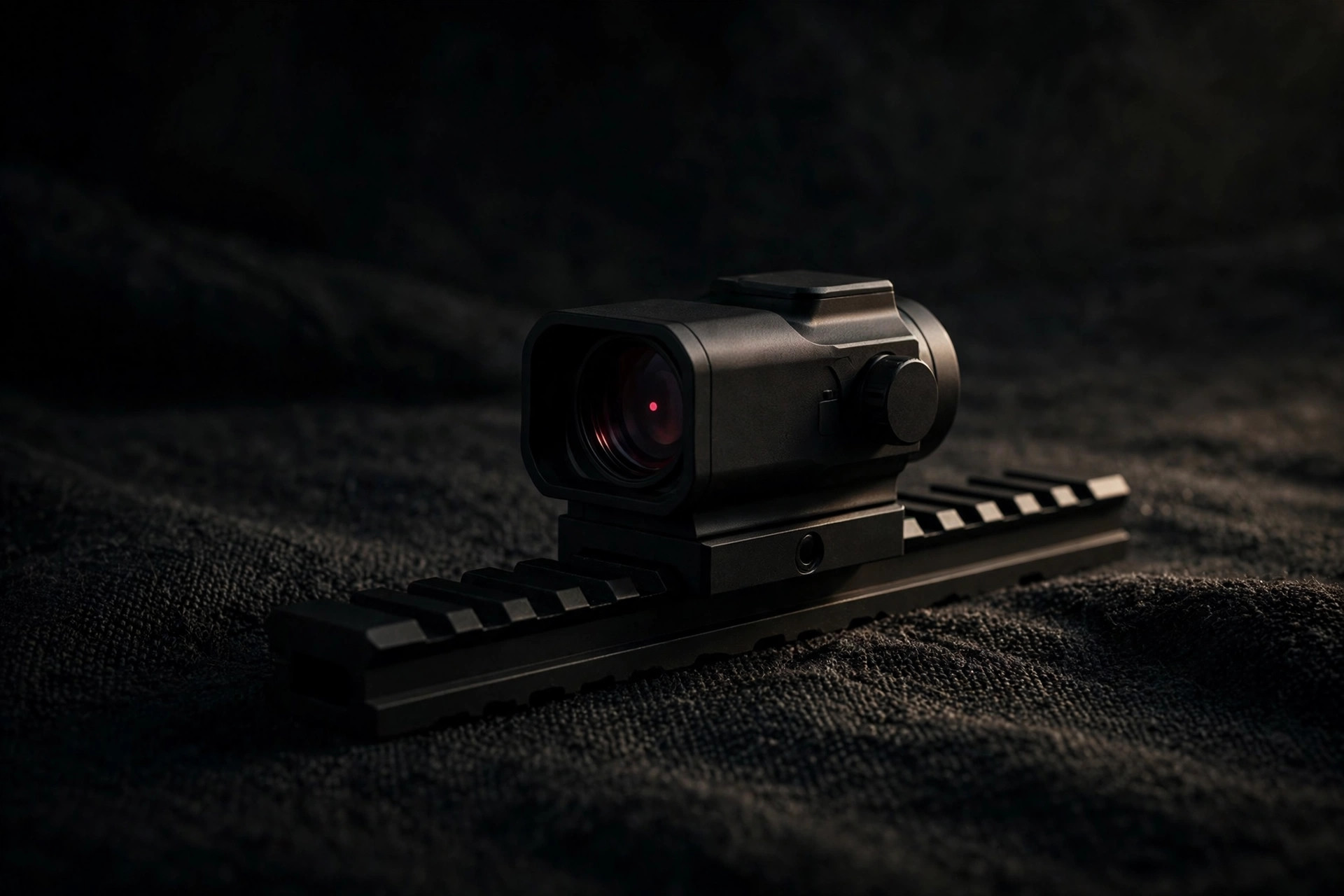
A red dot sight is the single biggest accuracy upgrade a new shooter can buy. Iron sights demand you align three things at once; a red dot asks you to put the dot on the target and press the trigger. The learning curve collapses, and so do your groups.
This guide is built from manufacturer spec sheets, owner reviews, and reviewer consensus — not from whichever brand cut a sponsorship deal. We haven't personally handled every optic on this list, and we won't pretend otherwise. What we've done is the research legwork: cross-referencing published specs against what owners actually report after thousands of rounds.
What Actually Matters in a Red Dot Sight
Dot size (MOA). A smaller dot (2 MOA) covers less of the target at distance — better for precision. A larger dot (6 MOA) is faster to pick up up close, which is why compact pistol dots trend bigger. For a first optic on a rifle or carbine, 2 MOA is the versatile default.
Battery life and power management. Published battery life is measured at a mid brightness setting, so treat it as a best case. Motion-activated wake (Holosun's Shake Awake, Sig's MOTAC) matters more than the raw hour count — it means the optic is on when you grab the gun and sipping power when you don't.
Durability and waterproofing. Look for a 7075-T6 aluminum housing and a real IP rating (IP67 means dust-tight and submersible to 1 meter). A red dot lives a rough life — recoil, rain, being knocked around in a safe. Owner reports of holding zero after drops matter more than marketing adjectives.
Mounting footprint. Pistol dots use specific footprints (RMR, Holosun K, RMSc) — the optic must match your slide's cut or an adapter plate. Rifle dots typically clamp straight to a Picatinny rail. Buy the wrong footprint and you're shopping for adapter plates.
Brightness settings and night vision. Count the daylight settings (more is better for bright sun) and check whether night-vision-compatible settings are included if you ever plan to run NODs. For most beginners, 8–10 daylight settings is plenty.
Reticle options. A simple dot is fastest to learn. Multi-reticle systems (Holosun's MRS) let you switch between a dot, a circle, or a circle-dot — the circle helps new shooters find the dot faster and gives a rough holdover reference.
Holosun HS507C X2
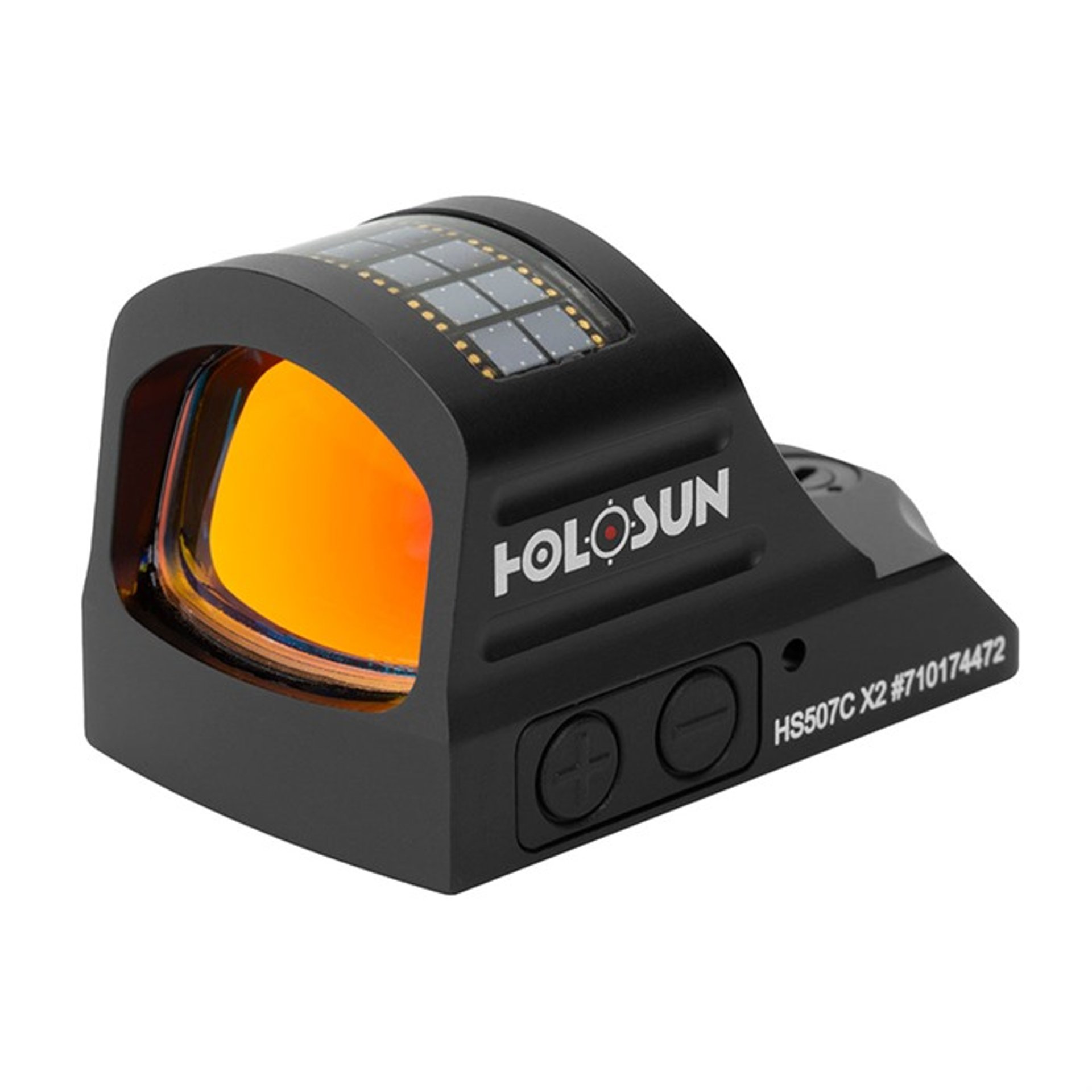
The HS507C X2 is the optic that made "just buy a Holosun" the default advice for first-time red dot buyers. Its multi-reticle system gives you a 2 MOA dot, a 32 MOA circle, or both combined — beginners consistently report the circle-dot mode is the fastest way to learn dot acquisition, because the big circle catches your eye even when your presentation is sloppy.
The spec sheet reads like optics costing twice as much: 50,000 hours of battery life at setting 6 on a side-loading CR1632 (no re-zeroing to change the battery), 12 brightness settings with 2 night-vision compatible, Shake Awake motion activation, and Solar Failsafe backup power. The housing is 7075-T6 aluminum, IP67 rated, and it rides the industry-standard RMR footprint, so mounts and adapter plates are everywhere.
Honest tradeoffs: the window (0.91" × 0.63") is on the smaller side compared to open-emitter rifle dots, and Holosun's warranty terms aren't published on their own site — owner reports on warranty service are positive, but it's not the unconditional lifetime promise some competitors make. At 1.5 ounces it's light enough for a pistol but most at home on a carbine or a full-size pistol slide.
Best for: first-time buyers who want one optic that does everything well — the safest recommendation on this list.
Check current price: Holosun HS507C X2
Sig Sauer Romeo5
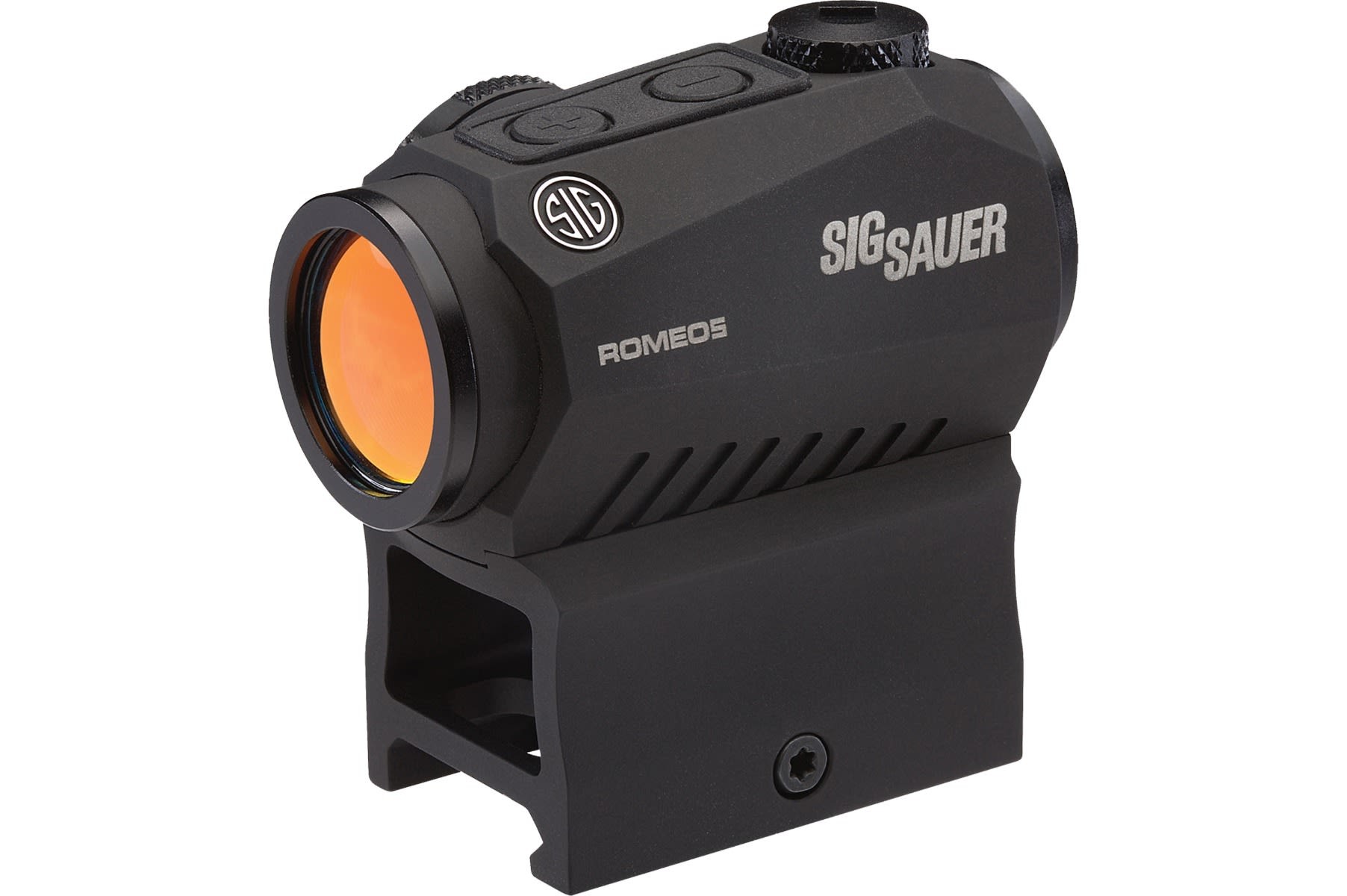
The Romeo5 is the value king that refuses to die. A 2 MOA red dot with 40,000+ hours of battery life on a CR2032, 10 brightness settings (8 daylight, 2 night vision), and Sig's MOTAC motion-activation — at a street price that routinely lands well under the competition. It's the optic reviewers recommend when someone asks "what's the cheapest red dot that isn't junk."
The classic retail bundle (SOR52001) ships with both a low mount and a 1.41" riser, so it co-witnesses correctly on an AR out of the box. It's IPX-7 waterproof and fog-proof, and the side-loading battery tray means no re-zero on changes. The manual specifies Sig's 5-year electronic and tritium limited warranty.
Tradeoffs: the housing material isn't specified on Sig's own page, the adjustment click values aren't published there either (retailers list 1/2 MOA), and at 5.1 ounces with the riser it's heavier than the Holosun pistol dots. The glass and emitter are a clear step behind the 507C in bright sunlight. But as a first rifle optic, the value math is brutal — it does 90% of the job for roughly half the money.
Best for: beginners who want a proven, no-regrets first rifle optic at the lowest serious price.
Check current price: Sig Sauer Romeo5
Holosun HS407K X2
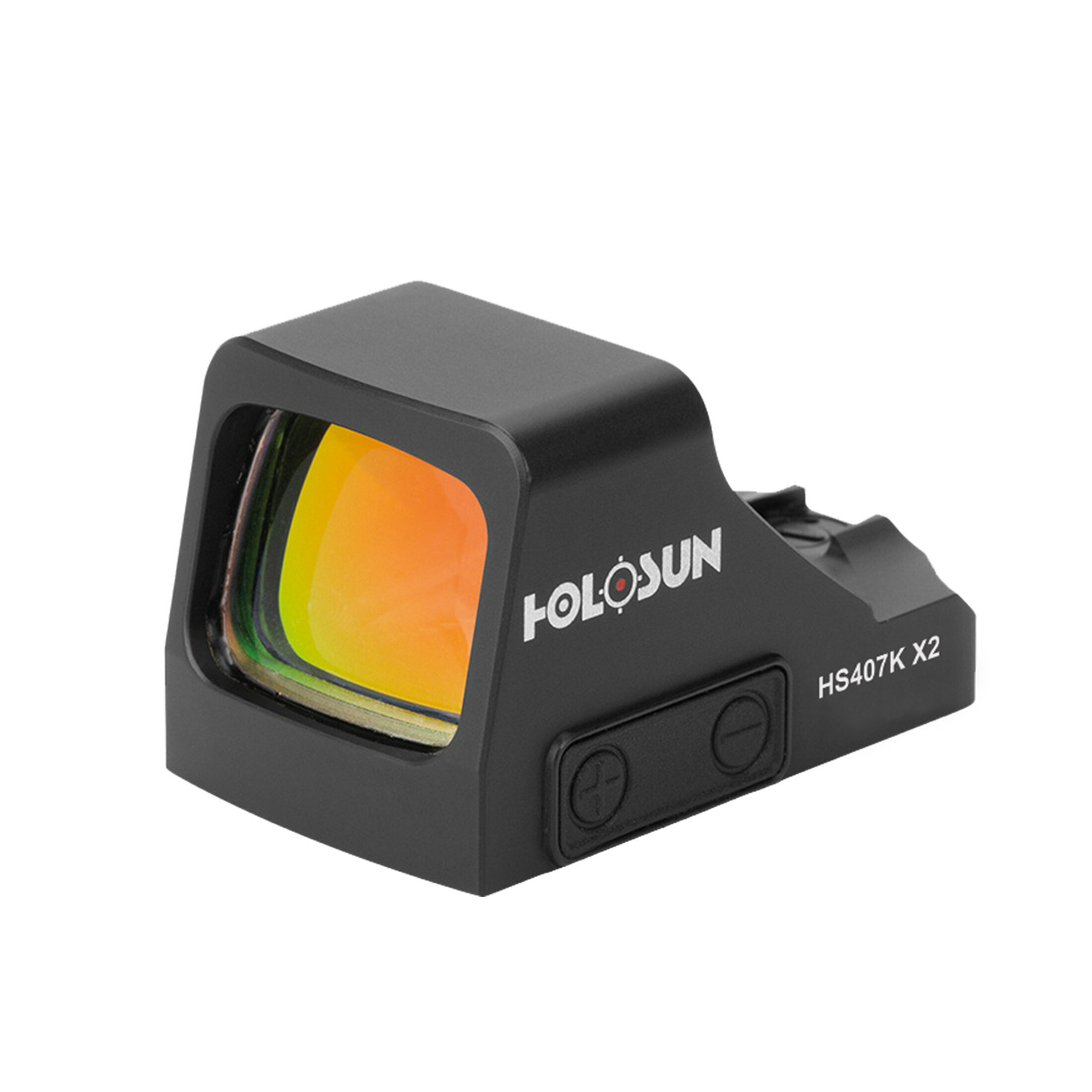
If your first red dot is going on a pistol, this is the one. The 407K X2 is built for subcompact optics-ready slides (P365X/XL pattern guns) on Holosun's K footprint — at 1.0 ounce and just 1.6" long, it disappears on a carry gun where a full-size dot would hang over the edges.
You get a 6 MOA dot (faster to pick up than 2 MOA in a defensive context), the same 50,000-hour battery life at setting 6 on a side-loading CR1632, 12 brightness settings with 2 night-vision, Shake Awake, and a 7075-T6 aluminum housing rated IP67. Note it does not have the solar failsafe of its bigger siblings — on a carry gun that's a non-issue, since Shake Awake keeps it ready.
The tradeoffs: the 0.58" × 0.77" window is small, which makes dot acquisition harder for brand-new shooters (experienced carriers don't mind), and the K footprint limits it to pistols — it won't mount to a rifle rail without an adapter. One more note for the careful shopper: Holosun's own page title says "2 MOA" but every spec field on the page says 6 MOA — it's a 6 MOA dot, confirmed across the manual and every retailer.
Best for: a first pistol dot on a subcompact or micro-compact carry gun.
Check current price: Holosun HS407K X2
Vortex Crossfire Red Dot
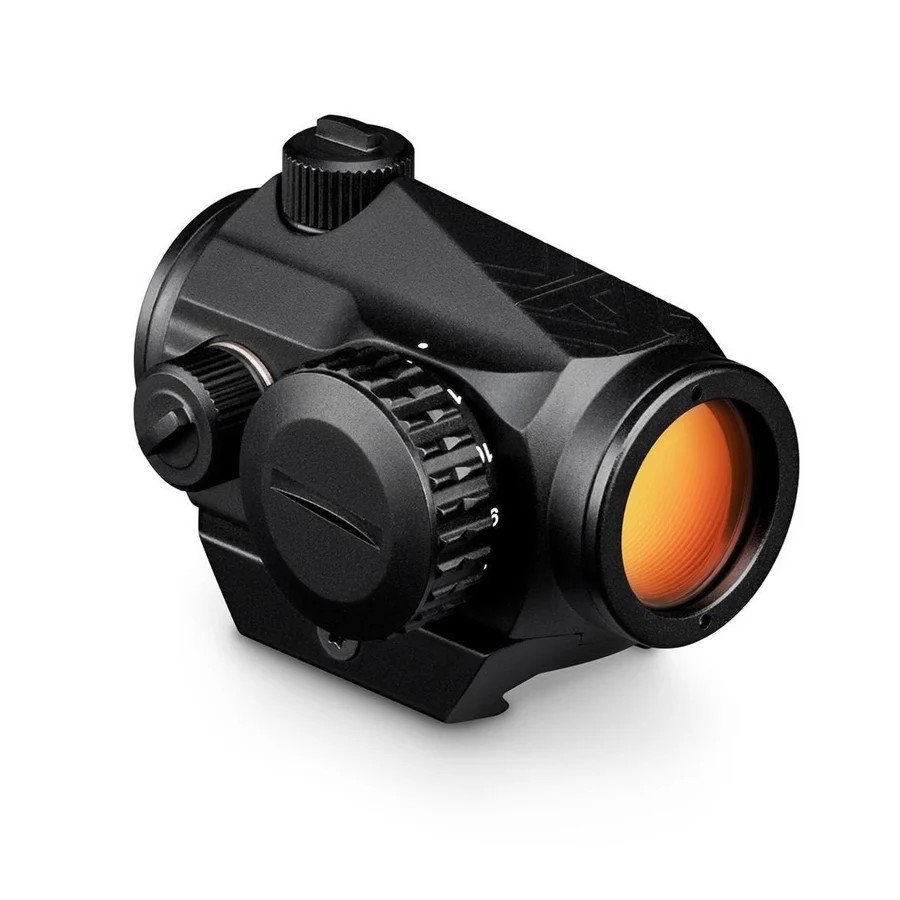
The Crossfire is the budget pick with the best warranty in the business: Vortex's unconditional lifetime VIP warranty covers it no matter what happens — run over, dropped off a stand, handed down to your kids. For a beginner who worries about breaking an expensive optic while learning, that promise has real value.
The version most retailers (and the Amazon listing) actually sell is the Gen II (CF-RD2): a 2 MOA dot with a widely reported 50,000-hour battery life, 11 brightness settings (9 daylight + 2 night vision), 1 MOA clicks, and a skeletonized mount included in the box. One honest flag: Vortex's current official page lists a revised CF-RD1 with a 7,000-hour battery rating and a $219.99 MSRP — specs differ from the Gen II most stores stock, so confirm which version you're buying.
Tradeoffs: it's the heaviest here at 5.2 ounces, the glass has more tint than the Holosun and Sig options, and the official spec page is thinner on details (housing material and waterproof rating aren't stated there). But the warranty means you'll never be stuck with a dead optic, and as a learning tool it's completely serviceable.
Best for: beginners who want the cheapest serious optic backed by a warranty that can't be voided.
Check current price: Vortex Crossfire Red Dot
Holosun HE510C-GR
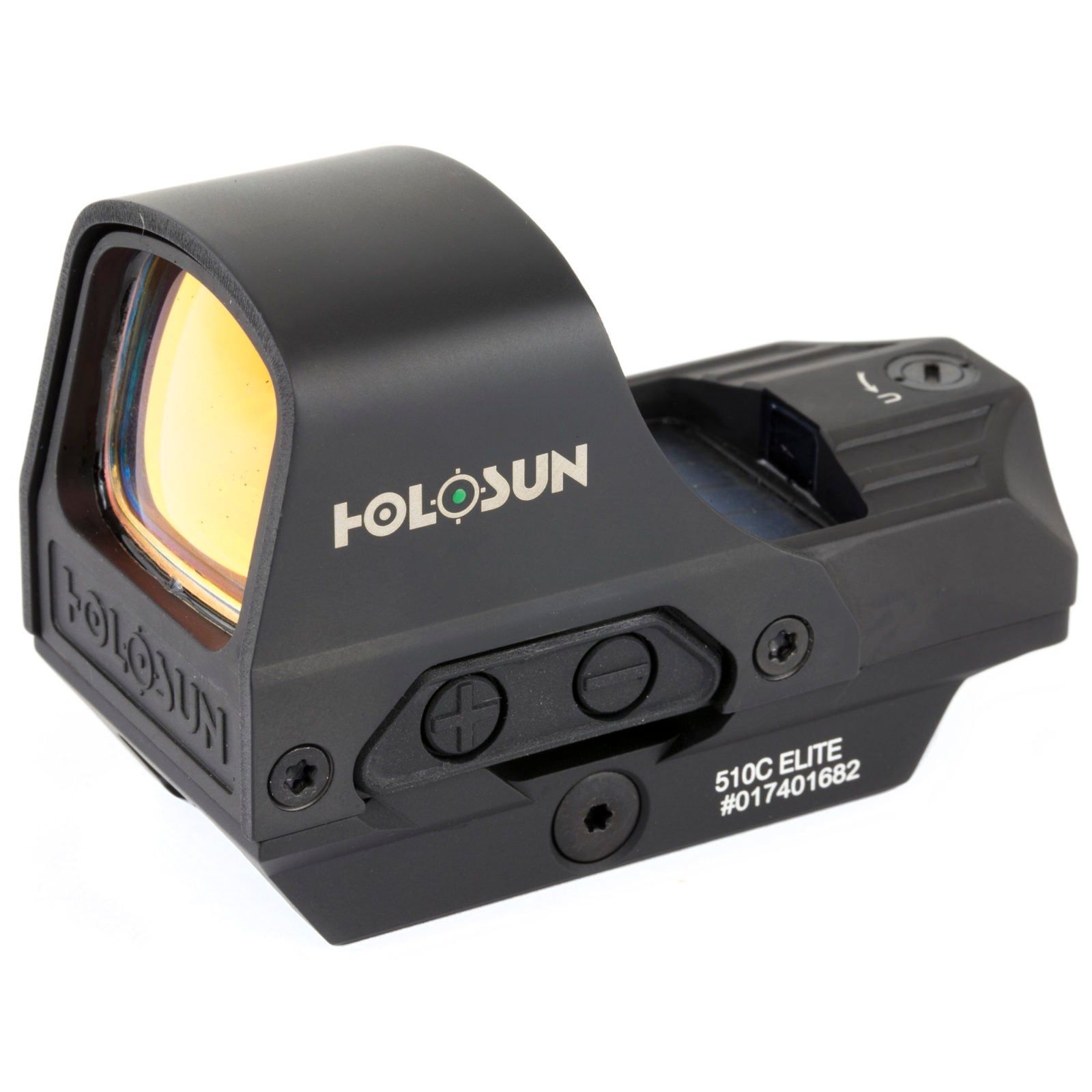
The step-up pick for shooters who know they'll stick with the platform. The 510C is an open-emitter rifle sight with a big 0.91" × 1.26" window — meaningfully easier to shoot with both eyes open than the tube-style dots — and this GR variant runs a green reticle, which many shooters with astigmatism report seeing more crisply than red.
The green multi-reticle system offers a 2 MOA dot, a 65 MOA circle, or both. You get the full Holosun feature set: 50,000 hours at setting 6 on a side-loading CR2032, 12 brightness settings with 2 night-vision, Shake Awake, and Solar Failsafe. The housing pairs aluminum with a titanium protective hood, it's IP67 rated, and it ships on a quick-detach absolute co-witness mount. Adjustment is a fine 0.5 MOA per click.
The price is the obvious objection — it's roughly double the Romeo5. At 4.94 ounces it's also not light, and the open emitter (like all open designs) can collect rain or dust on the lens in bad weather. But for a rifle optic you buy once and never think about again, the big window and green reticle are genuine upgrades.
Best for: shooters ready to buy their "forever" rifle optic — especially anyone whose eyes prefer green.
Check current price: Holosun HE510C-GR
Comparison Table
| Optic | Reticle | Battery Life | Brightness | Weight | Waterproof | Mount | Best For |
|---|---|---|---|---|---|---|---|
| Holosun HS507C X2 | 2 MOA dot / 32 MOA circle (red) | 50,000 hrs (CR1632) | 10 day + 2 NV | 1.5 oz | IP67 | RMR footprint | Best overall |
| Sig Sauer Romeo5 | 2 MOA dot (red) | 40,000+ hrs (CR2032) | 8 day + 2 NV | 5.1 oz | IPX-7 | Picatinny | Best value |
| Holosun HS407K X2 | 6 MOA dot (red) | 50,000 hrs (CR1632) | 10 day + 2 NV | 1.0 oz | IP67 | Holosun K | Pistol carry |
| Vortex Crossfire | 2 MOA dot (red) | 50,000 hrs Gen II (CR2032) | 9 day + 2 NV (Gen II) | 5.2 oz | Retailer-listed | Picatinny | Best budget + warranty |
| Holosun HE510C-GR | 2 MOA dot / 65 MOA circle (green) | 50,000 hrs (CR2032) | 10 day + 2 NV | 4.94 oz | IP67 | QD Picatinny | Premium rifle optic |
Frequently Asked Questions
What does MOA mean on a red dot? Minutes of angle — roughly 1 inch at 100 yards. A 2 MOA dot covers about 2 inches of target at 100 yards; a 6 MOA dot covers 6 inches. Smaller dots are more precise at distance; bigger dots are faster to find up close.
Red or green reticle? Red is the standard and works for most eyes in most light. Green appears brighter to the human eye at the same power and many shooters with astigmatism report it looks crisper with less starburst. If your red dots look blurry, try green before assuming the optic is bad.
Can I put a rifle red dot on a pistol? Physically sometimes, practically no. Rifle dots use Picatinny mounts; pistol slides use specific footprints (RMR, Holosun K, RMSc). The HS407K X2 on this list is the pistol answer. Adapters exist but add height and failure points.
How long do the batteries really last? Published figures are at medium brightness with the dot on continuously. With motion-activation (Shake Awake/MOTAC), real-world life is typically measured in years — owners commonly report 2+ years on one battery. Change it annually on your birthday and never think about it.
What is co-witnessing? Aligning your iron sights to be visible through the red dot's window, so if the electronics die you still have sights. Absolute co-witness puts the dot right on the iron sight line; lower 1/3 puts the irons in the bottom third of the window. The Romeo5's included riser and the 510C's QD mount both give absolute co-witness on an AR.
My dot looks like a starburst, not a dot. Is it broken? Probably not — that's astigmatism, and it's extremely common. Try a green reticle, turn the brightness down (too-bright dots bloom for everyone), or look through the optic at a target rather than a white wall. If it's crisp through your phone camera but blurry to your eye, it's your eyes, not the optic.
The Bottom Line
For most beginners, the Holosun HS507C X2 is the right answer — the multi-reticle system shortens the learning curve, the battery life is measured in years, and the RMR footprint keeps your mounting options open. If the budget is tight, the Sig Sauer Romeo5 does the job for roughly half the money. Pistol carriers should get the Holosun HS407K X2 instead — footprint matters more than features on a slide. And if you want the unconditional lifetime warranty above all else, the Vortex Crossfire has you covered. Match the optic to the gun it's going on first; everything else is secondary.
Get the next guide first
One email a week: new buying guides and gear deals worth knowing about. No spam, unsubscribe anytime.
We use your email only for the newsletter. See the privacy policy.
Related guides
Watch on YouTube — Forge Tested
Prefer video? The Forge Tested channel turns these guides into no-fluff video breakdowns.