The 5 Best Rugged Smartphones (2026 Buyer's Guide)
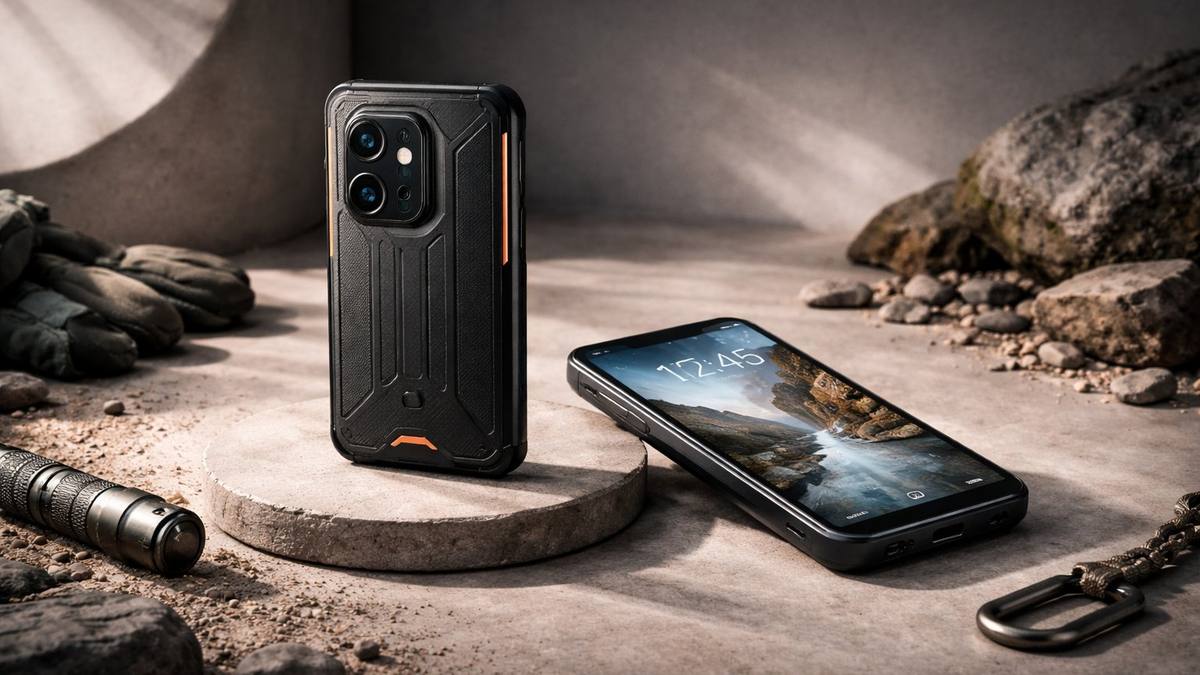
A regular flagship in a case is a compromise. The case adds bulk without adding sealing, the screen still cracks if it lands wrong, and one dunk in a river ends the experiment. A real rugged phone is engineered differently from the circuit board up: sealed ports, reinforced frames, batteries sized for days instead of hours, and certifications that actually mean something.
This guide is research-based, not sponsored. Specs come from manufacturer data sheets and certification listings; the practical framing — what survives a job site, a trail, or a boat deck — comes from long-term owner reports and repair-tech write-ups. Every pick below is a current-generation model, released in 2024 or 2025 and still sold at major retailers. Nobody paid for placement.
The rugged market splits into two camps: mainstream brands with a tough model (Samsung's XCover line) and specialist makers (Ulefone, Blackview, Doogee) that build nothing but bricks. Both have real strengths. Here's how to pick.
What Actually Matters: The Specs Worth Reading
Rugged marketing is full of dramatic drop-test videos. The certifications tell you more than the stunts.
MIL-STD-810H
This is the US military's environmental testing standard. A phone "tested to MIL-STD-810H" has survived lab procedures for drops, vibration, humidity, temperature extremes, and dust ingress. Note the weasel words: "tested to" means it was subjected to the tests, not necessarily that it passed every one. Still, it's the most meaningful durability claim in the industry — far more useful than "military-grade" with no standard attached.
IP68 vs IP69K
IP68 means dust-tight and submersible (typically 1.5m for 30 minutes, check the fine print). IP69K adds resistance to high-pressure, high-temperature water jets — relevant if you pressure-wash equipment or work around industrial spray. For most people IP68 is plenty; IP69K is a bonus, not a requirement.
Battery Capacity
This is where rugged phones embarrass flagships. 5,000 mAh is the floor; the serious bricks run 10,000–22,000 mAh. A 15,000 mAh battery means three to four days of real use, or a full day as a hotspot and GPS without anxiety. The tradeoff is weight and thickness — physics doesn't negotiate.
The Rest of the Checklist
- Screen: look for Gorilla Glass (Victus or newer) and usable brightness outdoors. Glove mode / wet-touch mode matters if you work with your hands.
- Extras: some rugged phones add thermal cameras, night vision, laser rangefinders, or walkie-talkie (PTT) buttons. Genuinely useful in trades — gimmicks everywhere else.
- Software support: the Achilles' heel of specialist brands. Check promised Android updates before buying; two years of security patches is the minimum you should accept.
The Picks
Samsung Galaxy XCover7 Pro (2025) — Best Mainstream-Brand Option
If you want rugged hardware with Samsung's software support and enterprise ecosystem, this is the only real choice. The XCover7 Pro (released 2025) carries IP68 and MIL-STD-810H ratings, a removable 4,350 mAh battery (increasingly rare and genuinely practical — carry a spare), and Samsung Knox security.
Where it wins is longevity: Samsung promises extended OS and security updates far beyond what any specialist brand offers, and replacement parts and accessories are easy to find. Owners consistently report it as the rugged phone that feels most like a "normal" phone — the 6.6-inch 120Hz display, stereo speakers, and camera are all a class above the typical brick.
The tradeoff is toughness ceiling. It's rugged, not indestructible — the removable back and lighter build mean it won't shrug off abuse the way a 450-gram specialist brick will. Battery life is a day and a half at best, not three days. If your phone lives in a chest pocket on a tractor, this is ideal. If it gets thrown across a workshop, look at the Ulefone picks below.
Check current price: Samsung Galaxy XCover7 Pro
Ulefone Armor 28 Ultra (2025) — Best Flagship-Tier Rugged Phone
The Armor 28 Ultra (released March 2025) is what happens when a specialist rugged maker stops compromising: a MediaTek Dimensity 9300+ flagship chipset, 16GB RAM, 1TB storage, a 6.67-inch 120Hz AMOLED display with 2,200-nit peak brightness, and a 10,600 mAh battery with 120W fast charging — all wrapped in IP68/IP69K sealing and MIL-STD-810H compliance.
The camera system is the best in the rugged category: a 50MP main sensor, a 64MP infrared night-vision camera, and a 50MP ultrawide, with 8K video. Owners upgrading from older bricks consistently report the least "downgrade shock" here — the screen and performance feel like a 2025 flagship that happens to survive drops. There's even a 1-inch rear AMOLED mini-display for notifications and a thermal-imaging variant for trades work.
Weaknesses: at 450 grams it's still a brick, and Ulefone's software update record is thin — it ships with Android 14/15 and you shouldn't count on much beyond that. It's also priced like a flagship. But if you want maximum phone with maximum armor, nothing else in 2026 touches it.
Check current price: Ulefone Armor 28 Ultra
Ulefone Armor 29 (2025) — Best Battery Life
When Ulefone showcased the Armor 29 series at CES 2025, the headline number was absurd: a 21,200 mAh battery. That's roughly four times a flagship phone. Owners report five to seven days of normal use between charges, and it doubles as a power bank for your other gear via reverse charging. If your use case is multi-day backcountry trips, remote work sites, or disaster response, nothing else in this price range touches it.
Beyond the battery you get IP68/IP69K, MIL-STD-810H, Android 15, and the series' signature versatile LED/warning-light array — genuinely useful as a work light, not a gimmick. The Armor 29 Pro variant runs a Dimensity 7300 chipset that handles daily tasks without complaint.
The cost is bulk: this is a two-handed device pushing past 500 grams that needs a belt holster, not a pocket. And like all specialist brands, software support is minimal — buy it for the battery and the armor, not for long-term updates. For pure endurance, though, it's in a class of one.
Check current price: Ulefone Armor 29
Blackview BV9300 Pro (2024) — Best Value Brick
Blackview owns the budget end of the rugged market, and the BV9300 Pro (released January 2024) is the sweet spot: IP68/IP69K, MIL-STD-810H, a 15,080 mAh battery, a 6.7-inch 120Hz display, and a 64MP Samsung main camera — usually at a price that undercuts everything else here by a wide margin.
The clever bits: a dual-LED 100-lumen flashlight that owners consistently praise as genuinely useful on job sites and campsites, and a 1.3-inch rear mini-display for notifications, compass, and music control. The Helio G99 chipset with 12GB RAM handles daily tasks without complaint, and 33W charging refills the giant battery in about two and a half hours.
Weaknesses mirror the category: it's 525 grams, low-light photography is mediocre, and Blackview's update policy is essentially "what you buy is what you get" (Android 13 out of the box). Build quality reports are generally positive but with more variance than Samsung — buy from a retailer with a solid return policy.
Check current price: Blackview BV9300 Pro
Samsung Galaxy XCover7 (2024) — Best Budget Mainstream Rugged
The standard XCover7 (released 2024) is the XCover7 Pro's sensible sibling: IP68, MIL-STD-810H, a removable 4,050 mAh battery, Samsung Knox, and Samsung's multi-year update commitment — at a notably lower price than the Pro.
You give up the 120Hz display and some camera quality versus the Pro, and the Dimensity 6100+ chipset is strictly midrange. But the core proposition is intact: a genuinely rugged phone from a brand that will still be patching it in three years, with parts and accessories you can actually find. Owners in field service, delivery, and warehouse work consistently rate it as the best "just works" rugged phone for the money.
If your budget doesn't stretch to the Pro and you don't need a week-long battery, this is the rational buy in the entire category.
Check current price: Samsung Galaxy XCover7
Comparison Table
| Phone | Released | Battery | Ratings | Weight | Standout Feature |
|---|---|---|---|---|---|
| Samsung Galaxy XCover7 Pro | 2025 | 4,350 mAh (removable) | IP68, MIL-STD-810H | ~240 g | Best software support |
| Ulefone Armor 28 Ultra | 2025 | 10,600 mAh | IP68/IP69K, MIL-STD-810H | ~450 g | Flagship chipset + AMOLED |
| Ulefone Armor 29 | 2025 | 21,200 mAh | IP68/IP69K, MIL-STD-810H | ~500 g+ | Week-long battery |
| Blackview BV9300 Pro | 2024 | 15,080 mAh | IP68/IP69K, MIL-STD-810H | ~525 g | 100-lumen flashlight, value |
| Samsung Galaxy XCover7 | 2024 | 4,050 mAh (removable) | IP68, MIL-STD-810H | ~240 g | Budget mainstream pick |
FAQs
Do I need a rugged phone if I already use a heavy-duty case? A good case protects against drops, but it doesn't seal ports against dust and water, and it can't fix a phone whose battery dies by dinner. If your environment involves water, fine dust (concrete, sawdust, grain), or multi-day stretches from a charger, a purpose-built rugged phone is meaningfully better than a cased flagship.
What does MIL-STD-810H actually guarantee? It guarantees the phone was subjected to a battery of lab tests (drop, shock, vibration, temperature, humidity). It doesn't guarantee it passed all of them, and lab conditions aren't a job site. Treat it as a strong signal of engineering intent, not a warranty against physics.
Are the cameras on rugged phones any good? Midrange at best, with one exception: the Ulefone Armor 28 Ultra's 50MP main + night vision setup is genuinely good. Everything else here is decent in daylight and mediocre in low light. If photography is the priority, the Samsung XCover models have the most reliable image processing of the bunch.
How long will these phones get software updates? Samsung is the clear winner with multi-year OS and security commitments on both XCover models. The specialist brands (Ulefone, Blackview) typically ship one Android version and minimal updates — factor that into the price.
Can I use these phones on any carrier? Most unlocked rugged phones support the major GSM/LTE/5G bands, but always check the specific model's band list against your carrier before buying — especially for Verizon, which is pickiest about certification.
Why isn't CAT on this list anymore? Bullitt Group, the company behind CAT-branded phones, shut down in early 2024. The CAT S75 and its siblings are discontinued with no software support — we don't recommend buying a phone from a dead company, no matter how good the hardware was.
The Bottom Line
Buy the Samsung Galaxy XCover7 Pro if you want ruggedness with proper software support and the least compromise in daily use. Buy the Ulefone Armor 28 Ultra if you want flagship performance in an armored shell. Buy the Ulefone Armor 29 if battery life is the entire point — nothing else lasts a work week. The Blackview BV9300 Pro is the value play: enormous battery and real armor for hundreds less. And the Galaxy XCover7 is the smart budget buy from a brand that'll still support it in three years.