Best Rugged Smartwatch for Men (2026 Buyer's Guide)
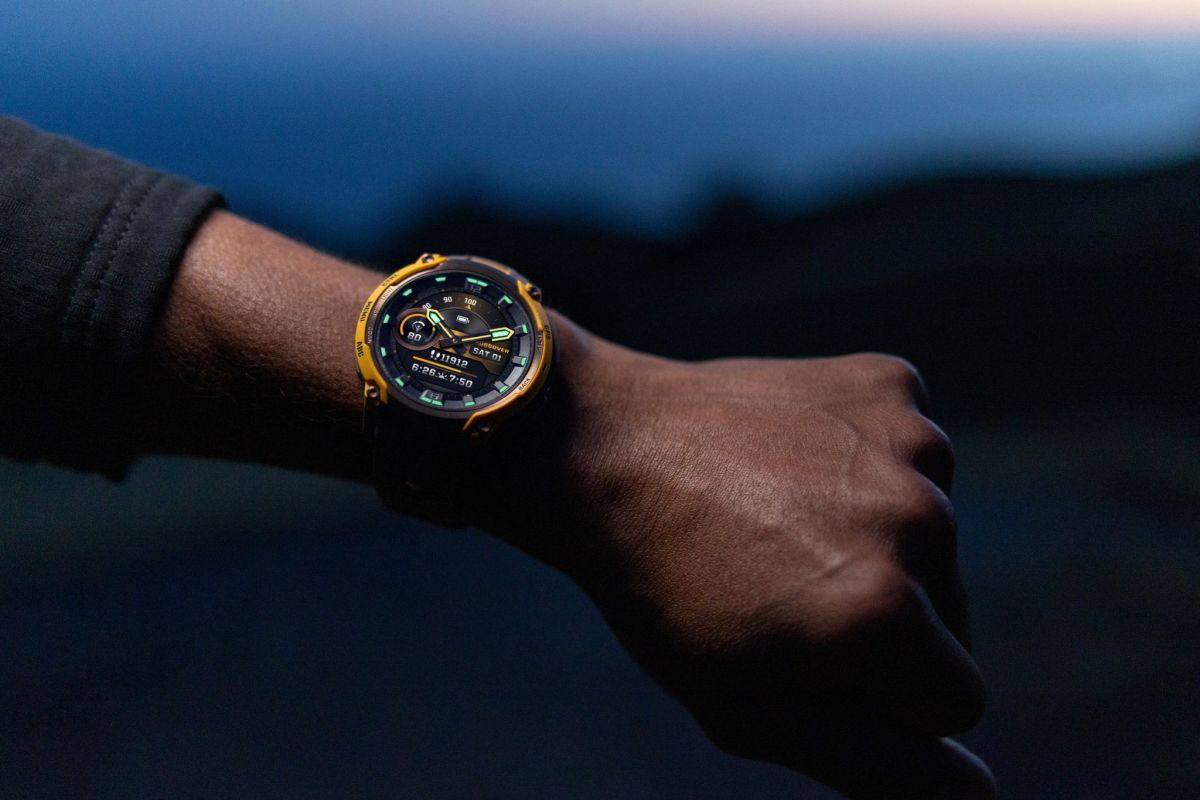
A smartwatch that dies on day two of a camping trip is a bracelet. A rugged smartwatch that runs for weeks, shrugs off rocks and water, and still navigates you home is a tool. The difference is in the specs most reviews gloss over.
This guide is research-based, not sponsored. Rankings come from manufacturer spec sheets, owner reviews across major retailers, and expert roundups. Nobody sent us free watches and nobody paid for placement. Here's what the data says actually matters, and which watches earn a place on your wrist.
What Actually Matters in a Rugged Smartwatch
Battery life in real modes. Manufacturers quote best-case numbers. What matters is battery life with GPS actually running and the screen at readable brightness. A watch rated for "30 days" might do 40 hours of continuous GPS tracking — fine for daily wear, useless for a long backpacking trip. Check the GPS-on figure, not the headline.
Durability ratings. MIL-STD-810 is the military durability standard — thermal shock, vibration, drop, humidity. It's meaningful but self-certified by manufacturers, so treat it as a baseline, not a guarantee. Water ratings matter more day-to-day: 10 ATM (100 meters) means genuine swim, surf, and snorkel capability; 5 ATM is fine for swimming but not high-impact water sports.
GPS accuracy. Dual-band (multi-GNSS) GPS — receiving multiple satellite frequencies — is the single biggest accuracy upgrade in recent years, especially in canyons, dense forest, and cities. Single-band GPS wanders; dual-band holds a line. If you navigate off-trail, this is non-negotiable.
Display readability outdoors. AMOLED screens are gorgeous indoors and readable in sunlight at high brightness — at the cost of battery. Memory-in-pixel (MIP) transflective displays look dated but are readable in direct sun with minimal power draw. For a rugged watch, sunlight readability beats showroom beauty.
Ecosystem and app support. A watch is only as good as its software three years from now. Garmin, Apple, and Casio all have long support track records. Budget brands can be excellent hardware with an expiration date on software updates — factor that in.
The Picks
Garmin Instinct 2
Why it wins overall. The Instinct 2 is the watch the entire rugged category gets measured against. Fiber-reinforced polymer case, MIL-STD-810 rated, 10 ATM water resistance, and battery life that embarrasses everything else: up to 28 days in smartwatch mode, 30 hours of continuous GPS — and the Solar edition extends both significantly in sunny conditions. Owners consistently report the battery claims holding up in real use, which is rare enough to be remarkable.
The monochrome MIP display won't win beauty contests, but it's readable in direct desert sun with the backlight off, and it's a big part of why the battery lasts so long. Multi-GNSS support, TracBack routing to get you home, and Garmin's training ecosystem (which is genuinely best-in-class for running, cycling, and hiking) round out the package.
Weaknesses. No AMOLED option on the standard Instinct 2 — if you want a pretty screen, look at the Instinct 2-adjacent Epix line for triple the money. No onboard music storage on the base model. The smartwatch features (notifications, Garmin Pay) work but feel utilitarian next to Apple or Samsung.
Best for: The man who wants maximum toughness and battery life per dollar, full stop.
Check current price: Garmin Instinct 2
Amazfit T-Rex 3
Why it wins for value. The T-Rex 3 is the watch that made the big brands nervous: dual-band GPS, an AMOLED display readable outdoors, 10 ATM water resistance, MIL-STD-810 rating, and battery life up to 27 days typical use — at roughly a third of the price of a Garmin Fenix. Owner reviews consistently highlight the GPS accuracy as genuinely competitive with watches costing three times more.
It handles the rugged checklist — mud, rain, drops, swimming — without complaint, and the Zepp app ecosystem has matured to the point where training metrics, sleep tracking, and route syncing all work reliably. For the man who wants 90% of a flagship adventure watch without the flagship price, this is it.
Weaknesses. The app ecosystem and third-party integrations aren't as deep as Garmin's — no equivalent of Garmin's training plans or Connect IQ store. Long-term software support is the open question: Amazfit's track record is decent but not Garmin-grade. The AMOLED display costs battery versus MIP screens, though the 27-day rating shows they've managed it well.
Best for: Maximum rugged capability per dollar spent.
Check current price: Amazfit T-Rex 3
Casio G-Shock Move GBD-H2000
Why it wins for indestructibility. G-Shock's reputation was built over forty years of watches surviving things that destroy everything else, and the GBD-H2000 brings that legacy into the smart era. Carbon fiber reinforced case, 20 ATM water resistance (double the competition), mud-resistant construction, and solar-assisted charging that extends the roughly 2-month battery life in watch mode.
The heart-rate monitor, GPS, and training functions are legitimately useful — this isn't a dumb watch with a step counter bolted on. And the G-Shock design language means it looks right in places where a techy smartwatch looks out of place. Owners report the classic G-Shock experience: you stop thinking about whether the watch can handle something, because it can.
Weaknesses. Battery life in GPS mode is the weak point — roughly 14-19 hours depending on settings, well short of Garmin. The display is MIP and functional rather than beautiful. The app ecosystem is the thinnest here; Casio's software is adequate but not a reason to buy. It's also the bulkiest watch on this list.
Best for: The man who destroys watches and wants the toughest thing with a pulse sensor ever made.
Check current price: Casio G-Shock Move GBD-H2000
Apple Watch Ultra 2
Why it wins for iPhone users. If you carry an iPhone, no other watch on this list integrates as deeply: cellular independence, the brightest display Apple has ever shipped (readable in any conditions), dual-band GPS with genuinely excellent accuracy, and a titanium case rated to 100 meters with MIL-STD-810 testing. The Action button is customizable for workouts, waypoints, or the flashlight — small thing, used constantly.
For the rugged use case specifically, the Ultra 2's depth gauge, water temperature sensor, and dive-computer functionality (with the Oceanic+ app) make it the only watch here that's a legitimate dive instrument. Owners consistently report the GPS track accuracy rivaling dedicated Garmin units.
Weaknesses. Battery life is the eternal Apple tax: 36 hours typical, 72 in low-power mode. That's an overnight charge every day or two, which disqualifies it for multi-day backcountry trips without a power bank. It's iPhone-only — Android users need not apply. And at the top of this list's price range, you're paying for integration as much as hardware.
Best for: iPhone owners who want one watch for the office, the gym, the trail, and the water.
Check current price: Apple Watch Ultra 2
Garmin Fenix 7
Why it wins for serious athletes. The Fenix 7 is the Instinct 2's bigger, more capable brother: everything the Instinct does, plus an AMOLED option (Fenix 7 Pro), onboard music, full topographic maps on the wrist, multi-LED flashlight built into the case, and training readiness scores that genuinely help you avoid overtraining. Dual-band GPS, 10 ATM, MIL-STD-810, and up to 18 days of smartwatch battery (37 hours GPS).
This is the watch worn by ultrarunners, mountaineers, and military personnel who actually use the navigation features. The map detail on the wrist — terrain, trails, waypoints — is something no other watch here matches. Owner reviews from serious endurance athletes are as close to unanimous as gear reviews get.
Weaknesses. Price — it's roughly double the Instinct 2, and you feel it. Size and weight: the 47mm case is a lot of watch for smaller wrists (the 7S exists for that reason). The feature depth means a real learning curve; casual users will use 20% of what it does.
Best for: The man who trains seriously and navigates off the grid.
Check current price: Garmin Fenix 7
Head-to-Head Comparison
| Watch | Battery (Smartwatch) | Battery (GPS) | Water Rating | Display | Dual-Band GPS | Approx. Price |
|---|---|---|---|---|---|---|
| Garmin Instinct 2 | 28 days | 30 hrs | 10 ATM | MIP | Yes | ~$300 |
| Amazfit T-Rex 3 | 27 days | ~25 hrs | 10 ATM | AMOLED | Yes | ~$280 |
| Casio G-Shock Move GBD-H2000 | ~2 months | ~14-19 hrs | 20 ATM | MIP | Yes | ~$400 |
| Apple Watch Ultra 2 | 36 hrs | ~12 hrs | 10 ATM / 100m | AMOLED | Yes | ~$800 |
| Garmin Fenix 7 | 18 days | 37 hrs | 10 ATM | MIP / AMOLED | Yes | ~$600 |
Prices are approximate street prices and shift with sales. Battery figures are manufacturer ratings; real-world use varies with settings. Specs from manufacturer data.
Frequently Asked Questions
How much battery life do I actually need? For daily wear with weekend adventures, a week of smartwatch battery is the comfort threshold — you stop thinking about charging. For multi-day backpacking or expedition use, you need 30+ hours of GPS-on time or a solar model. Be honest about which you do.
Is MIL-STD-810 certification meaningful? Partially. It's a real testing standard covering shock, vibration, temperature, and humidity — but manufacturers self-certify, and the specific tests passed vary. Treat it as evidence the watch was designed for abuse, not a guarantee it survives your particular abuse. The owner longevity data matters more.
Can I swim with a 5 ATM watch? What about 10 ATM? 5 ATM handles swimming pools fine. 10 ATM adds high-impact water sports — surfing, jet skiing, snorkeling. For actual scuba diving you want a dedicated dive rating (the Apple Watch Ultra 2 with Oceanic+ is certified to 40m recreational diving). When in doubt, rinse with fresh water after salt or chlorine.
MIP or AMOLED display? MIP (transflective) wins on battery life and direct-sun readability without backlight — the practical choice for a rugged watch. AMOLED wins on beauty, color maps, and indoor readability. The gap is narrowing as AMOLED efficiency improves, but for maximum endurance MIP still rules.
Do I need cellular on a rugged watch? Only if you want to leave your phone behind and stay reachable. For backcountry safety, a satellite communicator (like a Garmin inReach) is far more capable than watch cellular — cell towers don't exist where you actually need rescue. Watch cellular is a convenience, not a safety device.
Will these watches work with Android and iPhone? Garmin, Amazfit, and Casio all support both platforms fully. The Apple Watch Ultra 2 is iPhone-only with no Android support at all. If you're on Android, that narrows the field — and it's one more reason the Garmin options dominate this list.
The Bottom Line
Buy the Garmin Instinct 2 if you want the toughest, longest-lasting watch for the money — it's the default right answer. Buy the Amazfit T-Rex 3 if you want flagship features without the flagship price. Buy the Apple Watch Ultra 2 if you're deep in the iPhone ecosystem and charge nightly anyway. And if you train like it's your job, the Garmin Fenix 7 is the tool the pros actually wear.