Best Safety Razor for Men (2026 Buyer's Guide)
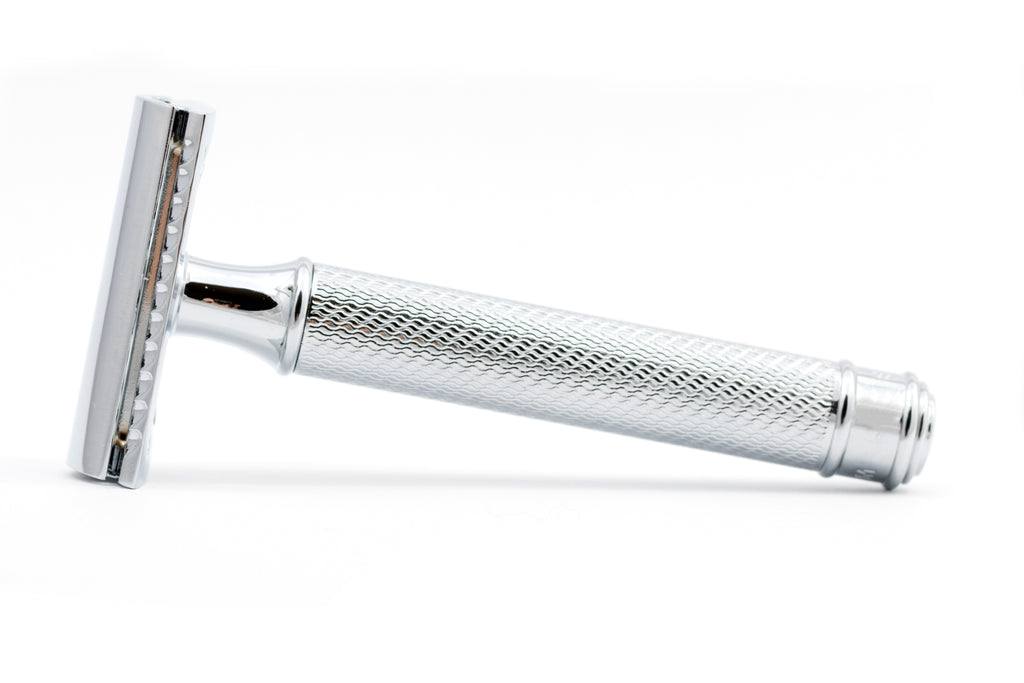
Cartridge razors are a subscription business wearing a shaving product costume. A safety razor is the opposite: one handle, bought once, and blades that cost pennies. The shave is closer, the irritation is less (once your technique settles in), and you'll never pay for a cartridge again.
This guide is built from manufacturer spec sheets, wet-shaving community consensus, and thousands of verified owner reviews — not sponsored placements. We haven't personally shaved with every razor here, and we won't claim otherwise. What we've done is aggregate what experienced wet shavers consistently report about each model's aggression, build quality, and suitability for different skill levels.
What Actually Matters in a Safety Razor
Comb type: closed, open, or adjustable. Closed comb is the standard — a straight safety bar that suits most faces and most skill levels. Open comb exposes more blade and handles thick, multi-day growth better, but it's more aggressive. Adjustable razors let you dial the blade gap up or down, which is ideal if you're still figuring out what your face likes.
Aggression (blade gap and exposure). "Aggression" is wet-shaving shorthand for how much blade the razor presents to your skin. Mild razors are forgiving and great for daily shavers and beginners; aggressive razors are more efficient on coarse growth but punish bad technique. There's no universally right answer — it depends on your hair, skin, and how often you shave.
Weight and balance. Heavier razors (90g+) let the weight do the work — you guide, you don't press. This is why stainless steel razors shave differently than light zamak or aluminum ones. Balance point matters too: a handle-heavy razor feels different from a head-heavy one.
Material and build quality. Zamak (a zinc alloy) with chrome plating is the industry standard at lower prices and shaves fine, but it can corrode if the plating chips. Brass, stainless steel, and aluminum last effectively forever. Check owner reviews for thread quality — the handle-to-head threading is where cheap razors fail.
Handle length and grip. Longer handles suit larger hands and body shaving; shorter handles give more control for face work. Knurling or texture matters when your hands are wet and soapy.
Merkur 34C HD
The 34C is the default recommendation in wet-shaving communities for a reason: it's the razor more beginners have learned on than any other. A closed-comb, two-piece design in chrome-plated zamak, weighing 77g with a short 75mm handle.
Owners consistently describe it as mild but efficient — forgiving enough for a first-timer, capable enough that many experienced shavers never move on. The short handle gives excellent control, and the two-piece design (the head twists off the handle, the baseplate stays captive) makes blade changes simple and safe. The knurled grip is secure even with wet hands.
The honest limitations: it's zamak under the chrome, so if you drop it on tile and chip the plating, corrosion can start. At 77g it's medium-weight — men who prefer heavy razors often graduate to stainless steel. And the short handle, while great for face control, is less ideal for head shavers with large hands.
Best for: beginners and daily shavers who want the proven, no-regrets first safety razor.
Check current price: Merkur 34C HD Safety Razor
Edwin Jagger DE89
The DE89 is the 34C's great rival — another closed-comb beginner classic, distinguished by its precisely engineered head (famously smooth) and a longer, more elegant handle. Chrome-plated, around 72g depending on handle variant.
What owners and reviewers consistently highlight is the smoothness of the shave: the DE89's head geometry is widely regarded as one of the most refined in the price class, delivering a close shave with very little blade feel. It comes in more handle options than the 34C — knurled, lined, faux-ebony — so you can pick the grip and look you prefer. The three-piece design breaks down fully for cleaning.
Same material caveat as the Merkur: zamak core, chrome plating, treat it with respect around hard surfaces. Some owners find it slightly milder than the 34C, which is perfect for sensitive skin but means very coarse beards may need an extra pass. The longer handle is a plus for most, a minus for those who liked the 34C's stubby control.
Best for: beginners with sensitive skin, or anyone who values shave smoothness above all.
Check current price: Edwin Jagger DE89 Safety Razor
Rockwell 6S
The 6S solves the beginner's dilemma — "what aggression do I need?" — by including it all. It's a fully stainless steel razor with three reversible baseplates giving six settings (R1 mildest through R6 most aggressive). Buy one razor, experiment, settle on your setting.
This is the consensus "buy it for life" pick in wet-shaving forums. The 316L stainless steel construction is effectively indestructible — owners report dropping it on tile with nothing worse than a scuff. At 118g it's heavy in the best way: the weight does the work, and technique improves faster because you're not pressing. Rockwell's customer service gets consistently excellent marks, which matters at this price.
The tradeoffs are price (roughly 2–3x the Merkur) and some bulk — the baseplate system means swapping plates to change settings, which is less convenient than a dial adjustable. A small number of owners report the matte bead-blasted finish shows water spots, a cosmetic quibble. If the price stings, the 6C (same design in chrome-plated zamak) gets you the adjustability for much less.
Best for: men who want one razor forever and the ability to dial in their perfect aggression.
Check current price: Rockwell 6S Safety Razor
Rockwell 6C
Everything above about the 6S's design applies — same six-setting baseplate system, same geometry — in a chrome-plated zamak body instead of stainless steel. It's the value play in the adjustable category.
Owners report the shave is essentially identical to the 6S at any given setting; the difference is feel (91g vs 118g — still substantial, just less so) and long-term durability. For the price of a mid-range fixed razor, you get six razors in one, which makes it arguably the smartest purchase on this list for a beginner who doesn't know their preferred aggression yet.
The zamak caveat applies: don't drop it on tile. And if you know you'll be wet-shaving for decades, the 6S's stainless steel is the longer-term investment. But as a way to find your setting before committing to a premium razor, the 6C is hard to beat.
Best for: beginners who want adjustability without the stainless-steel price.
Check current price: Rockwell 6C Safety Razor
Parker 99R
The 99R is the butterfly (twist-to-open) pick — a long-handled, heavy (98g) TTO razor that makes blade changes as simple as twisting the handle. Closed comb, chrome-plated brass frame.
TTO mechanisms divide opinion, but owners who like them really like them: no handling a loose blade, no threading parts together with wet hands. The 99R's long 100mm handle and substantial weight make it popular with head shavers and men with larger hands. Parker's build quality at this price consistently earns praise — the mechanism feels solid, not rattly, which is where cheap TTO razors fail.
The butterfly mechanism is also the weakness: more moving parts means more to wear out over decades, and you can't fully disassemble it for deep cleaning the way you can a three-piece. It's moderately aggressive — fine for most, but the very sensitive-skinned may prefer the DE89. And like most TTOs, blade alignment depends on the mechanism closing evenly; Parker's QC is generally good here, but it's worth checking your first blade seats straight.
Best for: men who want the easiest blade changes and a long, heavy handle — especially head shavers.
Check current price: Parker 99R Safety Razor
Vikings Blade The Chieftain
The Chieftain is the modern-aggressive option — a short-handled, heavyweight (over 100g) closed-comb razor aimed at men with coarse beards who found the beginner razors too mild. It also comes in genuinely striking finishes (including a much-photographed "Godfather" dark chrome).
Owner reviews from coarse-bearded shavers are the story here: men who needed three passes with a 34C report two-pass shaves with the Chieftain, with no increase in irritation once technique is dialed in. The short, fat handle gives a locked-in grip, and the weight means zero pressure is needed. It's become a quiet favorite in shaving forums for exactly this use case.
It's not a beginner razor — the efficiency that coarse beards love will punish a newcomer who hasn't learned light pressure yet. Start with a 34C or 6C and graduate here if you need more. The ornate finishes, while attractive, are plating over brass — durable, but show wear eventually like any plated razor.
Best for: experienced shavers with coarse, fast-growing beards who want maximum efficiency.
Check current price: Vikings Blade The Chieftain Safety Razor
Comparison Table
| Razor | Comb Type | Aggression | Weight | Material | Best For |
|---|---|---|---|---|---|
| Merkur 34C | Closed | Mild-medium | 77g | Chrome zamak | Beginners, daily shavers |
| Edwin Jagger DE89 | Closed | Mild | ~72g | Chrome zamak | Sensitive skin, smoothness |
| Rockwell 6S | Closed, 6 settings | R1–R6 adjustable | 118g | Stainless steel | Buy-it-for-life, dialing in |
| Rockwell 6C | Closed, 6 settings | R1–R6 adjustable | 91g | Chrome zamak | Adjustability on a budget |
| Parker 99R | Closed, TTO | Medium | 98g | Chrome brass | Easy blade changes, head shaving |
| Vikings Blade Chieftain | Closed | Medium-aggressive | 100g+ | Plated brass | Coarse beards, experienced hands |
Frequently Asked Questions
How long does it take to learn safety razor technique? Most men get comfortable within two to three weeks of daily shaving. The core skills are simple: no pressure (let the weight work), roughly a 30-degree blade angle, and short strokes. Nicks happen early and stop happening fast.
How much do replacement blades cost? Pennies. A 100-pack of quality double-edge blades (Astra, Feather, Personna) typically runs $10–15, which is a year or more of shaving. Compare that to $3–4 per cartridge.
How often should I change the blade? Most shavers get 3–7 shaves per blade depending on hair coarseness. Change it when you feel tugging — pushing a dull blade causes the irritation people blame on the razor.
Is a safety razor better for sensitive skin? Generally yes, once technique is learned. A single blade means a single pass of cutting per stroke, versus a cartridge dragging 3–5 blades across your skin. Less friction, fewer ingrown hairs — that's the consistent report from sensitive-skinned converts.
Open comb vs closed comb — which should I choose? Closed comb for daily shaving and beginners. Open comb earns its keep if you shave every 3–4 days or have very thick growth — it feeds longer hair to the blade without clogging. Most men never need open comb.
Can I travel with a safety razor? The handle can go in carry-on, but loose blades cannot — TSA prohibits them. Pack blades in checked luggage or buy a small pack at your destination. Many shavers keep a cheap second razor as a travel beater.
The Bottom Line
Start with the Merkur 34C or Edwin Jagger DE89 — both are proven, forgiving, and cheap enough that there's no wrong answer. If you'd rather buy once and experiment, the Rockwell 6C gives you six aggression levels for the price of one mid-range razor, and the 6S is the stainless-steel forever version. Coarse-bearded veterans should look at the Vikings Blade Chieftain. Whichever you pick, give it three weeks — the technique is the real upgrade, the razor is just the tool.