Best Tactical Flashlight (2026 Buyer's Guide)
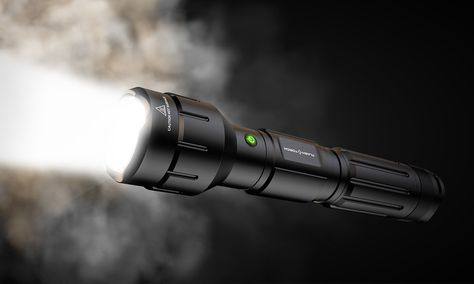
A flashlight is the most-used tool most men own and the least-researched purchase they make. Then the power goes out, a tire blows at midnight, or something goes bump in the backyard — and the $12 gas-station special flickers out in your hand.
This guide is research-based, not sponsored. Rankings come from manufacturer spec sheets, owner reviews across major retailers, and expert roundups. Nobody sent us free lights and nobody paid for placement. Here's what the data says actually matters, and which lights earn their keep.
What Actually Matters in a Tactical Flashlight
Lumens vs. candela. Lumens measure total light output; candela measures intensity — how far the beam throws. A 2,000-lumen flood light won't help you identify a target at 100 yards, but a 1,000-lumen light with 25,000 candela will. For tactical and outdoor use, candela matters more than the lumen number on the box.
Battery type: 18650 vs. CR123A vs. proprietary. 18650 rechargeables are the workhorse — high capacity, cheap to run, easy to swap. CR123A primaries have a 10-year shelf life and work in extreme cold, which is why duty lights still use them; the downside is ongoing cost. Proprietary battery packs (some Olight models) charge fast but lock you into one ecosystem. For most men, a light that runs on a standard 18650 and accepts CR123As as backup is the sweet spot.
User interface. Under stress, you need instant access to high and strobe without cycling through moonlight, SOS, and beacon modes. Tail-switch lights with a simple high/strobe interface win for defensive use. Side-switch lights with mode memory win for EDC.
Durability. Look for IPX8 waterproofing (submersible, not just splash-proof), 1-meter-plus impact resistance, and anodized aluminum bodies. The ANSI FL1 standard is the honest benchmark — if a brand doesn't publish FL1 numbers, be skeptical.
Size and carry. A duty light can be big. An EDC light can't. Be honest about which job you're buying for.
The Picks
Streamlight ProTac HL-X
Why it wins overall. The ProTac HL-X is the light you'll find on more duty belts and in more truck glove boxes than anything else in this price range, and the owner data backs it up: thousands of verified reviews averaging well above 4.5 stars across retailers. It puts out 1,000 lumens with 27,600 candela — genuine throw, not marketing numbers — and it runs on either the included 18650 or two CR123As.
The TEN-TAP programming is the standout feature nobody else does this well: you choose between high/strobe/low, high only, or low/medium/high programs. Set it to high/strobe for defensive use and it behaves like a much more expensive light. The tail cap switch gives momentary-on, and the light is IPX7 rated with a 2-meter impact rating.
Weaknesses. It's a chunky light at 5.4 inches — not a pocket EDC piece. The included 18650 charges via USB but the port cover is fiddly. And 1,000 lumens is no longer class-leading on paper, though in practice the candela figure means it out-throws plenty of "brighter" lights.
Best for: The man who wants one do-everything light for the house, truck, and belt.
Check current price: Streamlight ProTac HL-X
Fenix PD36R
Why it wins for EDC. The PD36R packs 1,600 lumens and 283 meters of throw into a 5.3-inch body that actually fits a jacket pocket. Owners consistently report the USB-C fast charging as the killer feature — a full charge in under two hours from dead, versus the better part of a day for older micro-USB lights.
The dual-switch interface (tail for on/off, side for mode changes) is intuitive enough to learn in a minute, and the mode memory means it comes back on at your last brightness. IP68 waterproofing and a 1-meter drop rating check the durability boxes. The included 21700 battery is a step up in capacity from 18650s, and Fenix's published FL1 runtimes hold up in independent testing.
Weaknesses. No instant-strobe from off — you have to hold the side switch, which is a strike against it as a defensive light. The 21700 cell is great but less standardized than 18650 if you ever need a spare in a pinch. Some owners note the pocket clip is stiff at first.
Best for: Everyday carry where you want maximum performance in minimum size.
Check current price: Fenix PD36R
Olight Warrior 3S
Why it wins for features. The Warrior 3S is the gadget lover's tactical light: 2,300 lumens, a proximity sensor that auto-dims the beam when something gets close (so you don't melt your shirt pocket), and Olight's magnetic charging that snaps on with zero fumbling in the dark. The side switch plus tail switch gives you both EDC convenience and tactical momentary-on.
Owner reviews skew heavily positive on build quality and the beam profile — a genuinely useful hotspot with enough spill to see peripherally. The aggressive knurling and strike bezel look the part without being mall-ninja ridiculous.
Weaknesses. The proprietary 21700 battery is the big one: when it dies years from now, you're buying Olight's cell or nothing. Olight has also had well-publicized thermal incidents in the past (since addressed with the proximity sensor), which still makes some buyers wary. It's also the priciest light on this list.
Best for: The man who wants the most advanced light available and doesn't mind a proprietary battery.
Check current price: Olight Warrior 3S
SureFire G2X Pro
Why it wins for pure reliability. SureFire built its name on lights that work when everything else fails, and the G2X Pro is the entry point to that reputation. The Nitrolon polymer body shrugs off impacts and won't freeze to your hand in winter like aluminum does. 600 lumens doesn't sound like much next to the competition, but 600 SureFire lumens with honest FL1 ratings beats inflated claims from no-name brands every time.
The dual-output tailcap — press lightly for 15-lumen low, press harder for 600-lumen high — is dead simple and impossible to mess up under stress. It runs on two CR123As with that decade-long shelf life, making it the light you can leave in a go-bag for years and trust.
Weaknesses. 600 lumens is modest in 2026, and there's no rechargeable option — you'll feed it CR123As forever. No strobe mode. The polymer body, while tough, doesn't feel as premium as anodized aluminum. You're paying partly for the name.
Best for: A go-bag, nightstand, or vehicle light where absolute reliability beats raw specs.
Check current price: SureFire G2X Pro
ThruNite BSS V6
Why it wins for budget. The BSS V6 — the current iteration of ThruNite's "Black Scout Survival" tactical line — delivers legitimate tactical features at roughly half the price of the big names: 2,000 lumens max output, a dual-switch tailcap for instant strobe, six modes from moonlight to turbo, and USB-C rechargeable with a 3,400mAh 18650 battery included in the box. The beam specs are legitimate thrower territory for a light this compact: 259 meters of throw and 16,800 candela. Owners consistently report being surprised by the build quality at this price point, with solid anodizing and a clean beam without the rings and artifacts that plague cheap lights.
At 5.7 inches and 97 grams (without battery), it rides comfortably in a pocket or on a belt clip, and the IPX8 rating (submersible to 2 meters) plus 1.5-meter impact resistance mean it shrugs off rain and drops. The dual-switch interface is genuinely intuitive when fine motor skills go out the window.
Weaknesses. Brand support and warranty don't match Streamlight or SureFire — if something goes wrong in year three, you're likely buying a new light instead of getting it serviced. Published specs are honest but the FL1 testing isn't as rigorously documented as the premium brands. Fit and finish is good, not great.
Best for: A second light for the garage or truck, or the man who wants 80% of the performance at 50% of the price.
Check current price: ThruNite BSS V6
Head-to-Head Comparison
| Light | Max Lumens | Throw (Candela) | Battery | Length | Waterproof | Approx. Price |
|---|---|---|---|---|---|---|
| Streamlight ProTac HL-X | 1,000 | 27,600 | 18650 / 2×CR123A | 5.4" | IPX7 | ~$75 |
| Fenix PD36R | 1,600 | ~20,000 | 21700 (USB-C) | 5.3" | IP68 | ~$90 |
| Olight Warrior 3S | 2,300 | ~19,000 | Proprietary 21700 | 5.5" | IPX8 | ~$120 |
| SureFire G2X Pro | 600 | ~8,700 | 2×CR123A | 5.2" | IPX7 | ~$95 |
| ThruNite BSS V6 | 2,000 | ~16,800 | 18650 (USB-C) | 5.7" | IPX8 | ~$45 |
Prices are approximate street prices and shift with sales. Specs from manufacturer FL1 data.
Frequently Asked Questions
How many lumens do I actually need? For indoor and around-the-house use, 300–600 honest lumens is plenty — more than that indoors just blinds you with bounce-back. For outdoor, search, or defensive use, 1,000+ lumens with strong candela is the useful threshold. Anything above 2,000 lumens is nice for showing off but rarely practical.
Are rechargeable batteries better than CR123As? For daily use, yes — an 18650 costs pennies per charge versus dollars per pair of CR123As. For emergency storage, CR123As win with their 10-year shelf life and cold-weather performance. The smart move is a light that takes both, like the ProTac HL-X.
What does IPX8 actually mean? Under the ANSI FL1 standard, IPX8 means the light survives continuous submersion beyond 1 meter (the manufacturer specifies the depth — usually 2 meters for 30 minutes). IPX7 is 1 meter for 30 minutes. Either is more than enough for rain, drops in puddles, and real-world abuse.
Is strobe mode actually useful or just a gimmick? It has legitimate defensive value — a disorienting strobe at close range buys you a second or two, which is the entire point. That said, it needs to be instantly accessible from off to matter. A strobe buried three clicks deep in a menu is useless.
Can I carry a tactical flashlight on a plane? Yes, in carry-on luggage, with a catch: the TSA allows flashlights but spare lithium batteries must be in your carry-on (never checked), with terminals protected. Lights with installed batteries are fine. Don't bring one with a sharp strike bezel if you want to avoid a conversation.
Do I need a weapon-mounted light instead? Different jobs. A handheld light lets you search and identify without pointing a firearm at everything you illuminate — which is both a safety rule and, in many places, a legal one. Most serious setups include both, but the handheld comes first.
The Bottom Line
Buy the Streamlight ProTac HL-X if you want one light that does everything well and will still be working in ten years. Buy the Fenix PD36R if it'll live in your pocket. Buy the SureFire G2X Pro if it might sit untouched for years before the one night you need it. All three are proven by thousands of owners — pick the one that matches your actual life, not a fantasy.
One last note: whichever light you choose, buy a spare battery and a simple charger now, not later. A great flashlight with a dead cell is a paperweight, and the men who get caught out are always the ones who meant to order spares "next week."