Best Camping Stove for Backpacking (2026 Buyer's Guide)
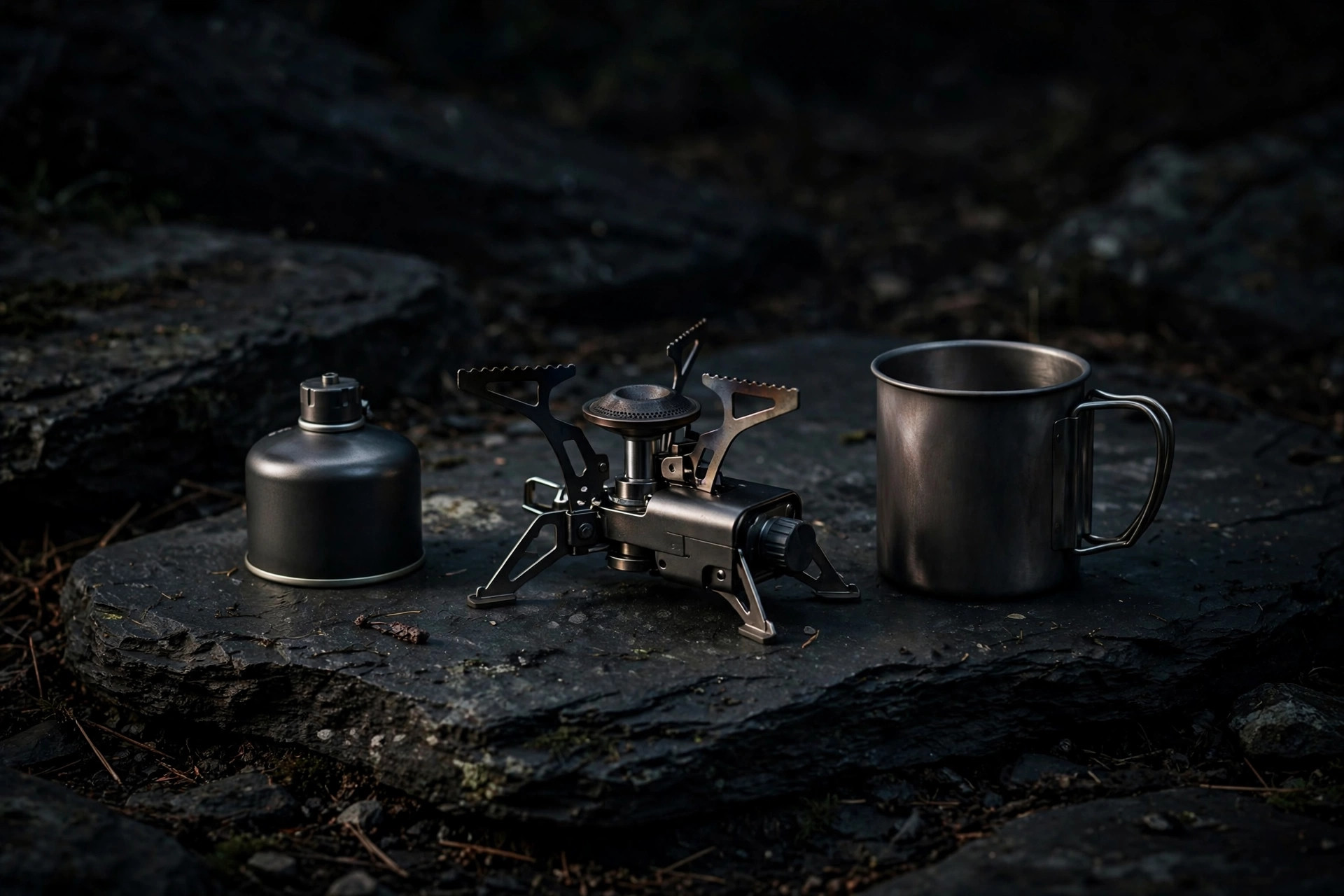
A backpacking stove has one job: turn fuel into hot food reliably, in bad weather, when you're tired. The best stove for you depends on how you eat on the trail — if your meals come in pouches that need boiling water, you want speed and efficiency; if you actually cook, you want flame control. Weight matters, but a stove that's 30 grams lighter and blows out in wind is a bad trade.
This guide is built from manufacturer spec sheets, verified owner reviews, and outdoor-media roundups — not from whichever brand cut a sponsorship deal. We haven't personally cooked on every stove on this list, and we won't pretend otherwise. What we've done is the research legwork: cross-referencing specs against what owners actually report after seasons on the trail.
What Actually Matters in a Backpacking Stove
Stove type: canister-top vs. integrated system. A canister-top stove (like the PocketRocket) screws onto a fuel canister and works with any pot — light and versatile. An integrated system (like the Jetboils) pairs a burner with a heat-exchanger pot that locks on — heavier as a system, but dramatically faster and more fuel-efficient at boiling water.
Weight. For canister-top stoves, every gram counts because you carry it for miles: the serious ultralight options sit under 90 grams. Integrated systems weigh more (12–15 oz for stove + pot), but they replace your pot, so compare total cook-kit weight, not just the burner.
Boil time and fuel efficiency. Faster boils mean less fuel burned per meal, which means carrying fewer canisters. Heat-exchanger pots (FluxRing and similar) are the big efficiency lever — they can halve fuel use versus an open flame under a plain pot.
Wind performance. Wind is the enemy of canister stoves — it steals heat and can blow the flame out entirely. Recessed or concave burner heads, pressure regulators, and integrated windscreens make the difference between dinner and a cold soak.
Simmer control. Boiling water needs one setting: full blast. Actual cooking — simmering sauce, frying, not scorching oatmeal — needs a valve that adjusts finely at low output. If you cook real food, prioritize this over raw BTU numbers.
Ignition. Built-in piezo igniters are convenient but they fail — always carry a mini lighter as backup regardless. A stove without an igniter isn't a dealbreaker; a dead igniter you were counting on is.
MSR PocketRocket 2 Stove
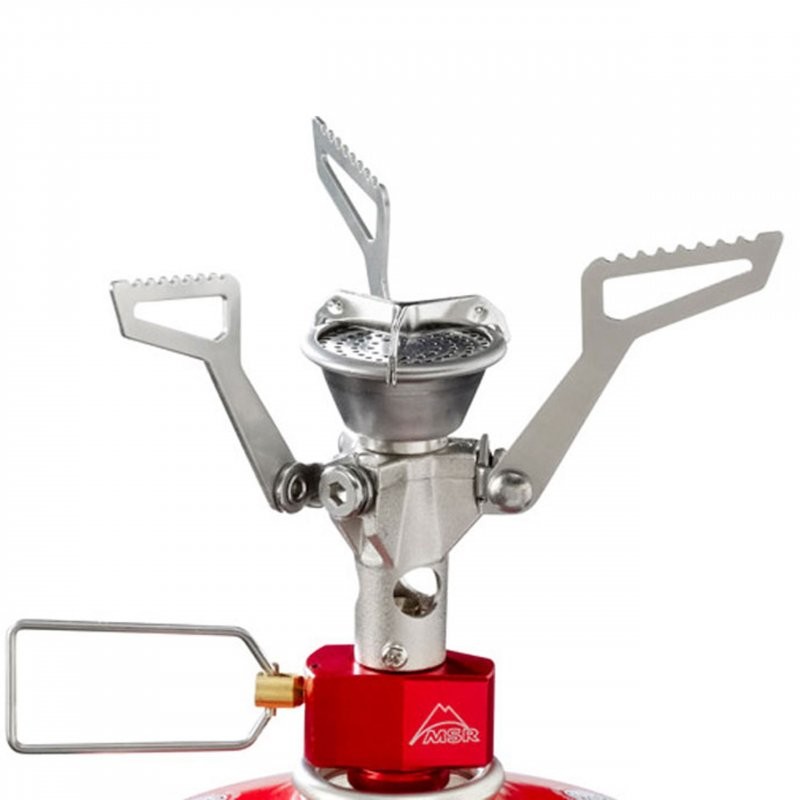
The PocketRocket 2 is the benchmark ultralight canister stove — 73 grams (2.6 oz), folding down to pocket size, boiling a liter of water in about 3.5 minutes on its 8,200 BTU/hr burner. It's been the default recommendation for thru-hikers and weekenders for years because it does the simple thing perfectly: screws onto any standard isobutane-propane canister, lights, and boils.
The flame adjusts from a rolling boil down to a reasonable simmer, and the serrated pot supports handle a wide range of pot sizes without wobbling. MSR's WindClip design gives it modest wind resistance for an open burner — not immunity, but better than the cheapest Amazon stoves. The included hard-shell case keeps it from getting crushed in your pack, and the 3-year warranty is solid.
The honest tradeoffs: there's no piezo igniter, so you're carrying a lighter (which you should anyway). It has no pressure regulator, so output drops as the canister empties or temperatures fall — plan on weaker performance on cold mornings. And it's an open burner, so in real wind you'll want a windscreen or a sheltered spot. But for the classic backpacker who boils water for coffee and dehydrated meals, nothing beats this combination of weight, reliability, and price.
Best for: ultralight backpackers who want the proven minimum-weight standard.
Check current price: MSR PocketRocket 2 Stove
Jetboil Flash Cooking System
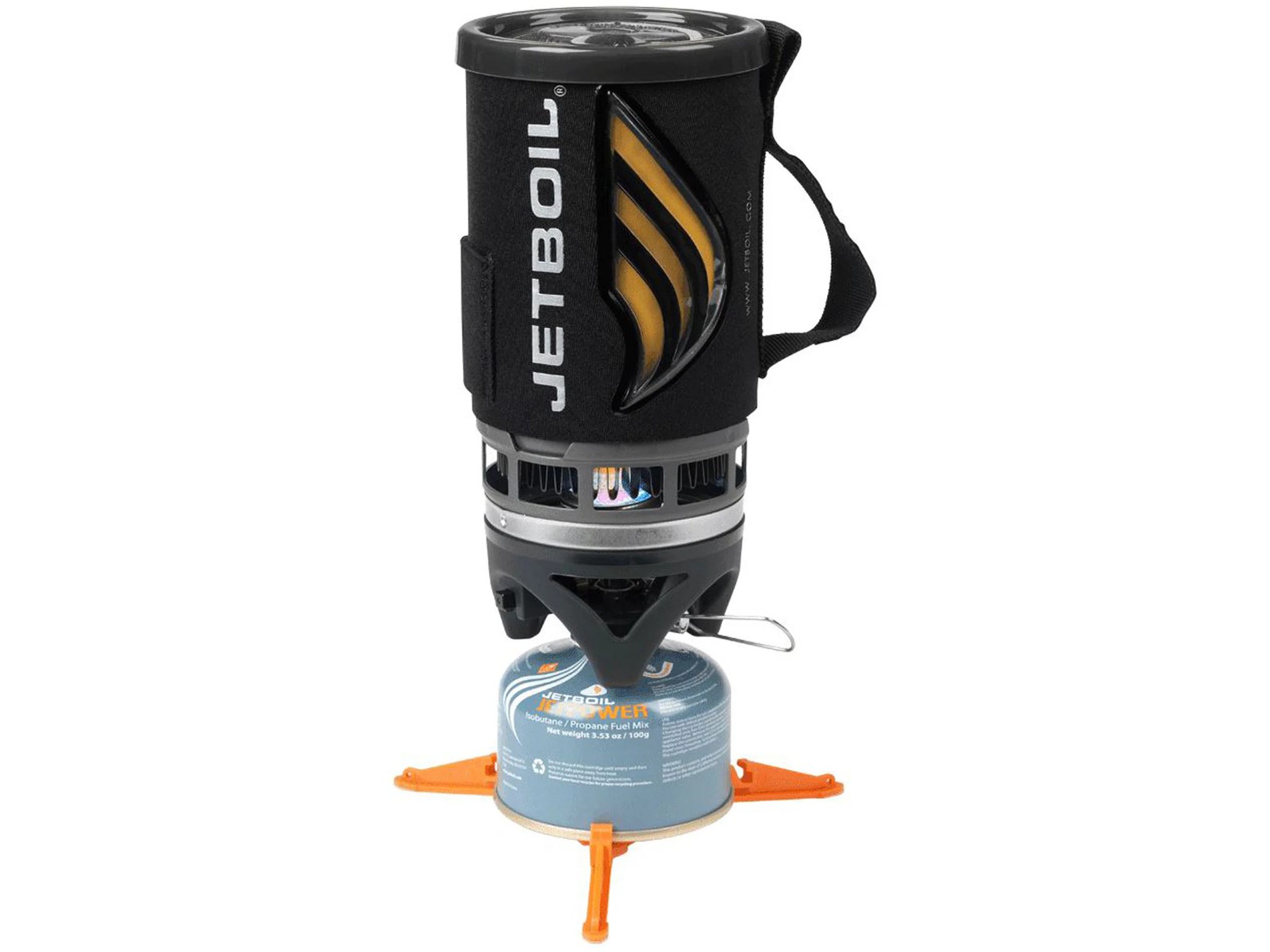
The Flash is the fastest way to get boiling water on the trail — the integrated 1.0-liter FluxRing cooking cup locks onto the burner, and the heat-exchanger ring captures so much heat that half a liter boils in about 100 seconds. Jetboil updated the Flash for 2025 with a new one-step auto ignition (turn the knob and it clicks itself lit, like a home stove) and a color-changing heat indicator on the cozy that tells you when the water's ready.
Everything nests inside the cup — burner, fuel canister stabilizer, and a 100g fuel canister all pack into the 1-liter pot — so the system carries as one tidy unit at under 14 ounces. The push-button igniter means no lighter fumble with cold hands, and the FluxRing efficiency stretches a small canister across many more boils than an open-burner setup.
The honest tradeoffs: this is a water-boiler, not a cooker. There's no pressure regulator and simmer control is poor — try to simmer and you'll scorch. The tall narrow cup is awkward for anything but boiling, and you're locked into Jetboil's pot ecosystem (though the pot support accessory opens it up somewhat). If your trail diet is freeze-dried meals, coffee, and tea, it's unbeatable. If you fry fish or simmer sauces, look at the MiniMo instead.
Best for: fast-and-light hikers whose meals just need boiling water.
Check current price: Jetboil Flash Cooking System
SOTO WindMaster Stove
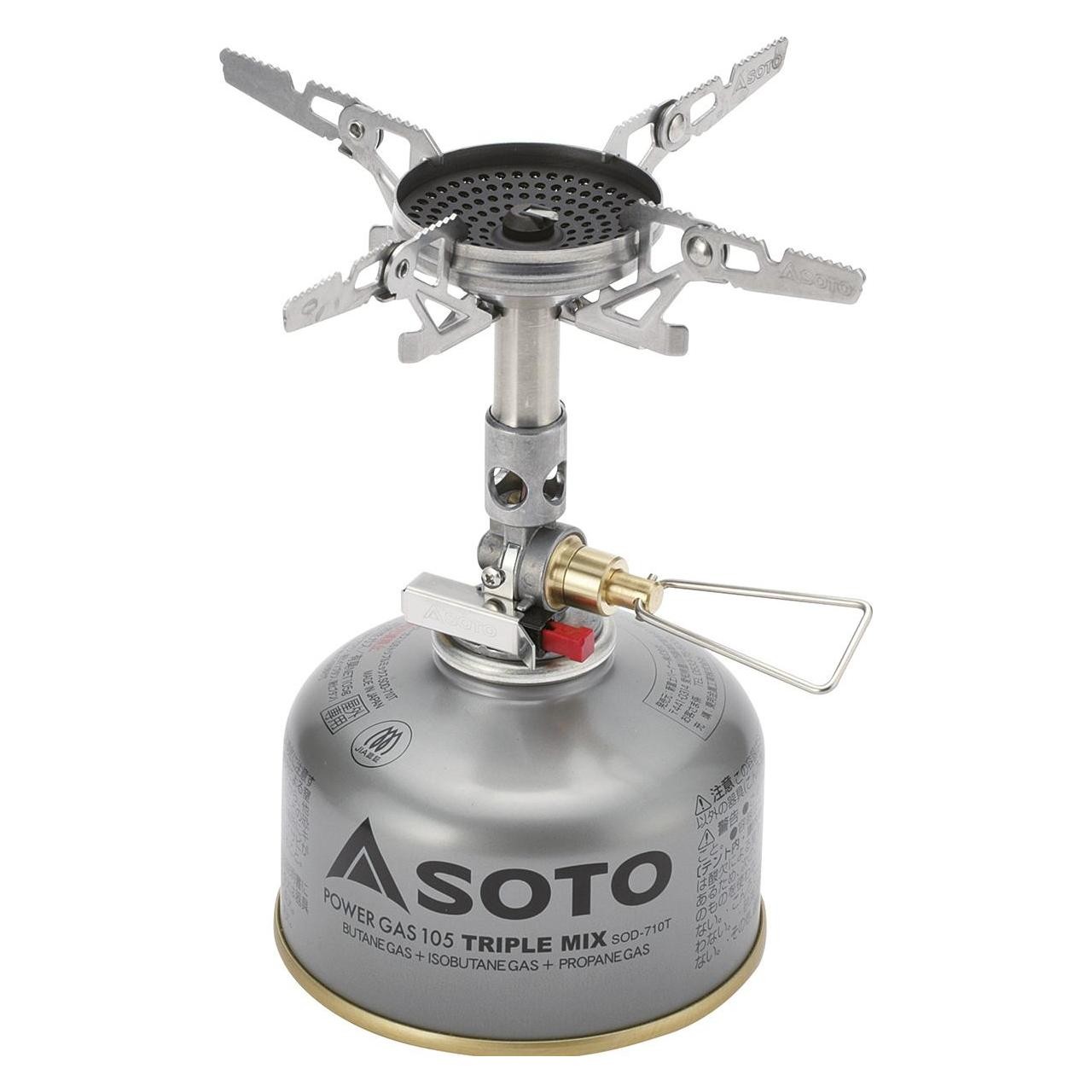
The WindMaster is the canister stove for people who've been burned — literally and figuratively — by wind. Its concave burner head creates the effect of a built-in windscreen, keeping the flame alive and efficient in gusts that blow out ordinary open burners. At 87 grams with the included 4Flex pot support, it's barely heavier than the PocketRocket 2 while being dramatically more weather-capable.
The Micro Regulator valve is the other half of the story: it maintains consistent output as the canister depletes and in cold conditions where unregulated stoves fade. The 11,000 BTU (3,260W) output boils two cups of water in under two and a half minutes, and the piezo Stealth igniter is recessed into the burner head where it's protected from damage. The 4Flex support handles larger pots stably; a lighter TriFlex support is available separately for gram-counters.
The honest tradeoffs: it's the priciest canister-top stove here, and the performance edge over the PocketRocket 2 only shows in wind and cold — on a calm summer evening, you won't notice the difference. The 4Flex pot support is clever but detachable, so it's one more small piece to lose in long grass. But if you hike exposed ridgelines, shoulder seasons, or anywhere the weather makes decisions for you, this is the stove that keeps cooking when others quit.
Best for: backpackers who cook in wind, cold, or exposed conditions.
Check current price: SOTO WindMaster Stove
SOTO Amicus Stove with Stealth Igniter
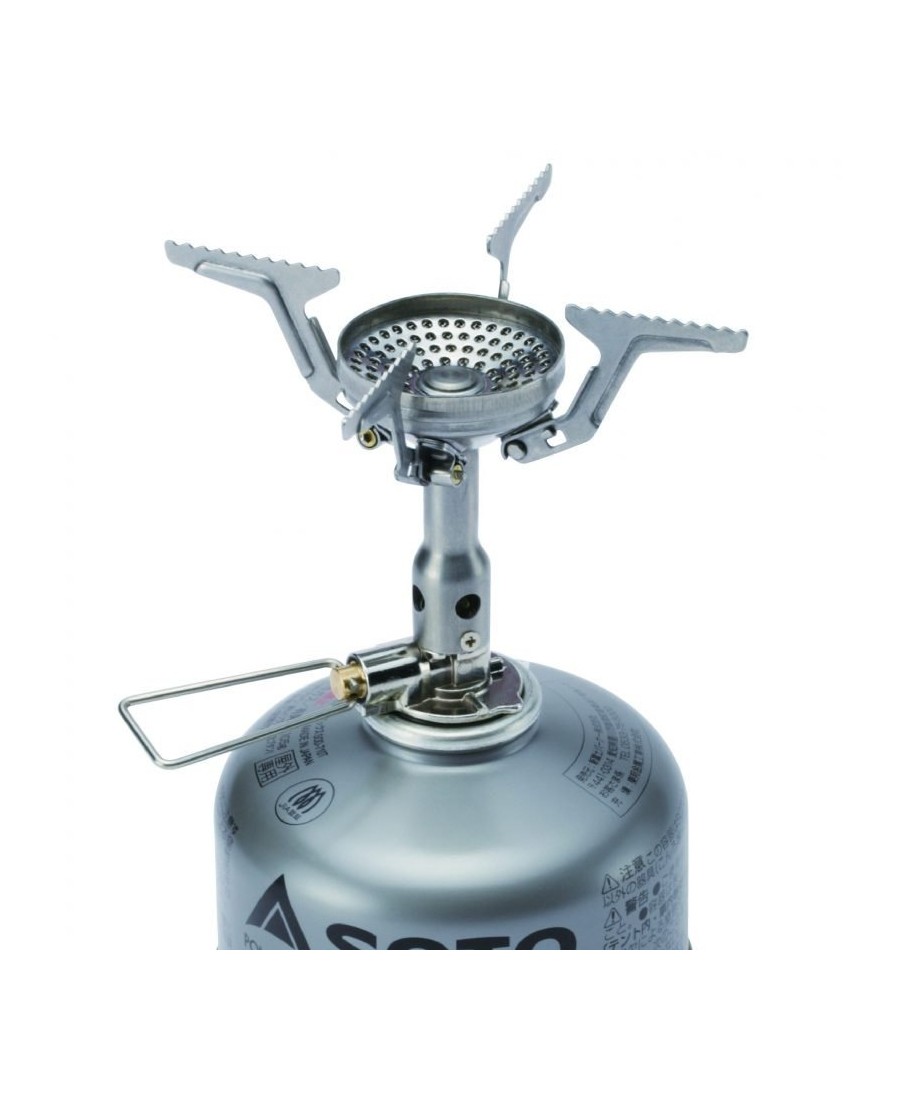
The Amicus is SOTO's answer to the question "what if the PocketRocket 2 had better wind resistance and an igniter?" At 81 grams with the Stealth piezo igniter (75g without), it's in the same ultralight class, but the raised crown and concave burner surface give it noticeably better wind performance than a flat open burner. The 10,210 BTU output boils fast, and the spring-loaded pot supports set up in seconds and grip pots securely.
The Stealth igniter is genuinely well engineered — the wire runs up through the burner column with the spark point in the center of the burner, so there's nothing exposed to snag or snap off in your pack. Flame control is good across the range, from simmer to full blast, and it burns about an hour and a half on a 250g canister. Build quality is excellent for the price — this is the value pick that doesn't feel like a compromise.
The honest tradeoffs: there's no pressure regulator, so like the PocketRocket 2, output tapers in the cold and as the canister empties. It doesn't match the WindMaster's wind immunity — better than basic, not best-in-class. And while the igniter is protected, piezo igniters can still fail; carry the mini lighter anyway. But as a do-everything canister stove at a friendly price, it's the easiest recommendation on this list for a first backpacking stove.
Best for: the best-value all-rounder — light, reliable, and priced for beginners.
Check current price: SOTO Amicus Stove with Stealth Igniter
Jetboil MiniMo Cooking System
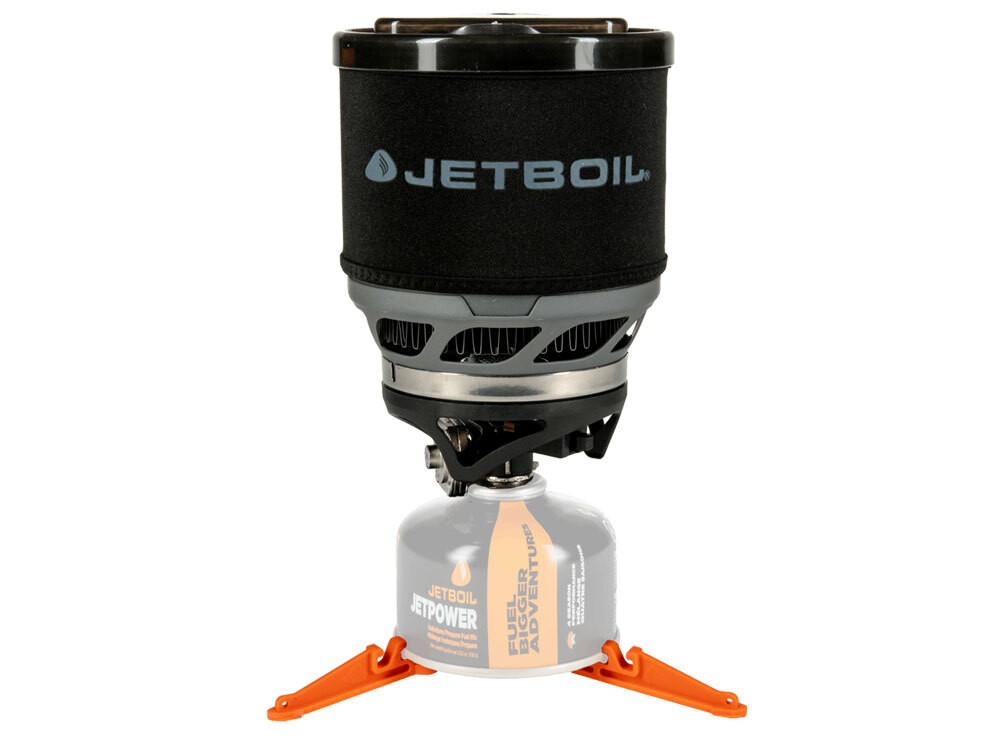
The MiniMo is the integrated system for people who actually cook. Like the Flash it pairs a burner with a 1-liter FluxRing cup for excellent fuel efficiency, but it adds the feature the Flash lacks: a pressure regulator with genuinely incremental heat adjustment from light simmer to full boil. Sautéing, simmering sauces, cooking real food — this is the Jetboil that does it without scorching.
The regulator also means consistent performance down to about 20°F, where unregulated stoves wheeze. The redesigned cup has a lower spoon angle and metal handles that make eating directly from the pot practical, the push-button igniter is reliable, and the burner stores sideways inside the cup for a compact pack. At 14.6 ounces it's slightly heavier than the Flash, and half a liter takes about 2 minutes 15 seconds — a touch slower, but the tradeoff is control.
The honest tradeoffs: you're paying more than the Flash for the regulator and the cooking-focused design, and it's still an integrated system — you're committed to the 1-liter cup as your pot. For pure boil-water duty, the Flash is faster and cheaper. But if your idea of trail food involves more than pouring hot water into a pouch, the MiniMo is the only integrated system here that cooks like a real stove.
Best for: backpackers who cook real meals and need true simmer control.
Check current price: Jetboil MiniMo Cooking System
Comparison Table
| Stove | Type | Weight | Boil (0.5L) | Simmer Control | Best For |
|---|---|---|---|---|---|
| MSR PocketRocket 2 | Canister-top | 73g / 2.6 oz | ~1.75 min* | Good | Ultralight standard |
| Jetboil Flash | Integrated | ~13.9 oz system | ~100 sec | Poor | Fastest boiling |
| SOTO WindMaster | Canister-top | 87g / 3.0 oz | ~2.5 min (2 cups, in wind) | Good | Wind and cold |
| SOTO Amicus | Canister-top | 81g / 2.9 oz | Fast | Good | Best value |
| Jetboil MiniMo | Integrated (regulated) | 14.6 oz system | ~2 min 15 sec | Excellent | Real cooking |
*PocketRocket 2 spec is 3.5 min per liter; 0.5L shown for comparison.
Frequently Asked Questions
Canister stove or integrated system — which should I choose? If you mostly boil water for dehydrated meals, coffee, and tea, an integrated system (Flash) is faster and more fuel-efficient. If you cook with different pots, want the lightest setup, or value versatility, a canister-top stove (PocketRocket 2, WindMaster, Amicus) is the better choice.
How long does a fuel canister last? A standard 230g canister delivers roughly 1.5 hours of burn time on most of these stoves. In practice, that's about 10–15 boils of half a liter with an integrated system, fewer with an open burner. For a weekend of boil-only meals for one person, a single 100–110g canister is usually enough.
Can I bring a canister stove on an airplane? The stove itself can fly in checked or carry-on luggage (empty, with no fuel residue ideally). Fuel canisters cannot — not in carry-on, not in checked bags. Buy canisters at your destination; standard threaded isobutane-propane canisters are sold at outdoor shops worldwide.
Do I need the igniter version of a stove? It's convenient, not essential. Piezo igniters eventually fail, and experienced backpackers carry a mini Bic as backup regardless. If the price difference is small, get the igniter for the convenience — but never depend on it as your only fire source.
How do canister stoves perform in cold weather? Poorly, unless regulated. Standard isobutane-propane canisters lose pressure as temperatures drop toward freezing, and unregulated stoves fade with them. The MiniMo's regulator and the WindMaster's Micro Regulator maintain output much better in the cold. In true winter, keep the canister warm in your sleeping bag or jacket.
What pots work with these stoves? Canister-top stoves work with any backpacking pot. Integrated systems are designed around their own FluxRing cups — the heat-exchanger ring is what makes them efficient, and regular pots won't lock onto the burner. Jetboil sells a pot support accessory that adapts the Flash and MiniMo burners to standard pots.
The Bottom Line
For most backpackers, the MSR PocketRocket 2 remains the right answer — 73 grams, dead reliable, and it works with any pot you own. If your meals just need boiling water, the Jetboil Flash does it faster and on less fuel. The SOTO WindMaster earns its price the first time you cook in real wind, the SOTO Amicus is the value pick that covers 90% of trips, and the Jetboil MiniMo is the one to get if you actually cook. Match the stove to your menu, carry a backup lighter no matter what, and you'll eat well out there.
Get the next guide first
One email a week: new buying guides and gear deals worth knowing about. No spam, unsubscribe anytime.
We use your email only for the newsletter. See the privacy policy.
Related guides
Watch on YouTube — Forge Tested
Prefer video? The Forge Tested channel turns these guides into no-fluff video breakdowns.