The 4 Best Gun Cleaning Kits (2026 Buyer's Guide)
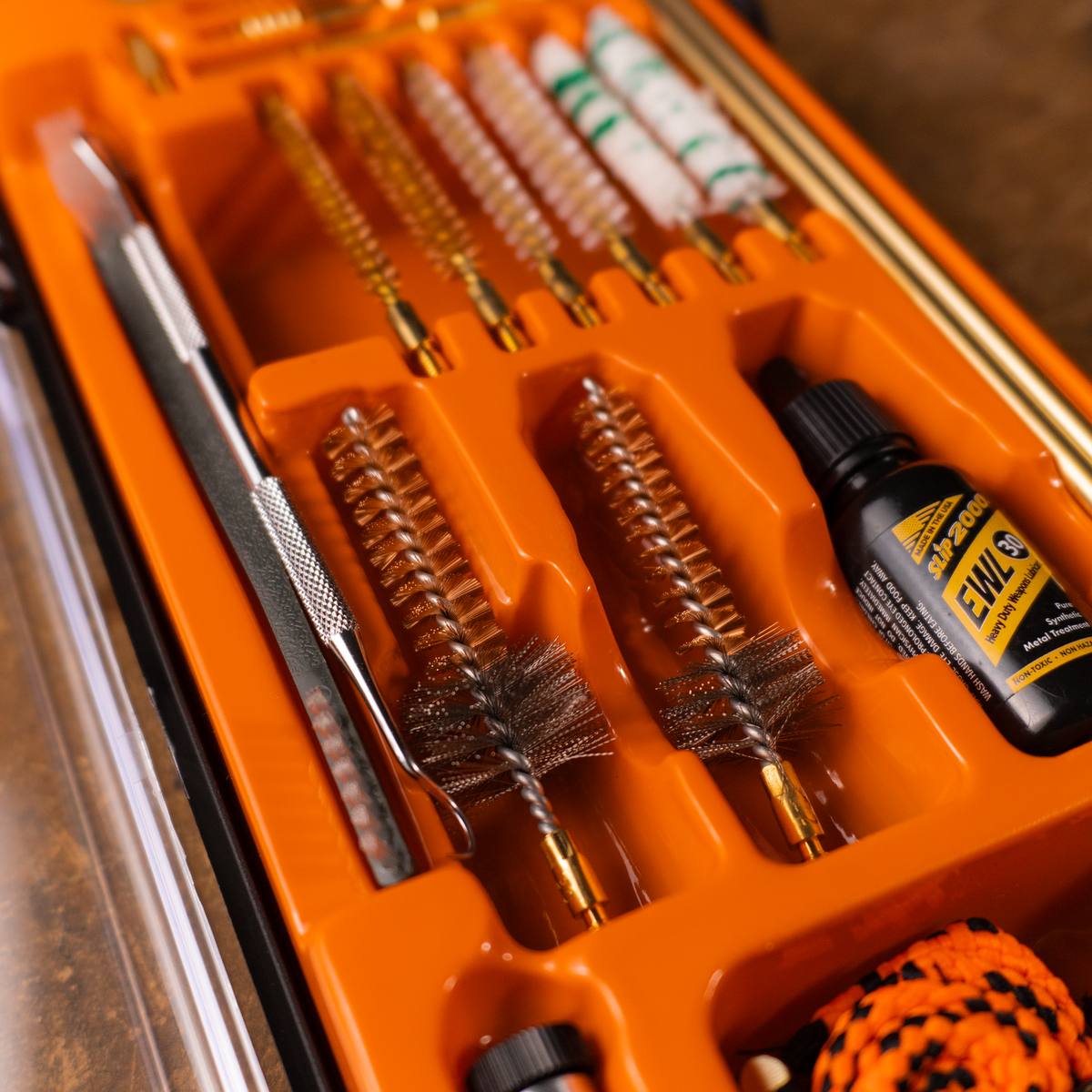
A dirty gun is a malfunction waiting for the worst possible moment. Carbon fouling, copper buildup, and old lubricant don't just hurt accuracy — they cause failures to feed, extract, and fire. Regular cleaning is the single highest-return maintenance habit in firearm ownership, and a good kit makes it a fifteen-minute job instead of an afternoon of frustration.
This guide is research-based, not sponsored. Kit contents come from manufacturer listings, and the assessments — which kits actually get used versus which gather dust, what breaks, what's missing — come from aggregated long-term owner reviews. We have not hands-on tested these kits.
A quick safety note that applies to all cleaning: always verify the firearm is unloaded before you start, keep ammunition in another room, and work in a ventilated space — solvents are no joke for your lungs. Laws on storage and transport vary by jurisdiction; know yours.
What Actually Matters: The Specs Worth Reading
Universal vs. Caliber-Specific
- Universal kits cover everything from .22 to 12 gauge with interchangeable brushes, mops, and jags. They're the right choice if you own (or plan to own) multiple firearms in different calibers. The trade-off: more pieces to organize, and the "universal" fit is occasionally imperfect at the extremes.
- Caliber-specific kits are dialed in for one gun — a 9mm pistol kit, a 5.56 rifle kit. Fewer parts, perfect fit, but useless the day you buy a second caliber. Fine if you own exactly one firearm and plan to keep it that way.
Our take: most shooters end up with more than one gun. Buy universal unless you're certain you'll stay single-caliber.
Rods vs. Pull-Through Cables (and Bore Snakes)
- Cleaning rods (brass or coated steel) give you the most control and the most scrubbing power — essential for serious copper fouling. The risk: a steel rod used carelessly can damage the crown and rifling. Coated rods and bore guides mitigate this. Always clean from breech to muzzle when the action allows it.
- Pull-through cables (Otis's signature system) thread through the bore and pull patches and brushes through in the correct breech-to-muzzle direction. Nearly impossible to damage a bore with, and they pack down tiny for field use. Slightly less aggressive than a rod for heavy fouling.
- Bore snakes are the quick-clean option: one pull-through with built-in brushes for a fast field clean. They don't replace a proper rod-and-patch cleaning, but owners consistently report they're the reason their guns actually get cleaned after every range trip — because it takes ninety seconds.
The best kits include rods for bench work; the best field kits use cables. Serious shooters own both.
Solvents, Oils, and What "Complete" Means
A kit marketed as "complete" should include, at minimum: bore brushes and mops in your calibers, a rod or cable system, patches, a jag or slotted tip, and ideally solvent and oil. Many kits cheap out on the chemicals — owners frequently report replacing the included solvent with their preferred brand within months. That's fine; the hardware is the long-term value. But check what's actually in the box before you assume you're range-ready.
Case and Organization
This is the underrated spec. A kit with forty pieces and no organization becomes a junk drawer — and a junk drawer doesn't get used. Look for labeled compartments, brush charts, and a case that closes with everything in its place. The kits owners actually keep using are the organized ones.
The Picks
1. Otis Elite Universal Cleaning Kit — Best Universal Kit
The Otis Elite is the consensus top-tier universal kit, and it's built around Otis's pull-through cable system rather than traditional rods. Per Otis's specs, it covers .17 through 12 gauge (rifle, pistol, and shotgun) with bronze brushes, mops, jags, and patches, all in a organized soft-pack case. The cable system cleans breech-to-muzzle every time, which is the correct direction and nearly eliminates the risk of bore damage that comes with mishandled rods.
Owner reviews are consistently strong on three points: the kit genuinely covers everything (owners report cleaning everything from .22 pistols to 12-gauge shotguns with one case), the organization is excellent (every tool has a labeled home), and the cables last for years. The common criticisms: it's the priciest kit here, the included solvent and oil are adequate rather than great (most owners supplement with their preferred chemicals), and for truly neglected bores with heavy copper fouling, some owners still reach for a traditional rod.
If you own multiple firearms and want one kit that handles all of them correctly, this is it. The cable system is the real differentiator — safer for bores, packs smaller, and faster to deploy than rods.
Check current price: Otis Elite Universal Gun Cleaning Kit
2. Hoppe's No. 9 Cleaning Kit (Universal or Pistol) — Best Classic Value
Hoppe's No. 9 solvent is the smell of gun cleaning for three generations of shooters, and the Hoppe's kits are the straightforward, no-nonsense option. The universal kit includes brass rods (not cables), brushes, mops, patches, and — the reason to buy it — actual Hoppe's No. 9 solvent and lubricating oil in the box. Per Hoppe's listings, the kits come in universal, pistol, rifle, and shotgun configurations.
Owner feedback is what you'd expect from a legacy brand: the rods and brushes are solid, the chemicals are the real deal (many owners buy Hoppe's kits specifically to get the solvent and oil bundled), and the case is functional but basic. The consistent complaint is organization — the included box is a step below Otis and Real Avid, and owners with large collections report outgrowing it. The rods are uncoated brass, so use a bore guide and mind your technique.
Buy this if you want proven chemicals and solid hardware at a workingman's price, and you don't mind a less refined case. It's the kit your grandfather would recognize, updated just enough.
Check current price: Hoppe's No. 9 Gun Cleaning Kit
3. Real Avid Gun Boss Pro Universal Kit — Best Field/Range-Bag Kit
Real Avid designs for the shooter who cleans at the range, in the truck, or at the hunting cabin — and the Gun Boss Pro shows it. It's a compact kit built around a folding, packable tool set with a cable system, brushes, and picks, all in a rugged case that fits in a range bag without complaint. Per Real Avid's specs, it covers the common handgun and long-gun calibers with a focus on portability over bench-completeness.
Owners consistently praise the packability and the thoughtful tool selection — the picks and scrapers for carbon in hard-to-reach spots get specific callouts in reviews. The trade-off versus the Otis Elite is breadth: this isn't the kit for a deep bench cleaning of a neglected bore. It's the kit that ensures cleaning actually happens, because it's always with you. Several owners report it as their second kit alongside a bench setup, which tells you exactly what role it fills.
If your cleaning habit dies the moment it requires a trip to the workbench, buy the kit that lives in your range bag.
Check current price: Real Avid Gun Boss Pro Universal Cleaning Kit
4. Tipton Ultra Cleaning Kit — Best Bench Kit With Rods
The Tipton Ultra is the flagship of Tipton's bench lineup, and it's built around the part most kits cheap out on: the rod. Per Tipton's specs, the heart of the kit is a premium 3-piece stainless steel cleaning rod — .205" diameter, 40" usable length, machined from 17-4 PH stainless with a multi-bearing handle — stiff enough to resist taking a bend, the failure mode that plagues most multi-section rods. Everything else in the case is equally serious: the RAPID Deluxe bore guide kit (with collars for bolt-action and AR-15 rifles), a 13-piece Ultra Jag set with its own case, and a 13-piece Best Bore Brush set covering .17 through .45 calibers, plus AR-15 bolt-carrier and action brushes, nylon and bronze utility brushes, and polymer picks.
Owner reviews highlight the rod quality and the bore guide as the standouts — the guide keeps the rod centered and protects the crown and chamber, and the die-cut foam case keeps every jag and brush in its place, with room left over for solvents and patches (bring your own chemicals; none are included). This is a rifle kit — .22 caliber and larger — and it shows in the best way.
Complaints are minor: the molded bench case is bulky compared to cable kits (it's bench gear, not field gear), and it's a premium product at a premium price — MSRP $197.99, with street prices often in the $130–$150 range.
For the shooter with a dedicated cleaning bench — especially bolt-action and AR rifle owners — rods done right beat cables. The Ultra does rods right.
Check current price: Tipton Ultra Gun Cleaning Kit
Comparison Table
| Kit | System | Coverage | Chemicals Included | Best For |
|---|---|---|---|---|
| Otis Elite | Pull-through cables | .17–12 ga universal | Basic solvent/oil | One kit for everything |
| Hoppe's No. 9 Kit | Brass rods | Universal or caliber-specific | Hoppe's No. 9 + oil (the real thing) | Classic value |
| Real Avid Gun Boss Pro | Cable, compact | Common calibers | Minimal | Range bag / field use |
| Tipton Ultra | 3-piece stainless rod | .22 cal+ rifles | None (bring your own) | Bench cleaning, precision rifles |
Frequently Asked Questions
How often should I clean my guns?
After every range session is the standard advice, and it's good advice — fouling gets harder to remove the longer it sits. At minimum: a quick bore-snake pass and wipe-down after shooting, a full field-strip clean every few sessions, and a deep clean (including copper removal) a few times a year for rifles. A defensive firearm should be cleaned and function-checked on a schedule even if it hasn't been fired — lint and old oil cause failures too.
Are bore snakes enough, or do I need a full kit?
Bore snakes are maintenance, not deep cleaning. Owners consistently report that a bore snake after every trip keeps things running, but it won't touch established copper fouling or carbon in the action. Think of it this way: the bore snake is brushing your teeth; the full kit is the dentist visit. You need both.
Can a cleaning rod damage my barrel?
A bare steel rod used carelessly — especially cleaned muzzle-to-breech, dragging grit across the crown — can damage rifling and the crown over time. This is well documented, not internet folklore. Mitigations: use coated or carbon-fiber rods, always clean breech-to-muzzle when possible, use a bore guide on rifles, and keep rods wiped clean. Or use a pull-through cable system, which sidesteps the issue entirely.
What's the difference between solvent and CLP?
Solvent dissolves fouling (carbon, copper, lead); lubricant protects and smooths moving parts. CLP (Cleaner, Lubricant, Protectant) products do all three adequately in one bottle — convenient for field use. Dedicated solvents generally clean more aggressively than CLPs. Most serious shooters use a dedicated solvent for bore cleaning and a quality oil or CLP for lubrication. There's no single right answer, but there is a wrong one: WD-40 is not a gun lubricant.
Do I need to clean a brand-new gun before shooting it?
Yes. New firearms ship with preservative grease (not shooting lubricant) that needs to come off, and manufacturing debris in the bore is common. A quick clean-and-lube before the first range trip is standard practice recommended by virtually every manufacturer.
How should I store cleaning chemicals?
Upright, capped, away from heat and out of reach of children and pets. Solvents are flammable and the fumes are harmful — use them in ventilated spaces and don't store them in living areas. Keep them locked up if kids are in the house; the same secure-storage thinking that applies to firearms applies to the chemicals.
The Bottom Line
Buy the Otis Elite if you want one kit that correctly handles every gun you own or will own. Buy the Hoppe's kit if you want proven chemicals and honest hardware at a fair price. Buy the Real Avid Gun Boss Pro if your cleaning happens in the field, not at a bench. Buy the Tipton Ultra if you're a bench cleaner who wants rods done properly. And whichever you choose, add a bore snake to your range bag — the best cleaning kit is the one that gets used, and ninety seconds after every trip beats a heroic deep-clean twice a year.