Best Offset Smokers for Beginners (2026 Buyer's Guide)
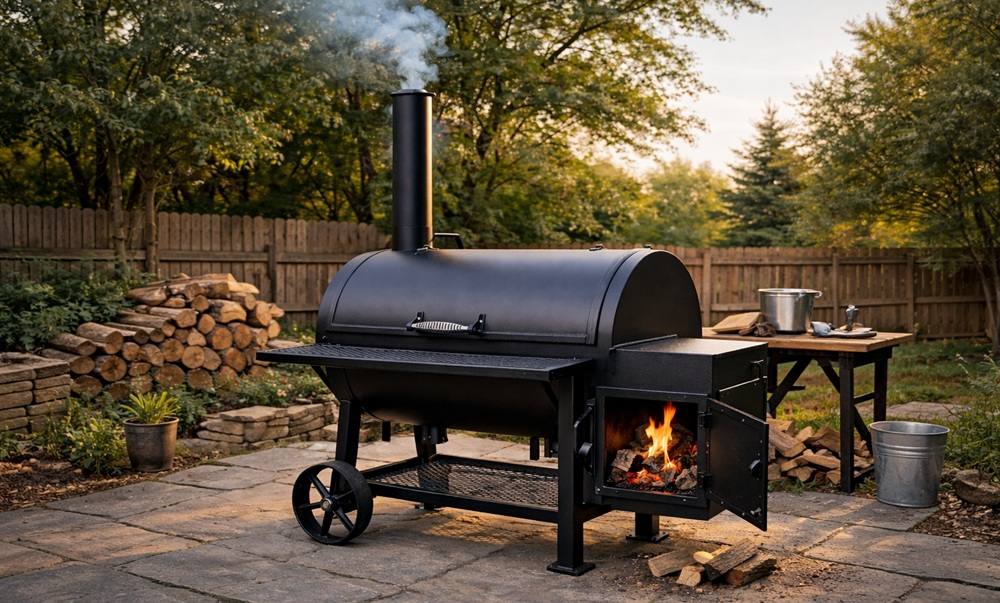
A pellet grill is convenient. An offset smoker is a craft. Fire in one chamber, meat in the other, and nothing but wood, steel, and your judgment between you and the best brisket you've ever tasted. It's harder than pushing a button — and that's exactly the point.
The learning curve is real, which is why the beginner's choice of smoker matters so much. Thin steel, leaky doors, and bad airflow turn learning into suffering. A forgiving, well-built offset teaches you fire management instead of fighting you. This guide focuses on models that give beginners a fair shot: decent steel, workable airflow, and honest value. Everything below comes from manufacturer specs, owner reviews, and pitmaster roundups — no sponsored placements, no testing claims we can't back up.
What actually matters in an offset smoker
Steel thickness. This is the spec that matters most and the one cheap smokers lie about by omission. Thicker steel holds heat, recovers faster when you open the lid, and resists the temperature swings that ruin cooks. Heavy-gauge steel is the difference between a smoker that holds 250°F and one that yo-yos between 200 and 300. You can feel the difference the moment you lift the lid — weight is quality here.
Firebox design. The firebox is where the work happens. A good one has an ash drawer or grate that keeps airflow under the coals, a door that seals reasonably well, and enough size to hold a real bed of coals plus wood splits. Side access doors let you add fuel without opening the cook chamber and dumping all your heat — a feature beginners will appreciate on hour six.
Temperature control. On an offset, you control temperature with the fire, not a dial. What the smoker contributes is airflow: intake dampers on the firebox and an exhaust stack on the chamber. Smooth, adjustable dampers and a tall stack that draws well make fire management dramatically easier. Leaky doors and sloppy dampers are the number one complaint in owner reviews of cheap offsets.
Size. Bigger isn't automatically better for beginners. A huge cook chamber takes more fuel and more fire-tending skill to keep even. For learning, a mid-size chamber (roughly 600–900 square inches) is the sweet spot: enough room for a brisket and ribs, not so much that you're burning a forest to heat it. Vertical offsets are worth knowing about — they use less fuel and hold temps more easily, at the cost of less traditional "stick burner" character.
Reverse flow vs. traditional. In a traditional offset, heat enters one end of the chamber and exits the other, creating a hot side and a cool side you learn to manage. Reverse flow designs use baffles to route heat under the grates and back, evening out temperatures across the chamber. For beginners, reverse flow is more forgiving — fewer hot spots to learn around.
The picks
Oklahoma Joe's Highland Offset Smoker — The classic beginner pick
Check current price: Oklahoma Joe's Highland Offset Smoker
The Highland is the smoker that taught a generation of backyard pitmasters. It's the default recommendation in nearly every beginner roundup for one reason: it's the cheapest way to get a real, functional offset with heavy-gauge steel construction and a proper firebox. Around 619 square inches of cooking space fits a full packer brisket or several racks of ribs.
Owner reviews tell a consistent story: out of the box it's good, and with a few cheap mods (gasket tape on the doors, a baffle plate, sealing the firebox joint) it becomes genuinely excellent. That modding culture is actually part of the appeal — the Highland has a massive community, endless YouTube tutorials, and every problem you'll encounter has been solved by someone. For a beginner, that support network is worth as much as the steel.
The honest downsides: it needs those mods to reach its potential, the stock thermometers are decorative at best (budget for a real thermometer — see our thermometer guide), and it's not insulated, so cold-weather cooking takes more fuel and attention. But as a first stick burner, nothing else offers this combination of price, community, and upgrade path.
Oklahoma Joe's Highland Reverse Flow — Best forgiving option
Check current price: Oklahoma Joe's Highland Reverse Flow Offset Smoker
Same DNA as the Highland, but with the reverse flow baffles that even out chamber temperatures — and a significantly larger cooking area at over 1,000 square inches. Removable baffles let you switch between reverse flow and traditional offset setups, so you can learn both styles on one cooker.
Why this matters for beginners: the number one frustration new offset owners report is fighting hot spots — one end of the brisket done, the other raw. Reverse flow largely eliminates that, which means your first dozen cooks teach you fire management instead of meat rotation. The larger charcoal basket supports longer burns, and the heavy-gauge steel construction carries over from the standard Highland.
The trade-offs are price (roughly double the standard Highland) and size — this is a big cooker that drinks more fuel. But if your budget stretches, it's the most beginner-forgiving real offset on the market, and you won't outgrow it.
Char-Griller E1224 Smokin' Pro — Best ultra-budget entry
Check current price: Char-Griller E1224 Smokin' Pro
The Smokin' Pro is the cheapest legitimate offset smoker worth buying — and that qualifier matters, because below this price point you're buying frustration shaped like a smoker. You get a side firebox, a main chamber with around 250 square inches of cooking space plus a warming rack, and adjustable dampers that actually function.
Let's be direct about what you're getting: the steel is thinner than the Oklahoma Joe's models, which means more temperature babysitting and higher fuel consumption. Owner reviews are positive for the price but clear-eyed — this is a learning tool, not a lifetime cooker. Seal the doors, watch your fire, and it will produce genuinely good barbecue.
Who should buy it: the man who isn't sure offset smoking is his thing and wants the cheapest possible real answer. If you fall in love with fire management, you'll upgrade within two years and know exactly what to look for. If you don't, you're out less than two hundred bucks.
Dyna-Glo Wide Body Vertical Offset — Easiest temperature control
Check current price: Dyna-Glo Wide Body Vertical Offset Charcoal Smoker
The vertical heretic in a list of horizontals — and it earns its spot. A vertical offset stacks the cooking grates above the firebox instead of beside it, which means heat rises naturally through the chamber instead of traveling sideways. The practical result, confirmed across owner reviews: steadier temperatures with less fiddling, often reported as staying within about 25°F of target during multi-hour cooks.
The heavy-gauge steel construction is legitimately good for the price, and the vertical layout is miserly with fuel compared to a horizontal offset of similar capacity. Six racks provide serious cooking space in a small footprint — this fits on patios where a Highland won't.
The honest trade: it's not a traditional stick burner experience. You won't get the same bark character or the romance of managing a horizontal fire, and wood splits need to be sized down. But if your priority is great smoked meat with the shallowest learning curve, the physics are on the vertical's side.
Royal Gourmet CC2036F — Best budget barrel style
Check current price: Royal Gourmet CC2036F Barrel Charcoal Grill with Offset Smoker
The barrel-style alternative for the budget buyer who wants more cooking space than the Char-Griller offers. The CC2036F pairs a large barrel cook chamber with a side offset firebox, giving you room for serious quantities of meat at a price that undercuts the big names significantly.
Owner reviews highlight the capacity-per-dollar as the standout trait — this thing swallows ribs by the rack. The steel is serviceable rather than heavy, so expect to tend the fire more actively than on thicker cookers, and the usual budget-smoker advice applies: seal gaps, replace the stock thermometer, learn your dampers.
It's the pick for the man cooking for a crowd on a budget — the family reunion, the tailgate crew, the neighborhood cookout. More space, less money, real smoke. Just go in knowing the steel asks more of you than the Oklahoma Joe's does.
Comparison table
| Smoker | Style | Cooking area | Steel | Beginner edge |
|---|---|---|---|---|
| Oklahoma Joe's Highland | Traditional offset | ~619 sq in | Heavy-gauge | Huge modding community |
| Highland Reverse Flow | Reverse flow offset | ~1,093 sq in | Heavy-gauge | Even temps, forgiving |
| Char-Griller E1224 | Traditional offset | ~250 sq in + rack | Medium | Cheapest real offset |
| Dyna-Glo Wide Body Vertical | Vertical offset | 6 racks | Heavy-gauge | Steadiest temps, less fuel |
| Royal Gourmet CC2036F | Barrel offset | Large | Medium | Most space per dollar |
Frequently asked questions
How much harder is an offset than a pellet grill? Meaningfully harder. A pellet grill manages the fire for you; an offset makes you the fire manager. Expect your first 3–5 cooks to be educational rather than triumphant. Most owners say it clicks around cook six — after that, it's relaxing rather than stressful.
What wood should a beginner start with? Oak. It's the most forgiving smoking wood — mild, steady-burning, hard to oversmoke with. Add hickory or pecan once you're comfortable. Avoid mesquite until you know what you're doing; it's easy to make meat bitter. Never use softwoods, treated lumber, or painted wood.
How much fuel does an offset use? More than you think. A full-day cook can go through a bag of charcoal plus several wood splits. This is the hidden cost of offset smoking and the main reason thicker steel matters — it burns less fuel holding temp.
Do I need to modify a beginner offset? The two mods with the biggest payoff: gasket tape around the cook chamber and firebox doors (stops heat and smoke leaks), and a reliable thermometer (the stock dial thermometers on budget smokers are notoriously inaccurate). Both cost less than $50 combined.
Can I grill on an offset smoker? Yes — the firebox doubles as a small charcoal grill on most models, and the main chamber works for direct grilling in a pinch. It's not their strength, but the versatility is real.
How do I clean and maintain it? Empty ash after every cook (ash holds moisture and rusts steel), brush the grates while warm, and keep it covered. Once a season, check for rust spots and hit them with high-heat paint. A $10 cover adds years to a smoker's life.
The bottom line
Buy the Oklahoma Joe's Highland if you want the classic beginner path with the biggest community behind it. Buy the Highland Reverse Flow if your budget stretches and you want the most forgiving learning curve. Buy the Char-Griller E1224 if you want the cheapest honest entry point. Buy the Dyna-Glo vertical if steady temperatures matter more to you than tradition. Buy the Royal Gourmet if you're feeding a crowd on a budget. Whichever you choose, budget $50 for gaskets and a real thermometer — and give yourself six cooks before you judge your skills.