Best Portable Power Station for Camping & Emergencies (2026 Buyer's Guide)
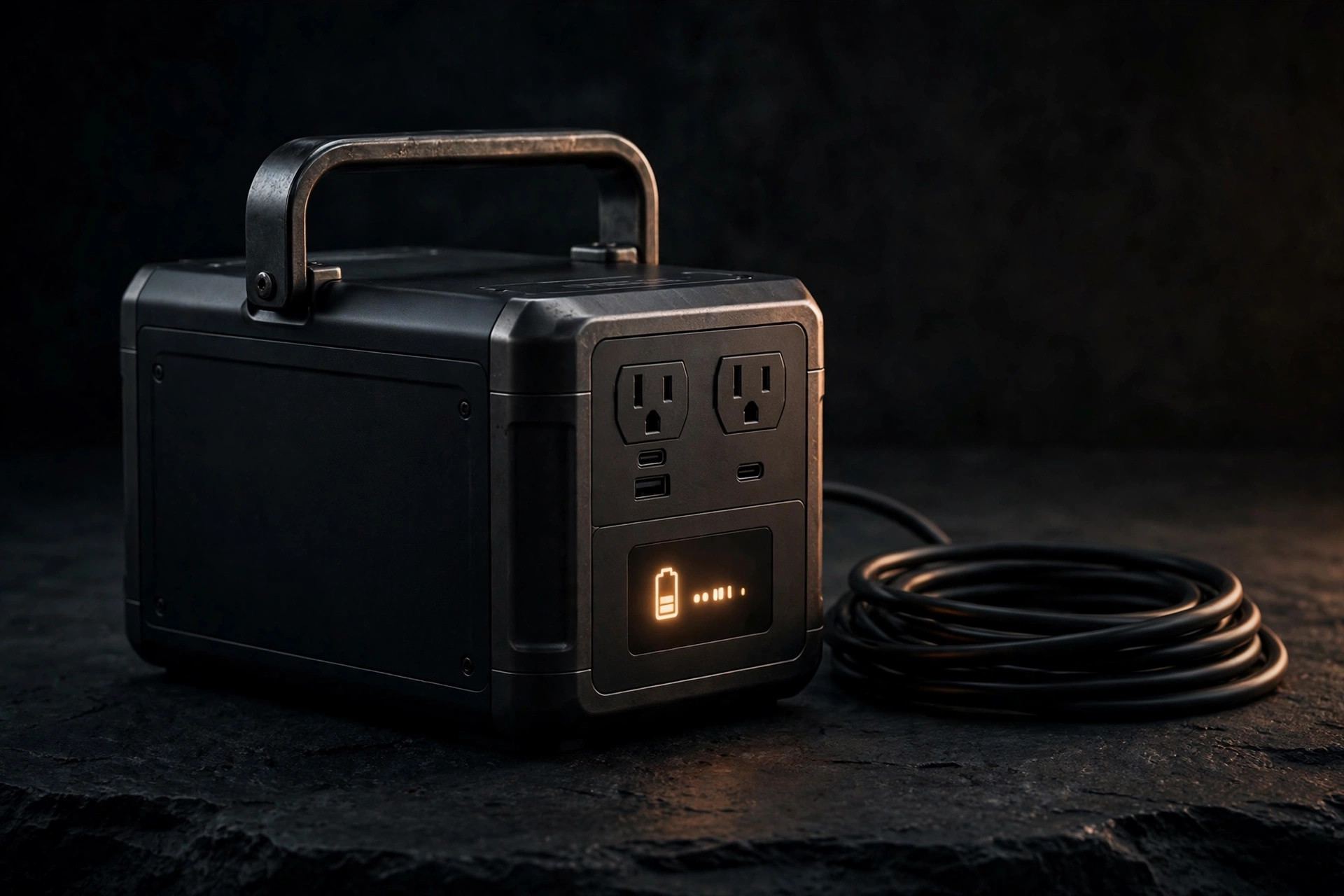
A portable power station is a big battery with an inverter and outlets — silent, fume-free power for camp or for the hours after the grid goes down. They're not cheap, which is why the specs matter more here than in almost any other category: buy too small and it can't run your fridge; buy blind and you get an older battery chemistry that dies in three years.
This guide is built from manufacturer spec sheets, verified owner reviews, and outdoor-media roundups — not from whichever brand cut a sponsorship deal. We haven't personally load-tested every station on this list, and we won't pretend otherwise. What we've done is the research legwork: cross-referencing specs against what owners actually report after real outages and real camping trips.
What Actually Matters in a Portable Power Station
Capacity (watt-hours). This is the size of the tank — how much total energy the station stores. A 1,000Wh station can theoretically deliver 1,000 watts for one hour, or 100 watts for ten. Size it to your loads: phones and lights need a few hundred Wh; a full-size fridge through an outage wants 1,000Wh or more.
Output (watts). This is how much power it can deliver at once. Check the running watts of what you'll plug in — a fridge compressor's startup surge can be double its running draw. Every station here lists continuous output and a higher surge rating; make sure your heaviest load fits under the continuous number.
Battery chemistry. Lithium iron phosphate (LiFePO4/LFP) is the current standard for a reason: 3,000–4,000 charge cycles versus 500–800 for older lithium-ion (NMC) packs. That translates to roughly a decade of regular use instead of a few years. Every pick on this list uses LiFePO4 — don't buy a station that doesn't.
Recharge speed. A station that refills in an hour is a different tool than one that takes all day. Fast AC charging (1,000W+) matters most for outage prep — you top up between blackouts — and for topping off at a powered campsite. Solar input wattage determines how practical off-grid recharging is.
Weight and portability. These range from about 18 to 37 pounds. That's the difference between "toss it in the truck" and "plan a permanent spot." Be honest about whether yours will travel or sit in the garage.
UPS / pass-through behavior. If you want the station to guard a fridge, router, or CPAP through flickering outages, check the switchover time — 20ms or under keeps electronics running without rebooting. Not every station handles this well.
EcoFlow Delta 2 Portable Power Station
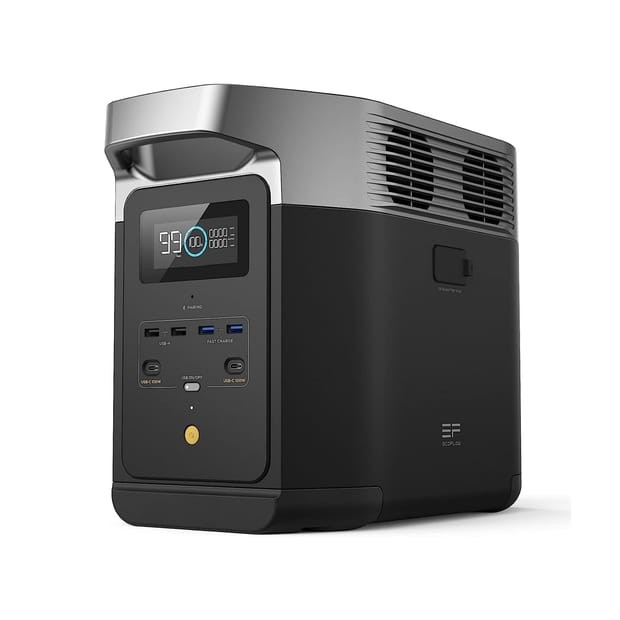
The Delta 2 is the best all-around station in this size class, and it's the one we'd recommend to most buyers. The core specs hit the sweet spot: 1,024Wh of LiFePO4 storage, 1,800W of continuous AC output (2,700W surge, with X-Boost handling up to 2,400W for stubborn loads), and a 3,000-cycle battery rated to retain 80% capacity — roughly a decade of regular use.
Where it pulls ahead is charging. The 1,200W AC input takes it from empty to 80% in about 50 minutes, which is genuinely useful in outage scenarios — you refill during the windows when power flickers back on. It's expandable to 3,040Wh with extra batteries if your needs grow, takes up to 500W of solar, and at 27 pounds it's heavy but still one-person portable. The 5-year warranty is among the best in the category.
The honest tradeoffs: the fan is audible under heavy load or fast charging — not generator-loud, but you'll notice it in a quiet tent. At 27 pounds it's not something you'll hike with; this is car-camping and home-backup territory. And EcoFlow's app is required to unlock some settings, which is a mild annoyance for a device that should be simple. But on capacity, output, charging speed, and warranty together, nothing else here covers as much ground.
Best for: the best overall balance of capacity, power, and recharge speed.
Check current price: EcoFlow Delta 2 Portable Power Station
Jackery Explorer 1000 v2 Portable Power Station
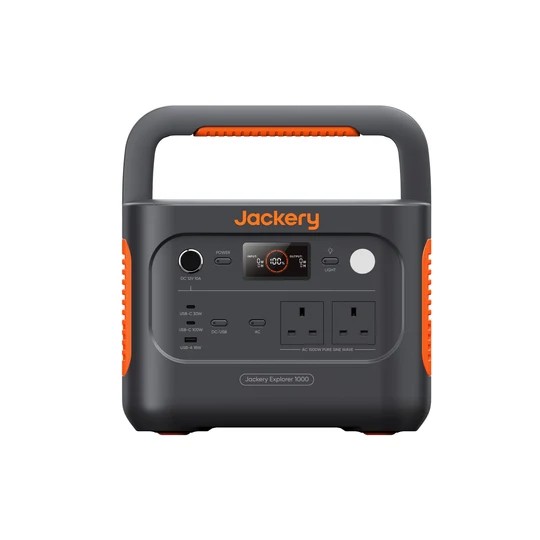
Jackery is the brand most first-time buyers have heard of, and the Explorer 1000 v2 is why: it's the friendliest station here to own. The specs are strong — 1,070Wh of LiFePO4, 1,500W continuous output (3,000W surge), and a 4,000-cycle rating to 70% capacity that suggests a 10+ year lifespan. At 23.8 pounds it's the lightest of the full-size picks, with a foldable handle that makes it genuinely easy to carry.
The standout feature is the one-hour emergency charge: enable it in the Jackery app and the station refills from empty in about an hour on AC. Owners consistently praise the clear LCD, the quiet operation, and the simple interface — this is the station you hand to a family member during an outage without a tutorial. The 5-year warranty and three AC outlets plus dual USB-C cover a household's worth of devices.
The honest tradeoffs: the 1-hour charge is an "emergency mode" you must enable in the app each time — by default it charges in 1.7 hours to protect battery health, which is fine but less dramatic. Solar charging only works with Jackery's own panels, a real limitation if you already own third-party panels. And 1,500W continuous is less headroom than the Delta 2's 1,800W for heavy loads. But for straightforward outage backup and car camping, it's the easiest station to live with.
Best for: first-time buyers who want the simplest, most approachable station.
Check current price: Jackery Explorer 1000 v2 Portable Power Station
Anker Solix C1000 Portable Power Station
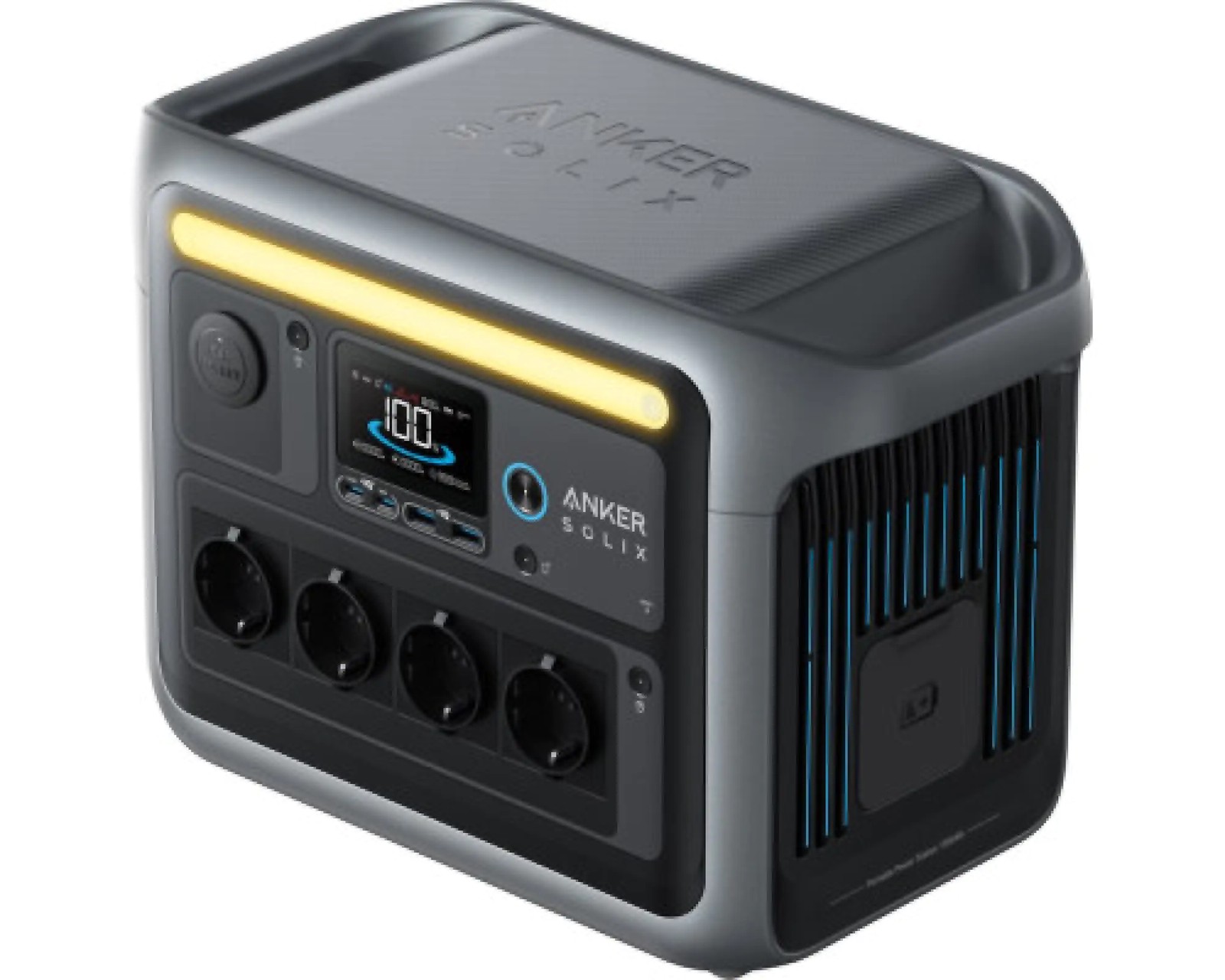
The Solix C1000 wins on recharge speed — nothing else here refills this fast. Anker's HyperFlash charging (enabled through the app) takes the 1,056Wh LiFePO4 pack from empty to 80% in about 43 minutes and to full in 58 minutes. When you're topping up between outages or grabbing a quick charge before a trip, that speed is a genuine superpower.
The rest of the package keeps up: 1,800W continuous output with 2,400W SurgePad peak, 3,000 cycles to 80%, 11 output ports including dual 100W USB-C, and up to 600W of solar input — the highest solar ceiling in this roundup. It's expandable to 2,112Wh with Anker's expansion battery, and the 5-year warranty matches the best here. At around 28 pounds it's portable enough for truck camping.
The honest tradeoffs: the headline charge speed requires the app and a smartphone to enable — out of the box it charges at standard speed, and some buyers find the app dependency irritating. Anker's power-station track record is shorter than EcoFlow's or Jackery's, though owner reviews have been strong. And the compact case means the fan works hard under sustained heavy loads. But if fast refills are your priority — storm country, short windows of grid power — this is the pick.
Best for: the fastest recharging — full in under an hour.
Check current price: Anker Solix C1000 Portable Power Station
EcoFlow River 2 Pro Portable Power Station
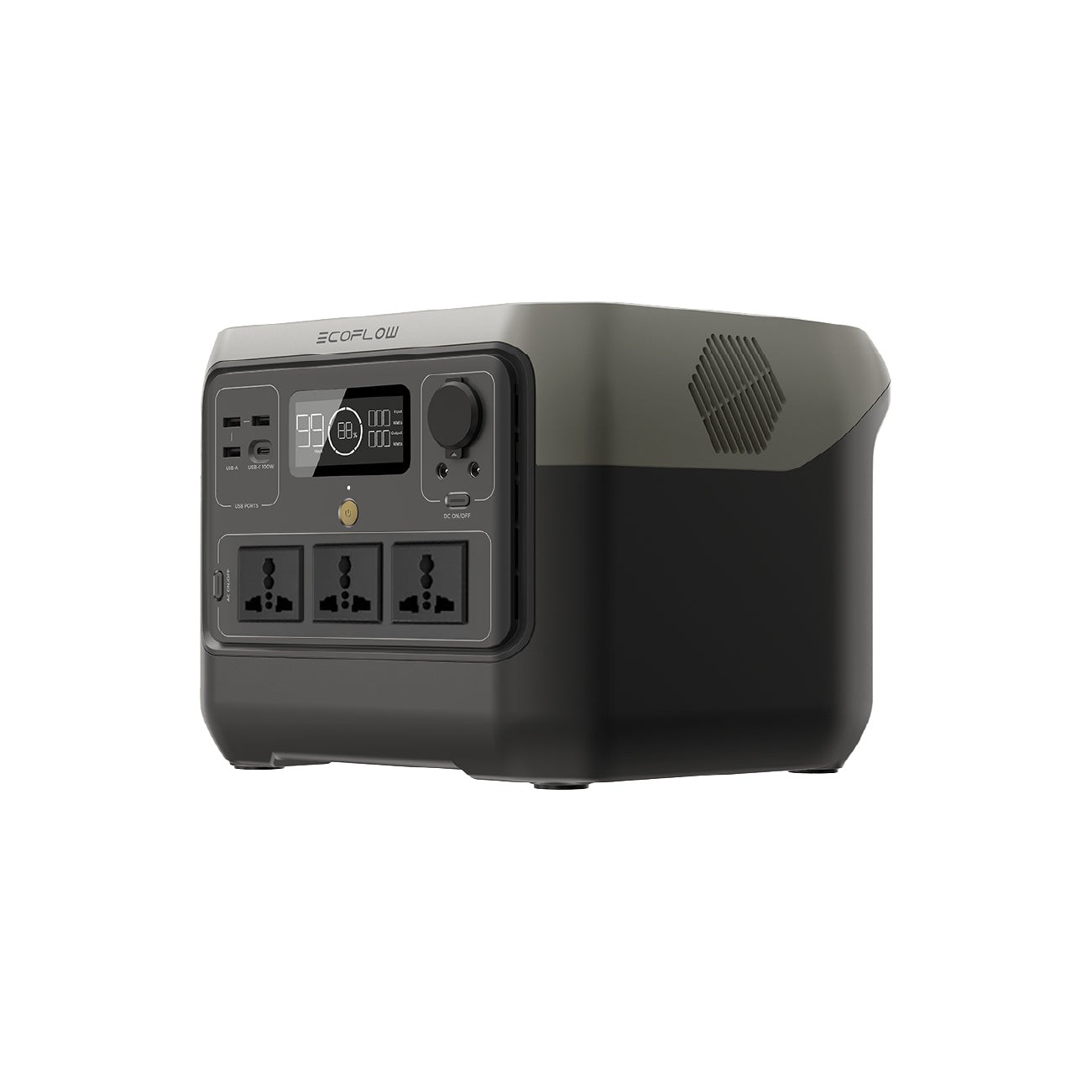
The River 2 Pro is the compact pick — the station for when a full 1,000Wh unit is more than you need to carry. At 768Wh and about 18 pounds, it's genuinely portable in a way the bigger stations aren't: easy to move from truck to tent to home office, and small enough to live on a shelf instead of demanding floor space.
It keeps the EcoFlow strengths: LiFePO4 chemistry with 3,000 cycles to 80%, 800W continuous output (1,600W with X-Boost for short surges), and the fastest AC recharge in its weight class — 0 to 100% in about 70 minutes. That's enough to run a 12V car fridge for a long weekend, keep laptops and cameras charged on a work trip, or carry the essentials (router, lights, phones) through a short outage. The 5-year warranty applies here too.
The honest tradeoffs: 768Wh and 800W are real limits. It won't run a full-size fridge, a microwave, or power tools — size your expectations to small electronics and efficient appliances. The 220W solar input ceiling is modest, so solar refills are slow. And per watt-hour, smaller stations cost more than bigger ones. But if your loads are laptops, lights, fridges, and phones rather than appliances, the weight savings are worth it every time you pick it up.
Best for: portable power for small electronics, car fridges, and short outages.
Check current price: EcoFlow River 2 Pro Portable Power Station
Bluetti AC180 Portable Power Station
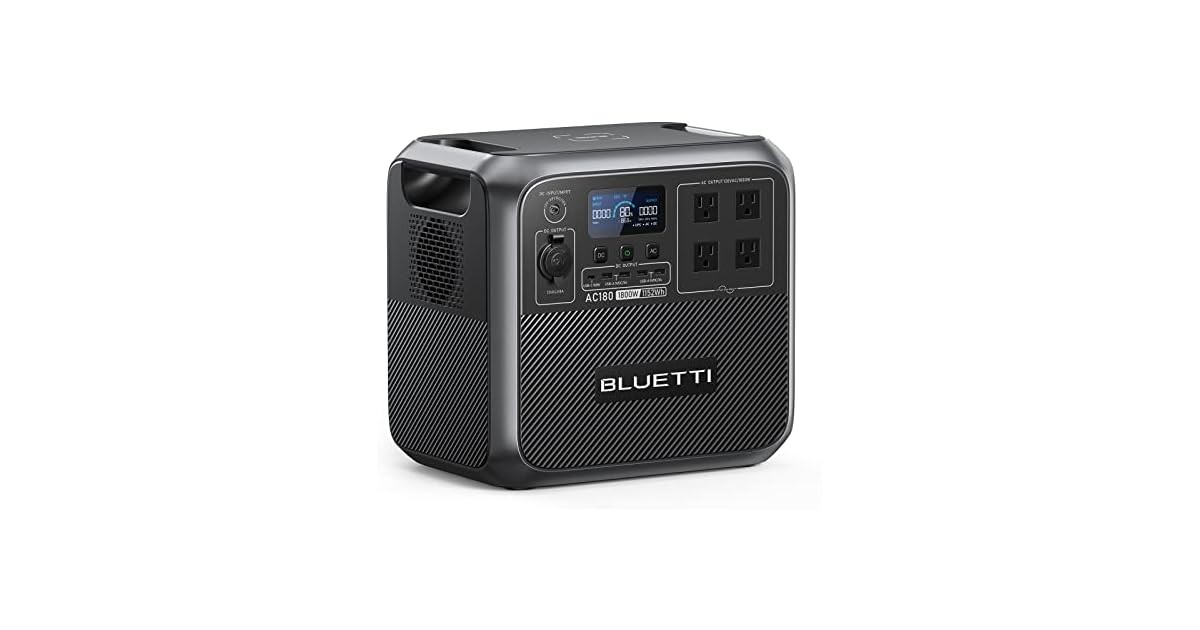
The AC180 is the value pick for home backup — the station to buy when the UPS behavior matters more than portability. The 1,152Wh LiFePO4 pack and 1,800W continuous output (2,700W surge) match the Delta 2 on paper, with a 3,500-cycle rating and 5-year warranty. But the headline is the 20-millisecond UPS switchover: when the grid drops, connected devices keep running without rebooting, which is exactly what you want guarding a desktop, router, or CPAP.
Charging is fast too — the 1,440W AC input fills it in about an hour and a half (0–80% in 45 minutes), and 500W of solar input gives real off-grid refill capability. The app enables a 2,700W power-lifting mode for stubborn loads, and it's expandable to 1,958Wh with Bluetti's B80 battery.
The honest tradeoffs: at 37.4 pounds, this is the heaviest station here by a wide margin — plan a permanent spot, not a camping companion. Owners report the real usable capacity runs below the 1,152Wh headline once inverter losses are factored in, so size conservatively. And the top-mounted wireless charging pad draws frequent complaints for unreliability — use the wired ports. But for a set-it-and-forget-it backup that bridges outages seamlessly, it's the most station per dollar here.
Best for: home backup duty with true UPS switchover, at the best price per watt-hour.
Check current price: Bluetti AC180 Portable Power Station
Comparison Table
| Station | Capacity | AC Output | Battery / Cycles | AC Recharge | Weight | Best For |
|---|---|---|---|---|---|---|
| EcoFlow Delta 2 | 1,024Wh | 1,800W (2,700W surge) | LiFePO4 / 3,000 to 80% | 0–80% ~50 min | 27 lbs | Best overall |
| Jackery Explorer 1000 v2 | 1,070Wh | 1,500W (3,000W surge) | LiFePO4 / 4,000 to 70% | ~1 hr (emergency mode) | 23.8 lbs | Easiest to own |
| Anker Solix C1000 | 1,056Wh | 1,800W (2,400W SurgePad) | LiFePO4 / 3,000 to 80% | Full ~58 min (HyperFlash) | ~28.4 lbs | Fastest charging |
| EcoFlow River 2 Pro | 768Wh | 800W (1,600W X-Boost) | LiFePO4 / 3,000 to 80% | Full ~70 min | ~18 lbs | Most portable |
| Bluetti AC180 | 1,152Wh | 1,800W (2,700W surge) | LiFePO4 / 3,500 to 80% | 0–80% ~45 min | 37.4 lbs | UPS home backup |
Frequently Asked Questions
What size power station do I need? Add up the watts of what you'll run simultaneously, and multiply by the hours you need. A fridge (150W running) for 8 hours needs roughly 1,200Wh before inverter losses — so a 1,000Wh-class station covers it with margin for a shorter outage. For phones, lights, and laptops, 500–800Wh is plenty. When in doubt, size up: running a station near empty regularly shortens its life.
How long will it run my refrigerator? A modern full-size fridge draws 100–200W while the compressor runs, but it cycles on and off — typically averaging a fraction of that over time. Owners commonly report 8–15 hours from a 1,000Wh-class station depending on the fridge's efficiency and ambient temperature. Keep the fridge full (thermal mass helps) and minimize door openings.
Can I use it while it's charging? Yes — pass-through charging is standard on all five picks. You can run devices off the station while it refills from AC or solar. Just note that charging generates heat, so the fan may run and total throughput is shared between charging the battery and powering your devices.
Do I need solar panels? Not necessarily. Most owners recharge from a wall outlet — solar is for extended off-grid use or for recharging during a multi-day outage when the grid is down. If you buy panels, match the station's solar input limit (220W–600W here); bigger panels won't charge faster than the controller allows. Panels are almost always sold separately.
LiFePO4 vs. regular lithium-ion — does it matter? Enormously. LiFePO4 (lithium iron phosphate) cells last 3,000–4,000 cycles versus 500–800 for the older NMC lithium-ion chemistry — roughly a decade of use instead of a few years — and they're more thermally stable. Every station on this list uses LiFePO4. If you're comparing against a cheaper station, check the chemistry first; it's usually where the corners were cut.
Can a portable power station run a space heater or air conditioner? Technically sometimes, practically no. A 1,500W space heater would drain a 1,000Wh station in under 40 minutes. These stations excel at electronics, lighting, refrigeration, and medical devices — not resistive heating or cooling. For climate control during outages, you need a fuel generator or a much larger battery system.
The Bottom Line
For most buyers, the EcoFlow Delta 2 is the right station — 1,024Wh, 1,800W output, 50-minute fast charging, and a 5-year warranty in one package. The Jackery Explorer 1000 v2 is the friendliest first station, the Anker Solix C1000 refills faster than anything else here, the EcoFlow River 2 Pro is the one you'll actually carry, and the Bluetti AC180 is the best value for set-and-forget home backup with real UPS switchover. Size to your actual loads, insist on LiFePO4, and you'll buy this once.
Get the next guide first
One email a week: new buying guides and gear deals worth knowing about. No spam, unsubscribe anytime.
We use your email only for the newsletter. See the privacy policy.
Related guides
Watch on YouTube — Forge Tested
Prefer video? The Forge Tested channel turns these guides into no-fluff video breakdowns.