Best Angle Grinder for Metalwork Beginners (Buyer's Guide)
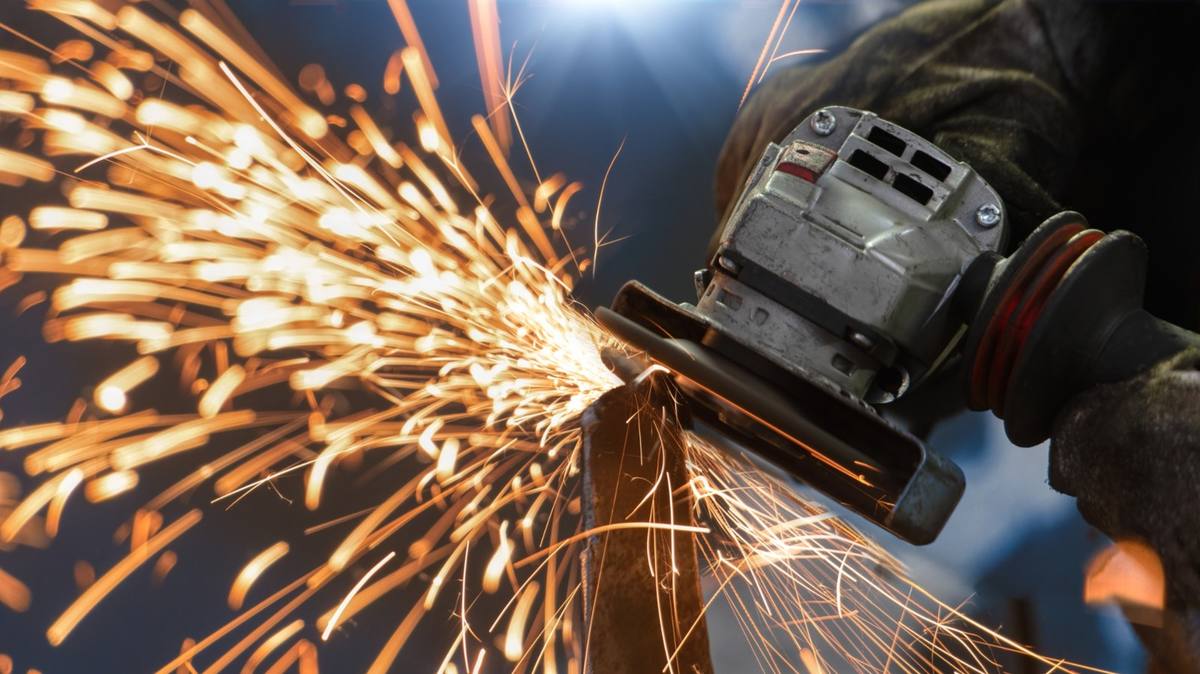
An angle grinder is one of the first tools most metalworking DIYers buy — and one of the most misunderstood. It's loud, throws sparks, and can hurt you if treated carelessly. But it's also the tool that unlocks cutting steel tubing, cleaning up welds, and deburring edges in seconds. This guide covers what matters when buying your first one, which specs are marketing noise, and which models reviewers and tradespeople recommend for beginners.
What an Angle Grinder Actually Does (and Doesn't)
Angle grinders cut, grind, and polish metal by spinning a disc at very high speed (typically 9,000–11,000 RPM for the common sizes). Swap the disc and the tool changes character:
- Cutting wheels (thin, ~1/16") — slice through steel, bolts, rebar, angle iron.
- Grinding wheels (thick, ~1/4") — remove weld beads, shape edges, clean up rough cuts.
- Flap discs — blend and smooth surfaces; the beginner-friendly all-rounder.
- Wire wheels — strip rust and paint.
What it doesn't do: it's not a precision tool — if you need exact, clean cuts in sheet metal, that's a different conversation. And never mount a wood-cutting saw blade on an angle grinder. That combination has caused serious injuries.
Disc Size: 4-1/2" vs 5"
For beginners doing metalwork, only one size debate matters: 4-1/2" vs 5".
| 4-1/2" | 5" | |
|---|---|---|
| Tool weight | Lighter (typically ~4–5 lbs) | Slightly heavier |
| Cutting depth | ~1-1/4" | ~1-1/2" |
| Disc availability | Enormous — every hardware store stocks them | Very good, but 4-1/2" wins |
| Cost of consumables | Cheaper per disc | Slightly more |
| Control | Easier one-handed feel, less fatigue | A bit more leverage and reach |
Our recommendation for beginners: start with 4-1/2". The disc selection is unmatched, the tool is lighter (which matters more than you'd think when you're learning control), and it handles 90% of hobbyist metalwork — cutting angle iron, trimming bolts, grinding welds, deburring edges. Step up to 5" later if you regularly work thicker stock.
The big 7" and 9" grinders are professional tools for heavy fabrication. They're heavy, powerful, and unforgiving — not beginner tools. Skip them for now.
Amps and Motor Power: What Matters
Corded grinders are rated in amps; cordless ones in volts. Here's how to read the numbers:
- Corded 4-1/2": 10–13 amps is the sweet spot. Around 11 amps from a reputable brand has plenty of power. Cheaper 7-amp grinders bog down under load and overheat — false economy.
- Cordless 4-1/2": 18V/20V class is standard. Brushless motors run cooler and more efficiently; worth paying for if you go cordless.
- No-load RPM: Most 4-1/2" grinders spin at 10,000–11,000 RPM. This matters less than you'd think — just buy discs rated at or above your grinder's max RPM (they all are, if you buy proper discs).
What actually separates good from mediocre: overload protection, soft start (no jerk when you pull the trigger — huge for beginners), and how well the tool holds speed when you lean into a cut. Reviewers consistently praise tools that don't bog down, not the ones with the biggest amp number on the box.
Paddle Switch vs Slide Switch: The Safety Question
This is the most important ergonomic choice you'll make, and it genuinely affects safety:
- Paddle (dead-man) switch: You squeeze a wide paddle under the tool body. Let go — even reflexively — and the tool stops. Reviewers and safety-minded tradespeople overwhelmingly prefer these, especially for beginners.
- Slide switch: You push a slider forward; it locks on. You have to deliberately slide it back to stop. In a grab, snag, or kickback moment, a beginner's instinct is to grip tighter — which doesn't stop a slide-switch tool.
Bottom line: get a paddle switch. The convenience of a lock-on switch isn't worth the tradeoff for your first grinder. If a model you like only comes with a slide switch, pick a different model.
Also worth looking for: kickback protection (stops the disc quickly if the wheel binds) and anti-restart (the tool won't spin up if plugged in while switched on). Both are cheap insurance and common on mid-tier tools.
Corded vs Cordless
This is less of a loyalty test than it used to be — modern cordless grinders are genuinely good. But for a beginner, the tradeoffs still tilt one way:
Go corded if you're mostly working in a garage or shop with outlets nearby, you want maximum runtime without battery anxiety, or budget matters — corded gives you more tool per dollar.
Go cordless if you're already invested in a battery platform (DeWalt 20V, Makita 18V LXT, Milwaukee M18, etc.) — bare tools are affordable when you own batteries — or you work away from outlets and move around a lot.
Honest take: most beginners do their metalwork in one place. A corded grinder is cheaper, never dies mid-cut, and removes one variable while you're learning. If you already own a solid battery platform, a brushless cordless from that same brand is a perfectly good first grinder — just budget for big batteries (5.0Ah+), because grinders drain small batteries fast.
Safety Gear: Non-Negotiable Essentials
An angle grinder is the tool most likely to send a DIYer to urgent care through complacency. The safety gear list is short and non-negotiable:
- Face shield (not just safety glasses). The single most important accessory — grinding throws hot metal particles at high velocity.
- Hearing protection. Grinders run well over 90 dB. Earplugs or muffs, every time.
- Gloves. Leather work gloves protect against sharp edges and hot metal. Keep fingers and loose material away from the spinning disc.
- Long sleeves, no loose clothing. Hot sparks are unpleasant; dangling sleeves near a spinning disc are dangerous.
- Respirator/dust mask. Grinding creates fine particulate; cutting or grinding galvanized steel produces zinc fumes. An N95 at minimum; a P100 half-face respirator for regular work.
Also: keep the guard on, always. Removing it for "better visibility" is one of the classic beginner mistakes. Use two hands, let the tool do the work (don't force it), and never set the grinder down until the disc has fully stopped.
Top Picks for Beginners
These are representative, well-reviewed models from established brands — the kind that show up again and again in reviewer roundups and workshop forums. We chose them for beginner-friendly features: paddle switches, soft start, and manageable weight.
Best Overall: DeWalt DWE402-style 4-1/2" Paddle Switch Grinder
Check current price: DeWalt 4-1/2-inch angle grinder
The DeWalt 4-1/2" paddle-switch grinder (the DWE402 line and its successors) is the default recommendation for a reason. Reviewers consistently praise its 11-amp motor for holding speed under load, the large paddle switch that works with gloved hands, and the soft start that prevents startup jerk. Tool-free guard adjustment is a genuinely useful touch, and dust-sealed bearings help longevity in a metal shop environment.
Who it's for: The beginner who wants one reliable corded grinder that just works.
Pros: - Strong, consistent power that doesn't bog down on thick stock - Large paddle switch — easy to hold and release with gloves - Soft start and overload protection - Tool-free guard adjustment
Cons: - Heavier and louder than some competitors - Corded — you're tethered to an outlet
Best Budget Pick: Store-Brand Value Grinder
Check current price: budget 4-1/2-inch angle grinder
If your budget is tight, the house-brand grinders from big-box and discount tool retailers are serviceable starter tools. They cut and grind fine for light hobby use — a few bolts, an occasional weld. They typically lack soft start and overload protection, and build quality is a step down.
Who it's for: The true beginner who isn't sure they'll stick with metalwork and wants to spend as little as possible to start.
Pros: - Very inexpensive — often a third of the price of big brands - Adequate for occasional light-duty work
Cons: - No soft start; jerky on startup - Slide switch on many models — less beginner-friendly - Shorter lifespan; most users outgrow it within a year
Cordless (If You're on a Battery Platform): Makita 18V LXT Brushless or DeWalt 20V Brushless
Check current price: Makita 18V brushless angle grinder
Check current price: DeWalt 20V MAX brushless angle grinder
The brushless 18V/20V-class grinders from Makita and DeWalt get consistent reviewer praise for cutting nearly as well as their corded siblings, with obvious portability. Electronic kickback protection is standard on the better models. The catch: you need 5.0Ah batteries minimum, and two of them — a grinder drains a small battery in minutes under load.
Who it's for: Beginners already invested in Makita LXT, DeWalt 20V, or Milwaukee M18 who work away from outlets.
Pros: - True portability; no cord to manage around hot metal - Brushless motors run cooler and more efficiently - Modern electronic safety features
Cons: - Bare tool + batteries + charger adds up fast if you're not already on the platform - Runtime limits — plan your cuts around battery swaps - Slightly less sustained power than the best corded tools
Best for Comfort and Control: Metabo WEV-series-style Grinder
Check current price: Metabo 4-1/2-inch angle grinder
Metabo built its reputation on grinders, and reviewers consistently describe the feel as a step up: slimmer body, lower vibration, excellent balance, and strong electronic safety features (auto-stop clutch, anti-restart). Pricier, but if you'll be grinding a lot — weld cleanup, surface prep — reduced vibration and fatigue are worth it.
Who it's for: The beginner who knows they'll be grinding regularly and wants the most comfortable, safety-forward tool.
Pros: - Excellent ergonomics and low vibration - Class-leading electronic safety (clutch, anti-restart) - Slim body fits smaller hands well
Cons: - Premium price - Disc and parts availability can be slightly less convenient than DeWalt/Makita in some regions
Comparison Table
| Best Overall (DeWalt-style) | Budget Pick | Cordless (Makita/DeWalt-style) | Comfort Pick (Metabo-style) | |
|---|---|---|---|---|
| Disc size | 4-1/2" | 4-1/2" | 4-1/2" | 4-1/2" |
| Power | 11A corded | ~7–9A corded | 18V/20V brushless | 10–13A corded |
| Switch | Paddle | Usually slide | Paddle (typical) | Paddle |
| Soft start | Yes | Usually no | Yes | Yes |
| Best for | Most beginners | Trying it out cheaply | Battery-platform owners | Frequent grinding |
| Approx. price tier | Mid | Low | Mid–High (with batteries) | High |
Prices and exact specs vary by model revision; check the current listings.
What to Buy With It (Starter Kit)
A grinder without consumables and safety gear is a paperweight. Budget for these on day one:
- Face shield — full-face, ANSI-rated (Check current price: full face shield for grinding)
- Cutting wheels (thin, 1/16") — a 10-pack of quality discs; cheap discs shatter more often (Check current price: 4-1/2 inch metal cutting discs)
- A grinding wheel (1/4") — for weld cleanup (Check current price: 4-1/2 inch grinding wheel)
- Flap discs (60 and 80 grit) — the most versatile finishing consumable (Check current price: flap disc assortment)
- Spare flanges and wrench — cheap insurance
- Leather gloves, ear protection, N95/P100 respirator — see the safety section above
Total starter cost beyond the tool itself: roughly $60–$120 depending on brands. Don't cheap out on discs — the disc is the part that can fail catastrophically, and quality name-brand abrasives are cheap peace of mind.
FAQ
Can a beginner safely use an angle grinder?
Yes, with respect and the right gear. The keys: paddle switch, guard always on, face shield plus glasses, two hands, let the tool do the work, and never force a binding disc. If the wheel binds or kicks, release the switch immediately.
What's the difference between a cutting disc and a grinding disc?
Cutting discs are thin (~1/16") and slice through metal — but they're fragile side-to-side. Grinding discs are thick (~1/4") and remove material on their face. Never grind with a cutting disc or cut with a grinding disc; each fails dangerously when misused.
Do I need a variable-speed grinder?
For metalwork, no. Variable speed is useful for polishing, wire wheels, and working with materials that melt or discolor — nice to have, not beginner-essential. A single-speed tool with soft start is simpler and cheaper.
Corded or cordless for my first grinder?
Corded, unless you already own batteries for a major platform. It's cheaper, runs indefinitely, and one less thing to manage while you're learning. Cordless is excellent as a second grinder or for mobile work.
Why does my grinder keep bogging down?
Usually one of three things: you're pushing too hard (let the disc cut at its own pace), the extension cord is too long or too thin (use a 12-gauge cord, as short as possible), or the disc is dull. A dull disc makes the motor work twice as hard.
How long do cutting discs last?
Shorter than you expect — they're consumables, and hobbyists go through several in one project. That's normal. Stock up; a disc run past its useful life cuts slower, runs hotter, and is more prone to breaking.
Can I cut wood with an angle grinder?
Not with a standard disc — and never mount a toothed circular saw blade on an angle grinder. Specialty carving discs for wood exist, but keep this tool dedicated to metal and use proper saws for wood.
What RPM rating do my discs need?
Match or exceed your grinder's no-load RPM — typically 10,000–11,000 for a 4-1/2" grinder, and virtually all discs sold for that size are rated accordingly. The rating is printed on every disc; check before mounting.
The Verdict
For most metalwork beginners, the answer is straightforward: a corded 4-1/2" paddle-switch grinder from an established brand — the DeWalt DWE402-style tool being the most consistently recommended example. It has the power to do real work and the safety features that matter (paddle switch, soft start, overload protection), plus a massive ecosystem of cheap, available discs.
Spend your remaining budget where it counts: a full face shield, quality name-brand discs, and hearing protection.
If you're already deep into a cordless platform, the brushless 18V/20V options from Makita or DeWalt are genuinely good first grinders. And if you know you'll be grinding for hours at a time, Metabo's ergonomics are worth the premium. But when in doubt: start corded, start 4-1/2", and keep the guard on.