Best Circular Saw for Cutting Plywood (2026 Buyer's Guide)
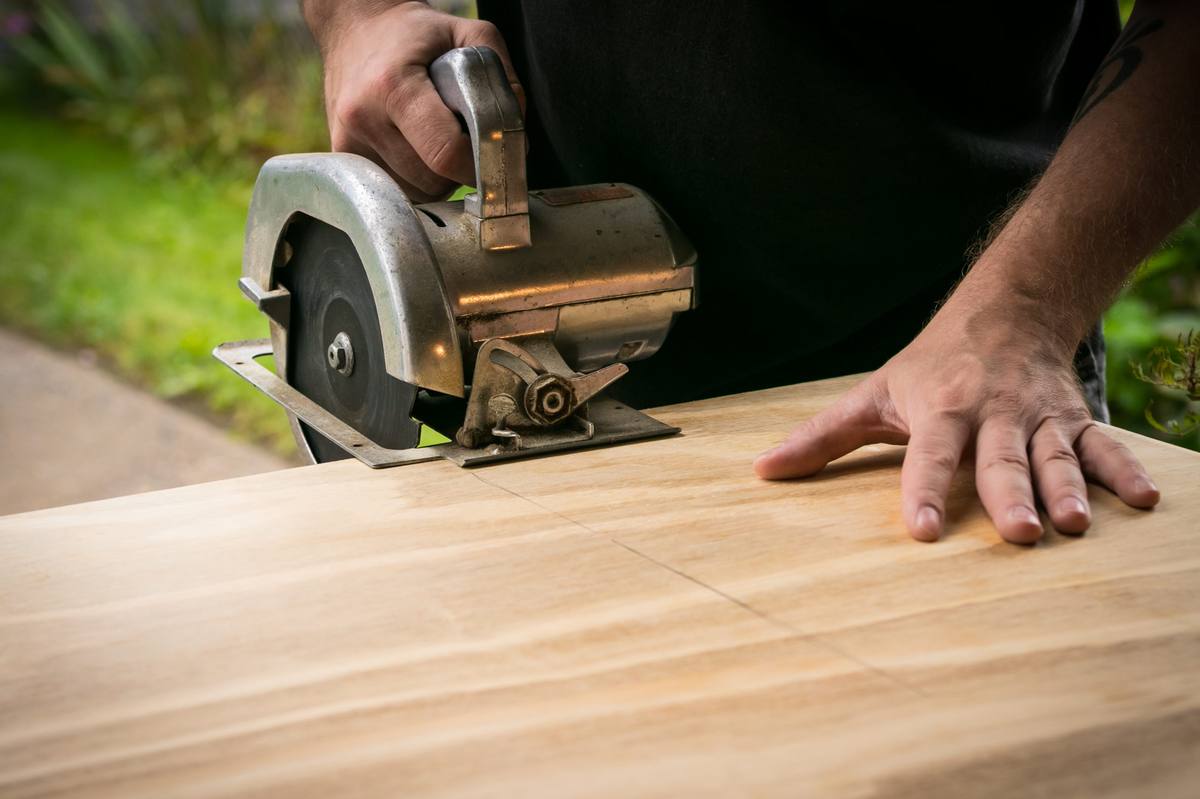
A circular saw is the cheapest, most versatile way to break down full sheets of plywood — but the stock blade in the box is almost always a framing blade that will chew up the face veneer. The saw itself matters, but the blade, the cut setup, and how the saw works with a straightedge guide matter just as much.
This is a research-based roundup, not a lab test: we've aggregated what woodworking forums, contractor reviewers, and long-term owners consistently report about which saws actually cut plywood cleanly.
What Matters Most for Plywood
Plywood is unforgiving. The thin face veneers splinter the moment a blade tears upward through them, and a standard 24-tooth framing blade will leave edges that look chewed. The good news: splintering is mostly a blade and technique problem, not a saw problem. Still, some saw features genuinely make plywood work easier.
Blade Size
The overwhelming standard is 7-1/4 inches. It gives you about 2-1/2" of cut depth at 90° (plenty for 3/4" plywood) and the blades are cheap and widely available — including the high-tooth-count plywood blades you actually need. A 6-1/2" saw is lighter and easier to control, but blade selection is narrower and depth at 45° can be tight. Avoid 8" or 10" circular saws for sheet goods; the extra size adds weight without benefits for 3/4" stock.
Tooth Count: The Single Biggest Factor
- 24T — stock framing blade. Fast, rough, heavy splintering. Fine for construction lumber; bad for visible plywood edges.
- 40T — the sweet spot for most plywood work. Clean enough for cabinet carcasses and shelving while still cutting reasonably fast.
- 60T+ — finish-quality cuts on veneered plywood, melamine, and pre-finished sheets. Slower feed rate, more heat, but glass-smooth edges on good plywood.
The practical move: buy a saw you're comfortable with, then budget ~$25–40 for a dedicated 40T or 60T thin-kerf plywood blade. Reviewers consistently say this one upgrade improves cut quality more than spending another $100 on the saw itself.
Bevel Capacity
Most saws bevel 0–45°, which covers the angled cuts plywood work occasionally needs. Some bevel to 50–57°. The more useful spec for plywood is bevel detent stops and smooth adjustment — a sloppy bevel mechanism shows up fast when you're cutting a clean mitered edge on a cabinet side.
Cut Depth
At 90°, a 7-1/4" saw cuts ~2-1/2" deep — far more than the 3/4" sheets you'll normally run. What matters is that the depth lever locks firmly without drifting; a depth that slips mid-cut is one of the most common complaints about budget saws, and inconsistent depth leaves uneven splintering along the cut line.
Guide and Track Compatibility
This is the hidden spec that separates saws DIYers love from saws they tolerate. Nobody freehands a 4x8 sheet accurately — you need a straightedge. Clamp-on aluminum rail systems work with nearly any saw. Track saws — circular saws with a flat base riding a dedicated track — are the cleanest way to cut plywood, at 2–3x the price, and some circular saws accept aftermarket adapters for track-saw rails. If you plan to cut lots of sheet goods, reviewers strongly recommend choosing a saw with an adapter available, or budgeting for a proper track saw.
Corded vs. Cordless
- Corded (~$80–130 for good ones): Constant power, lighter weight, no battery platform lock-in. If you already own a circular saw cord and your plywood cutting happens in the shop or garage, corded is the value play. You never run out of power mid-sheet.
- Cordless (18V/20V or 36V/40V platforms): Convenience — no cord dragging across a sheet, easier on a jobsite or cutting outdoors. Modern brushless cordless saws match corded cutting power for plywood. Only buy into a cordless saw if you already own (or plan to own) that battery platform; buying a saw plus two batteries plus a charger can double the effective cost.
For pure plywood sheet breakdown at home, corded still wins on value. For everything else — especially if you're cutting sheets in a driveway — cordless wins on convenience.
Features Worth Paying For
Electric brake (stops the blade in seconds), bevel detents at 45° and 22.5°, clear sight lines to the blade on both sides of the cut, a dust blower or port that keeps the cut line visible, and a spindle lock for fast blade changes — you'll swap between framing and plywood blades often.
Top Picks
Best Overall: Makita 7-1/4" Hypoid-Style Circular Saw (Representative Example)
This is the saw that shows up most often in "what should I buy" threads. Makita's hypoid-drive design delivers smooth, torquey power, and owners consistently praise its build quality, magnesium components, and the way it tracks straight in a cut.
- Best for: The DIYer who wants one saw to last a decade — plywood, 2x stock, everything in between.
- Why reviewers like it: Smooth, torquey power; durable magnesium shoe; excellent sight lines and straight tracking.
- Cons: Corded (tied to an outlet); priced above the budget tier; no electric brake on some versions.
- Check current price: Makita 7-1/4-inch hypoid circular saw
Best Budget: Skilsaw 7-1/4" Lightweight Circular Saw (Representative Example)
The classic red Skilsaw is the best-selling circular saw for a reason: it's light (~7.2 lbs), cheap, and cuts straight. Reviewers consistently say it pairs well with a straightedge guide and a 40T plywood blade.
- Best for: Occasional plywood projects — a bookshelf, garage shelving, a workbench top.
- Why reviewers like it: Very light and easy to handle, excellent value; with a 40T blade and a guide, cut quality rivals saws costing twice as much.
- Cons: Stamped-steel shoe can flex if abused; bevel adjustment is adequate rather than precise; stock framing blade must be replaced day one.
- Check current price: Skilsaw 7-1/4-inch circular saw
Best Cordless: DeWalt 20V MAX 7-1/4" Brushless Circular Saw (Representative Example)
Brushless motor, electric brake, and enough runtime on a 5Ah battery to break down several sheets per charge. Owners report it cuts plywood as cleanly as corded saws with a plywood blade fitted, and no cord snagging on sheet edges is a genuine quality-of-life upgrade.
- Best for: Existing DeWalt 20V owners, jobsite/driveway cutting, anyone who hates managing a cord across a 4x8 sheet.
- Why reviewers like it: True corded-like power, fast electric brake, reasonable tool-only price if you own batteries.
- Cons: Kit price jumps once you add batteries; heavier than comparable corded saws; battery platform lock-in.
- Check current price: DeWalt 20V MAX 7-1/4-inch brushless circular saw
Best for Ultra-Clean Cuts: Makita 6-1/2" Track Saw (Representative Example)
When the edge itself is the project — visible cabinet sides, pre-finished plywood, melamine — a track saw is the correct tool. The saw rides in a zero-clearance track that supports both sides of the cut and virtually eliminates top-face splintering.
- Best for: Cabinetry, built-ins, any project where the plywood edge will be seen.
- Why reviewers like it: Near-splinter-free cuts, dead-straight long rips, excellent dust collection with a vacuum attached.
- Cons: 2–3x the cost of a circular saw; tracks cost extra and are bulky to store; slower setup for one-off cuts.
- Check current price: Makita 6-1/2-inch plunge track saw kit
Best Upgrade Pick: Milwaukee M18 Fuel 7-1/4" Rear-Handle Cordless Saw (Representative Example)
The rear-handle (worm-drive-style) layout puts the motor behind the blade, giving superb sight lines — owners say the blade sits exactly where your eyes expect it. Milwaukee's M18 Fuel version brings that advantage to cordless, with reviewers praising its power and build.
- Best for: Serious DIYers and pros who cut a lot of sheet goods and want the best ergonomics in a circular saw.
- Why reviewers like it: Best-in-class sight lines (blade sits where your eyes expect it), huge power, premium build.
- Cons: Heavy; expensive, especially with batteries; more saw than a casual user needs.
- Check current price: Milwaukee M18 Fuel 7-1/4-inch rear-handle circular saw
Comparison Table
| Saw | Type | Blade | Best For | Approx. Price |
|---|---|---|---|---|
| Makita 7-1/4" hypoid-style | Corded | 7-1/4" | Best overall — one saw for everything | $$ |
| Skilsaw 7-1/4" lightweight | Corded | 7-1/4" | Budget pick — occasional projects | $ |
| DeWalt 20V MAX 7-1/4" brushless | Cordless | 7-1/4" | Best cordless — existing DeWalt owners | $$ (tool only) |
| Makita 6-1/2" track saw | Corded track | 6-1/2" | Cleanest cuts — cabinetry & built-ins | $$$ |
| Milwaukee M18 Fuel rear-handle | Cordless | 7-1/4" | Premium ergonomics — heavy users | $$$ |
Prices are approximate street prices at time of writing and move with sales. All picks are representative examples of their class — comparable models from other major brands at the same tier are usually fine substitutes.
Splinter Reduction Tips (The Part That Actually Matters)
The saw is maybe 30% of the cut-quality equation. These techniques do the rest:
- Use a plywood blade. 40T minimum, 60T for finish work. Thin-kerf blades cut with less resistance and less tear-out.
- Cut with the good face down. A circular saw's teeth cut upward, so the top face splinters and the bottom stays clean. (Track saws are the reverse — good face up.)
- Score the cut line. A shallow utility-knife score on the top face severs veneer fibers before the blade tears them.
- Tape the line. Painter's tape over the cut line measurably reduces splintering on cheap veneer.
- Use zero-clearance support. A sacrificial foam board underneath supports the fibers at the cut; a track saw's splinter guard does the same job.
- Slow down. Forcing a fine-tooth blade overheats it and tears rather than cuts. Let the blade do the work.
- Support the sheet fully. A sagging sheet pinches the blade and splinters the exit. Two sawhorses plus a foam insulation board underneath is the classic setup.
FAQ
What size circular saw is best for cutting plywood? 7-1/4" is the standard and the right choice for nearly everyone. It cuts 3/4" plywood at full depth with room to spare, and has the widest selection of plywood-specific blades. A 6-1/2" saw works fine too but offers fewer blade choices.
How many teeth should a plywood blade have? 40 teeth is the practical minimum for clean plywood cuts; 60 teeth or more gives finish-quality edges on veneered and pre-finished sheets. The stock 24-tooth blade that ships with most saws is a framing blade and will splinter plywood badly.
Can a circular saw cut plywood as cleanly as a table saw? With a sharp plywood blade, a straightedge guide, and the techniques above, it gets very close — close enough that many woodworkers break down sheets with a circular saw and only do final sizing on a table saw. A track saw narrows the gap further.
Corded or cordless circular saw for plywood? Corded wins on value and never runs out of power; cordless wins on convenience, especially cutting sheets outdoors. If you already own a battery platform, a brushless cordless saw from that platform is the easy choice.
Why is my circular saw splintering plywood? Almost always the blade (too few teeth, dull, or wrong type), cutting with the good face up, or an unsupported sheet. Fix those three and most splintering disappears regardless of which saw you own.
Do I need a track saw for plywood? No — but it's the biggest upgrade if you cut lots of sheet goods or need visible edges to be perfect. A circular saw plus a clamp-on straightedge guide gets you 80% of the way there for a fraction of the cost.
What is the best way to cut a full 4x8 sheet of plywood? Lay it on rigid foam insulation on the ground or sawhorses (full support, safe blade exit), clamp a straightedge guide on your cut line, set the blade depth to just clear the sheet, and cut with the good face down.
Can I cut plywood with the blade that came with my saw? You can, but expect splintered edges. A dedicated 40T or 60T plywood blade is the highest-value upgrade in this category, according to reviewers.
Verdict
For most DIY buyers, the right answer is a quality 7-1/4" circular saw plus a dedicated plywood blade and a straightedge guide — not the most expensive saw on the shelf. The Makita 7-1/4" hypoid-style saw is our best-overall pick for its smooth power and long-term durability; the Skilsaw lightweight is the smart budget buy since the money you save funds the blade and guide that actually determine cut quality. Cordless buyers already invested in a battery platform should get the matching brushless saw from that platform, and anyone building cabinets should seriously consider a track saw instead.
Whatever you choose, spend the extra $30 on a real plywood blade. It's the cheapest upgrade in the workshop and the one that shows up most in the finished work.