Best Cordless Ratchet for Mechanics (2026 Buyer's Guide)
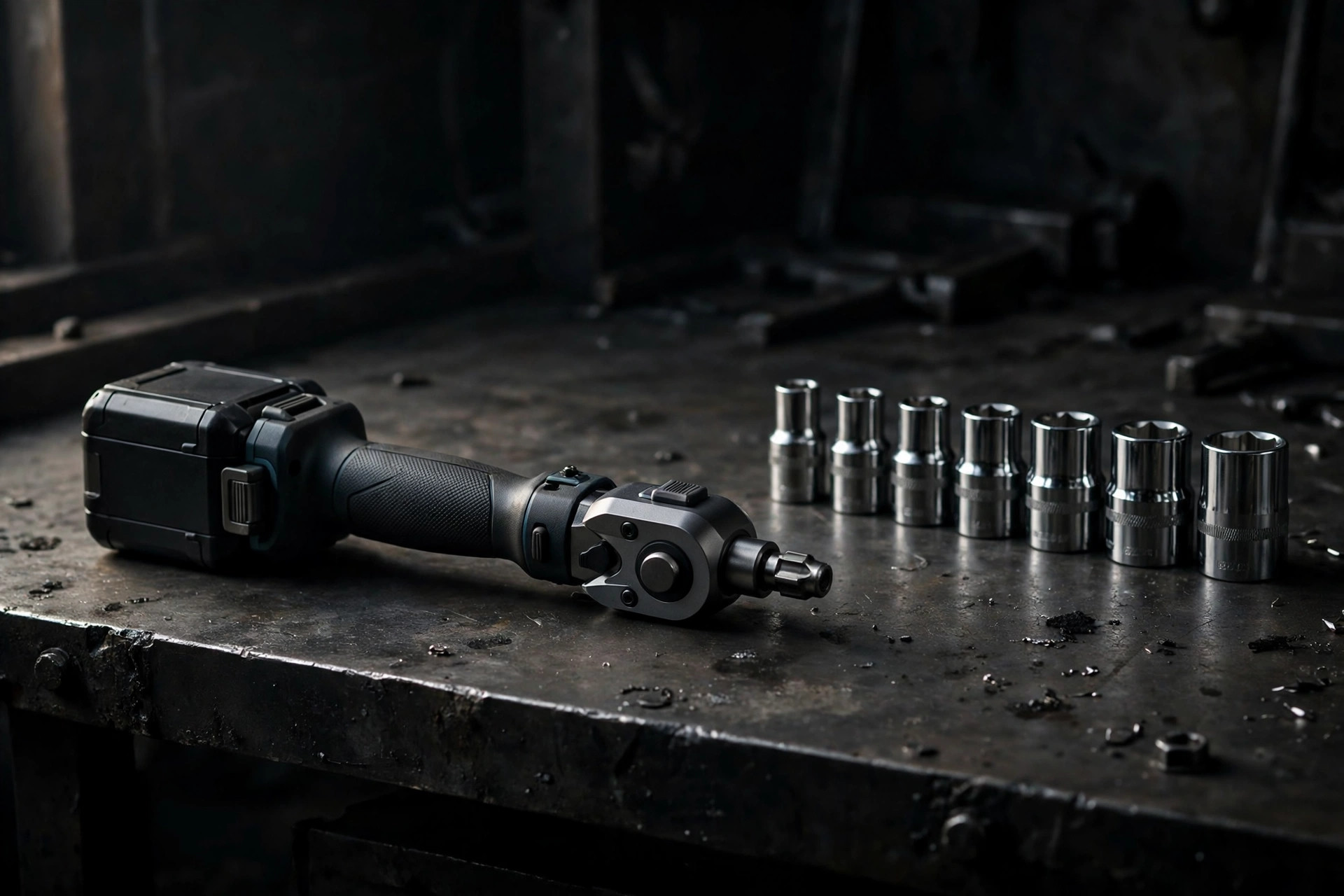
A cordless ratchet is the tool that pays for itself in knuckles. Anyone who's spun a dozen intake-manifold bolts by hand in a tight engine bay knows the math: a powered ratchet turns a 20-minute knuckle-buster into a two-minute job, and it does it without the air hose dragging across the fender. The category has matured fast — brushless motors, sub-inch head profiles, and extended-reach necks that get where your hand can't.
This guide is built from manufacturer spec sheets, retailer listings, and reviewer consensus — not from brand sponsorships. We haven't personally wrenched with every ratchet here, and we won't pretend otherwise. What we've done is cross-reference the specs that matter against what working mechanics actually report after months of shop use.
What Actually Matters in a Cordless Ratchet
Max torque (ft-lbs). This is breakaway muscle — what the ratchet can loosen, not just spin. 35 ft-lbs handles most interior and trim fasteners; 55–70 ft-lbs starts breaking suspension and engine-bay hardware. Match the torque to the fasteners you actually touch, not the biggest number on the page.
No-load RPM (speed). Once a fastener breaks loose, speed is everything. A 450–550 RPM ratchet runs long bolts dramatically faster than a 200 RPM one. High speed usually trades against torque — the fastest ratchets here are spinners, not breakers.
Head profile and drive size. The head has to fit where the fastener lives. Sub-inch head profiles (0.75") get into spaces a standard ratchet head can't. 3/8" drive is the shop standard; 1/4" is for small fasteners and tightest access. Extended-reach necks trade compactness for the ability to reach buried bolts.
Length and weight. A 15-inch extended-reach ratchet gets places a 10-inch one can't, but it's worse in tight quarters and heavier in the hand. Weight matters on all-day use — the difference between 1.7 and 2.8 lbs is real by hour six.
Motor type. Brushless (Milwaukee's POWERSTATE, DeWalt's brushless) means more power, longer runtime, and no brush maintenance. Brushed motors still work fine — they're just less efficient and wear out faster. At budget prices, brushed is an acceptable tradeoff.
Battery platform. A ratchet is only as good as the batteries behind it. Milwaukee's M12 system (150+ tools) is the deepest 12V lineup in existence; DeWalt's 20V MAX is the broadest overall. Buy the ratchet that matches the batteries already in your box.
Milwaukee M12 FUEL 3/8" Ratchet (2557-20)
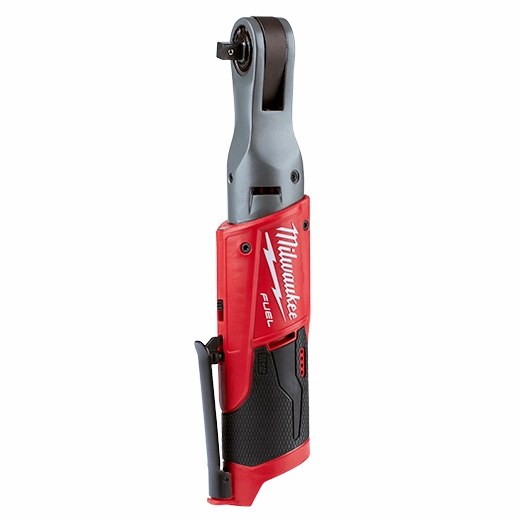
The 2557-20 is the shop standard for a reason: 55 ft-lbs of max torque from a POWERSTATE brushless motor, a 10.87-inch body, and a low-profile recessed steel-yoke head that fits where bulkier ratchets don't. At 2.4 lbs bare (2.8 with a battery), it balances like a hand tool rather than a power tool, which is exactly what you want for all-day engine-bay work.
The 200 RPM no-load speed is the honest tradeoff — it's the slowest spinner on this list. Milwaukee clearly optimized this one for breakaway torque over run-down speed, and for most mechanics that's the right call: breaking fasteners loose is the hard part, and 200 RPM still beats hand-ratcheting by an order of magnitude. Owners consistently call it the best torque-per-dollar in the M12 ratchet line.
One note for 2026 shoppers: Milwaukee has released a newer-generation M12 FUEL 3/8" ratchet (3053-20) with higher torque and speed ratings. It's worth a look if you want the latest, but the 2557-20 remains the proven, widely-available choice with deep owner-review history behind it.
Best for: mechanics who want one do-everything 3/8" ratchet with the best blend of torque, size, and price.
Check current price: Milwaukee M12 FUEL 3/8" Ratchet (2557-20)
Milwaukee M12 FUEL 3/8" High Speed Ratchet (2567-20)
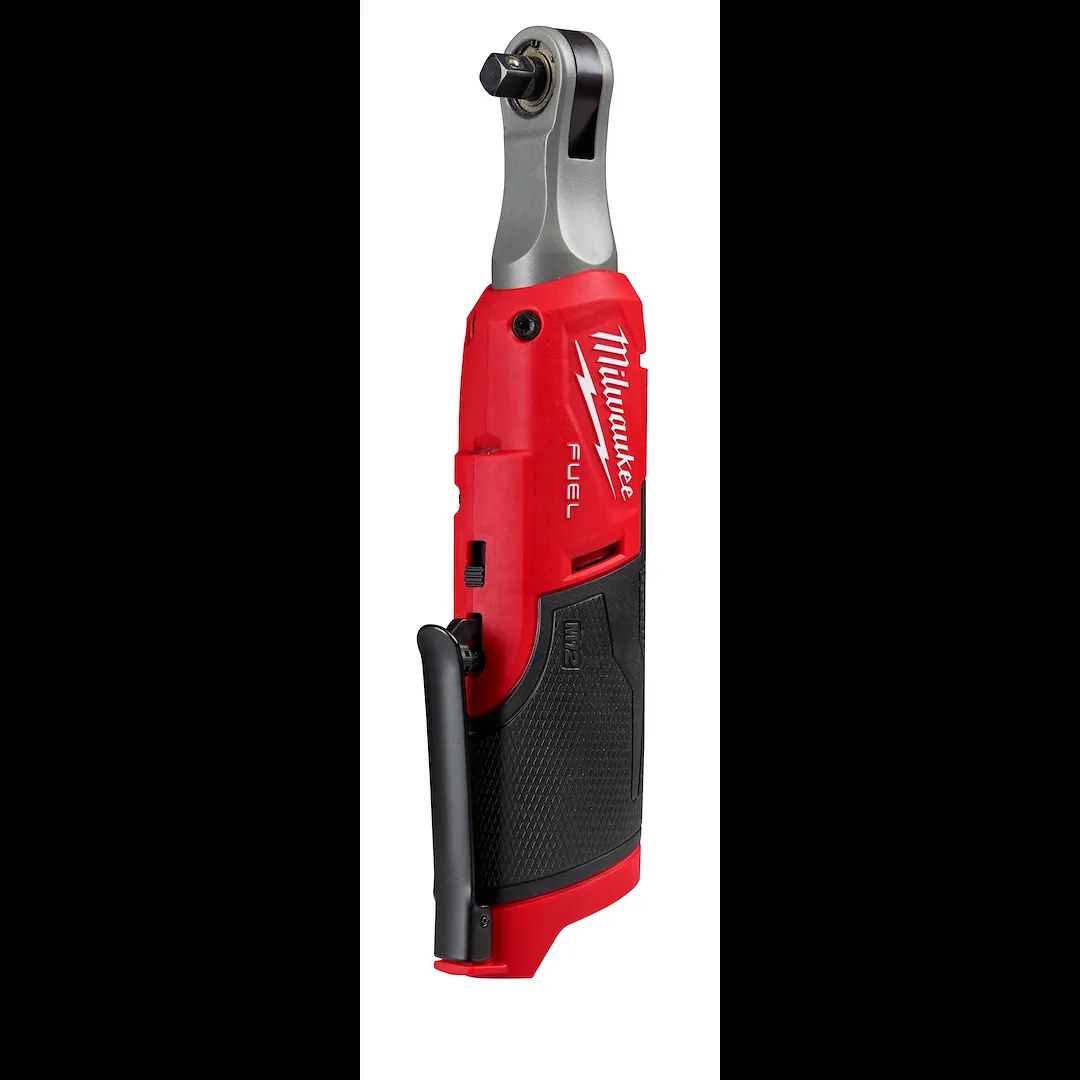
When the job is running fasteners rather than breaking them — long intake bolts, bellhousing bolts, anything with thread length — the 2567-20 is the answer. Its 0–450 RPM top speed is more than double the standard FUEL ratchet's, and the 0.75-inch head profile is the slimmest here, slipping into gaps where even the standard head won't go.
The tradeoff is torque: 35 ft-lbs max. This is a spinner, not a breaker — it'll run bolts down all day but you'll reach for something else (or a breaker bar first) on anything corroded or torqued hard. At 10.3 inches and 1.7 lbs bare, it's also the lightest full-size option here, which your wrist will appreciate on overhead work.
Think of it as a specialist: pair it with the standard 2557-20 and you've covered both ends of the job — break it loose with one, run it out with the other. As a first ratchet, though, the standard model's torque is more versatile.
Best for: high-volume fastener run-down work and the tightest access — the speed specialist.
Check current price: Milwaukee M12 FUEL 3/8" High Speed Ratchet (2567-20)
Milwaukee M12 FUEL INSIDER Extended Reach Box Ratchet (3050-20)
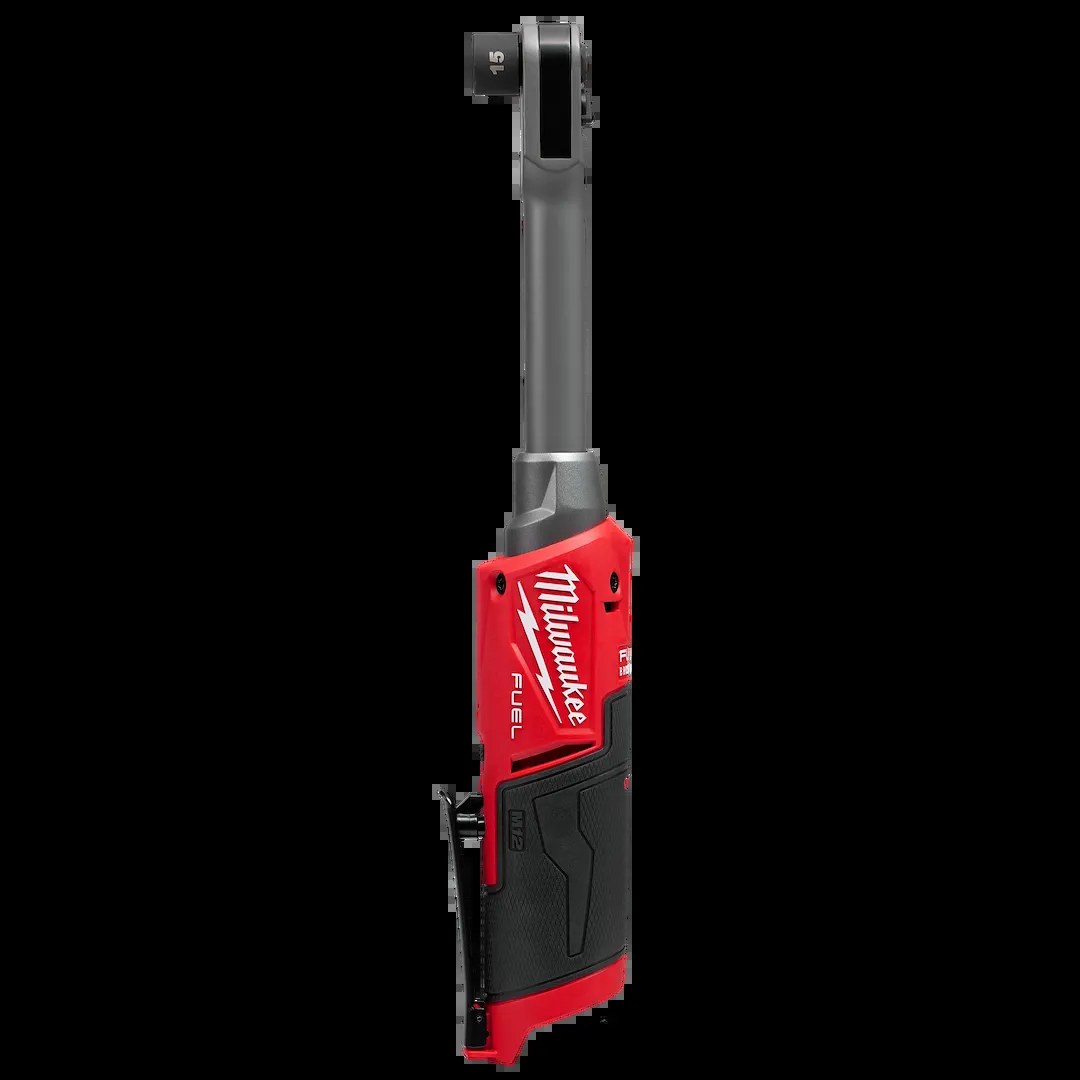
The INSIDER is the most innovative tool on this list: instead of a square drive, it has a pass-through box head that sockets insert directly into, from either side. That gives it the world's smallest head-with-socket profile and lets it reach buried fasteners — deep in engine bays, behind brackets — that no conventional ratchet can touch. Sockets pass through up to 15mm, so you can run nuts on threaded rod without bottoming out.
The numbers back up the concept: 60 ft-lbs max torque, 0–350 RPM, POWERSTATE brushless motor, dual LEDs, and a 15.2-inch extended neck. It ships with 13 metric box sockets (8–21mm) plus 1/4" hex, 1/4" anvil, and 3/8" anvil adapters, so it's genuinely versatile out of the box. It can even be used manually without engaging the motor.
The honest caveats: at 15.2 inches and a premium price, it's a specialty second ratchet, not a first — too long for tight quarters, too expensive as your only one. And the box-head system means you're buying into Milwaukee's INSIDER socket ecosystem. But for the fasteners nothing else reaches, nothing else reaches them.
Best for: mechanics who regularly fight buried or obstructed fasteners — the access specialist.
Check current price: Milwaukee M12 FUEL INSIDER Box Ratchet (3050-20)
DEWALT ATOMIC 20V MAX Brushless 3/8" Ratchet (DCF513B)
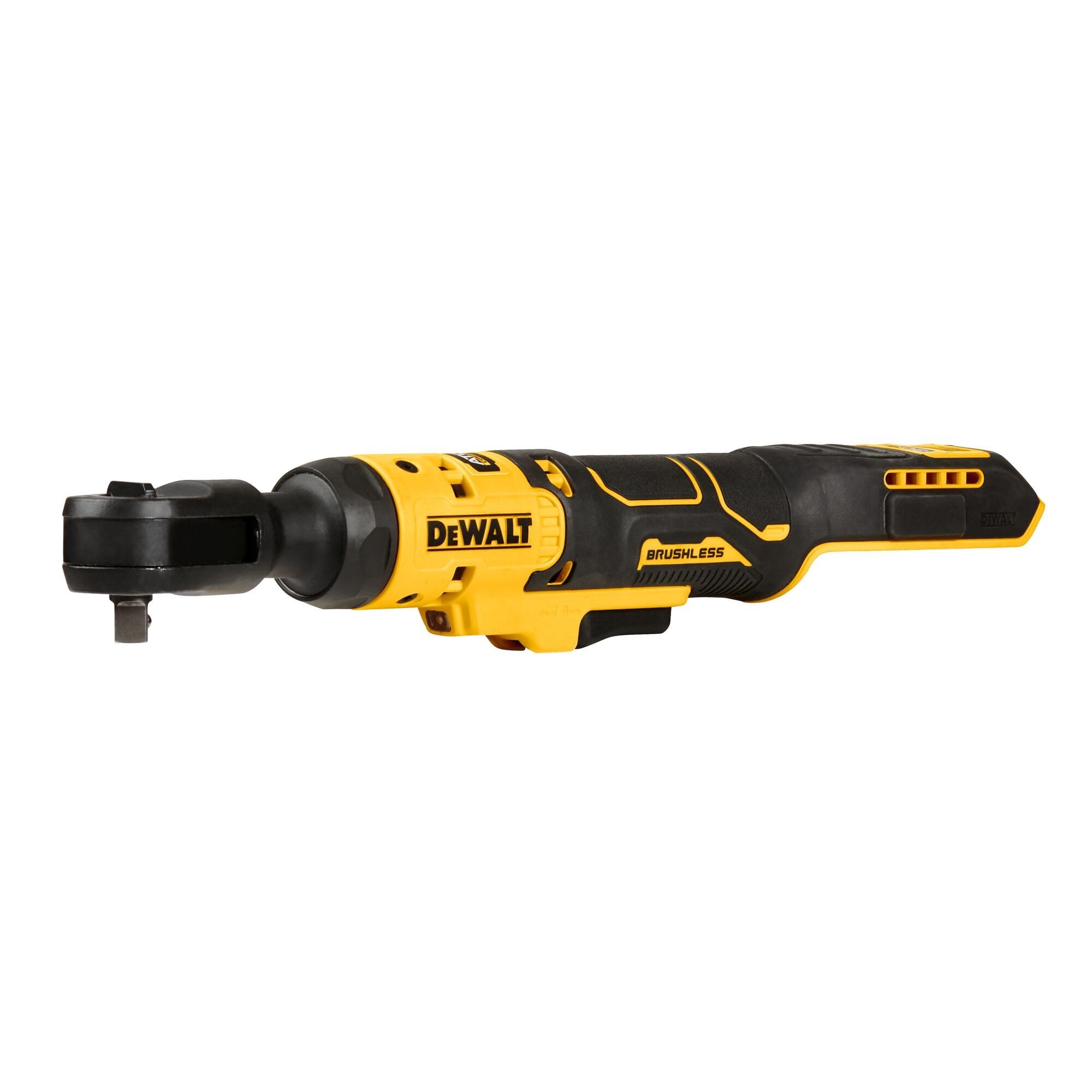
The DeWalt-system pick, and don't let the compact ATOMIC branding fool you — this is the torque king of the roundup at 70 ft-lbs max, from a brushless motor in a glass-filled nylon housing that shrugs off oil and solvents. If you're already on DeWalt 20V MAX, this is the obvious ratchet.
The 250 RPM speed and 14.2-inch length make it the longest, slowest option here — DeWalt traded compactness for power and reach. At 2.4 lbs (tool only, before the battery), it's also the heaviest once you hang a 20V pack on it; a 5Ah battery turns it into a 4-pound tool. The variable-speed trigger with trigger lock is well-executed, and the LED work light is genuinely useful.
Who should skip it: anyone not on the DeWalt platform — there's no reason to buy into 20V MAX for the ratchet alone when Milwaukee's M12 line is deeper and more compact. But for the DeWalt shop, the 70 ft-lbs is real, and it costs less than buying into a second battery system.
Best for: DeWalt 20V MAX owners who want maximum breakaway torque in the platform they already own.
Check current price: DEWALT ATOMIC 20V MAX Brushless 3/8" Ratchet (DCF513B)
Milwaukee M12 FUEL 1/4" High Speed Ratchet (2566-20)
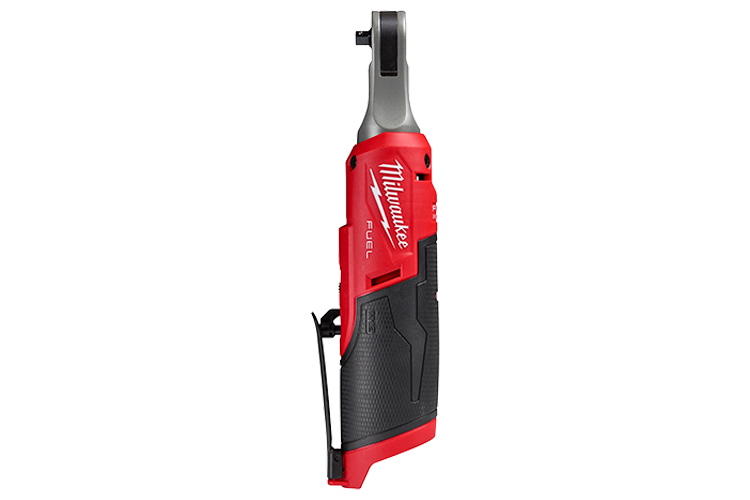
The 1/4"-drive specialist: 35 ft-lbs of torque and 450 RPM in a standard-length 11.1-inch body with a slim 0.8-inch head profile. For small fasteners in tight spaces (interior work, electronics, small-engine repair), the combination of speed, torque, and a slim head is hard to beat. It's the same M12 FUEL family and the same 35 ft-lb / 450 RPM class as the extended-reach models — but standard length, so it gives up the deep-access reach that defined this slot. The newer 3058-20 is faster and stronger (45 ft-lbs, 550 RPM), but it has no Amazon listing, and the previous generation's extended-reach 2568-20 is gone from Amazon too — so this is the closest buyable equivalent that keeps the 1/4" drive.
The POWERSTATE brushless motor and variable-speed paddle trigger are pure FUEL-line quality. The 35 ft-lbs is plenty for 1/4"-drive work — this isn't a breaker-bar substitute and doesn't pretend to be.
Two honest notes: you're giving up reach and a step of speed and torque against the 3058-20 — and it's unapologetically a specialist: if you only buy one ratchet, buy 3/8" drive. But as a second ratchet for small-fastener work, it's the best buyable option in the class.
Best for: 1/4"-drive work in tight spaces — interior, electronics, and small fasteners at high speed.
Check current price: Milwaukee M12 FUEL 1/4" High Speed Ratchet (2566-20)
Milwaukee M12 3/8" Ratchet (2457-20)
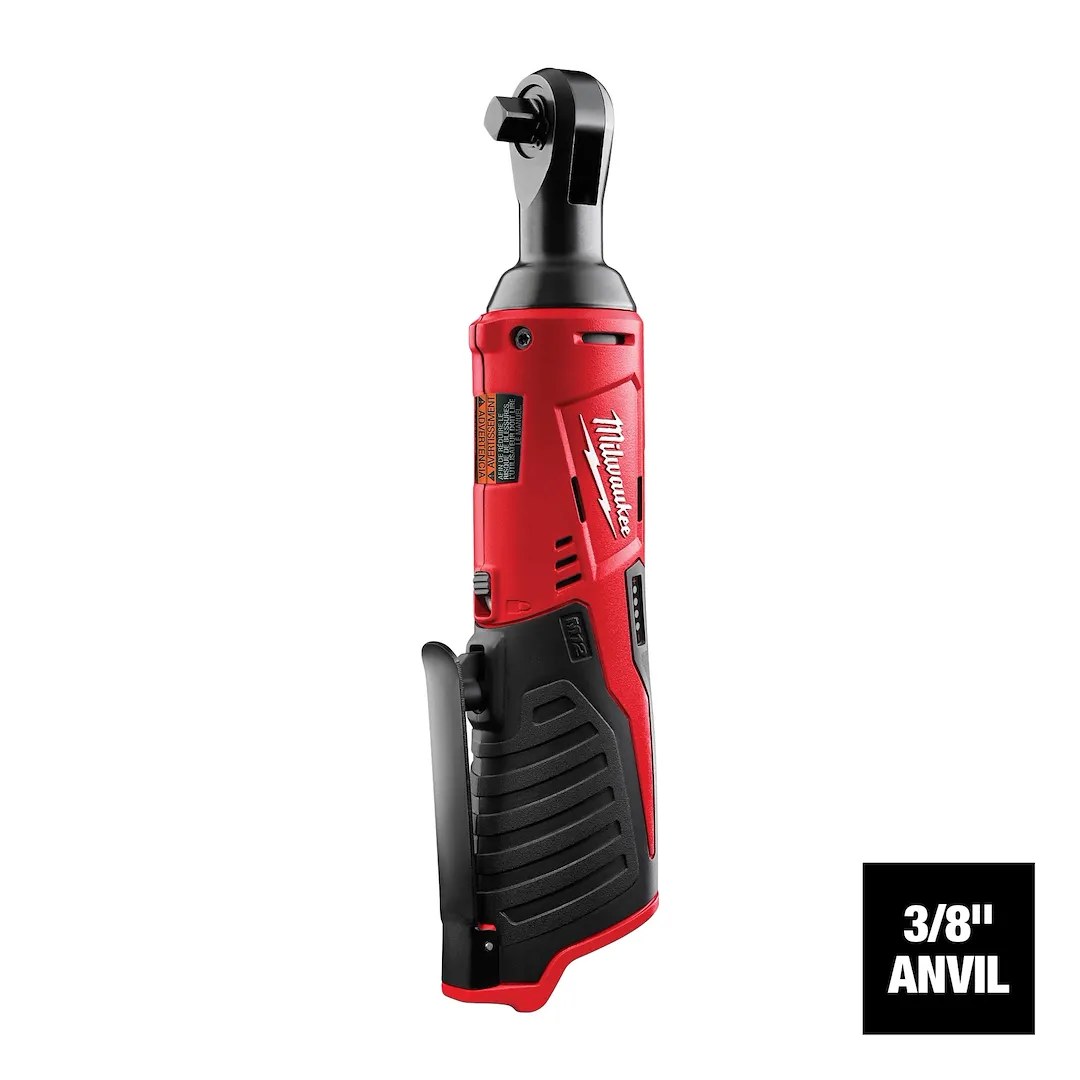
The budget pick and the proof that you don't need FUEL branding to get real work done. The 2457-20 is the brushed-motor 3/8" ratchet: 35 ft-lbs, 250 RPM, and the same 3/4-inch low-profile head that makes the FUEL line so good in tight spaces. At 10.75 inches and 1.9 lbs, it's compact and light.
The concessions are real but fair: the brushed motor is less efficient and will eventually wear (brushes are consumable), runtime per charge is shorter than the brushless models, and 35 ft-lbs won't break anything serious loose. But for running fasteners, interior work, and general shop duty, it's been a proven workhorse for years with a deep bench of positive owner reviews.
This is the right call for the home mechanic, the apprentice building a first box, or anyone who needs a ratchet occasionally rather than daily. Daily professional use justifies the FUEL upgrade; occasional use doesn't.
Best for: budget buyers and home mechanics who need a capable 3/8" ratchet without the FUEL premium.
Check current price: Milwaukee M12 3/8" Ratchet (2457-20)
Comparison Table
| Ratchet | Drive | Max Torque | No-Load RPM | Length | Weight (bare) | Best For |
|---|---|---|---|---|---|---|
| Milwaukee 2557-20 | 3/8" | 55 ft-lbs | 200 | 10.87" | 2.4 lb | Best overall |
| Milwaukee 2567-20 | 3/8" | 35 ft-lbs | 450 | 10.3" | 1.7 lb | Speed, tight access |
| Milwaukee 3050-20 | Box head | 60 ft-lbs | 350 | 15.2" | 2.3 lb | Buried fasteners |
| DeWalt DCF513B | 3/8" | 70 ft-lbs | 250 | 14.2" | 2.4 lb | DeWalt owners, max torque |
| Milwaukee 2566-20 | 1/4" | 35 ft-lbs | 450 | 11.1" | ~1.7 lb | Small fasteners, speed |
| Milwaukee 2457-20 | 3/8" | 35 ft-lbs | 250 | 10.75" | 1.9 lb | Budget pick |
Frequently Asked Questions
3/8" or 1/4" drive — which do I need? 3/8" for almost everyone. It's the shop standard, handles the fasteners you'll touch most, and every pick here except the 2566-20 is 3/8" (or the INSIDER's adaptable box head). Buy 1/4" drive only as a second ratchet for small-fastener, tight-space work.
Can a cordless ratchet replace my breaker bar? No — and it shouldn't try. Even the strongest here (70 ft-lbs) is a fastener tool, not a breaking tool. Break corroded or high-torque fasteners loose manually (or with an impact wrench), then let the ratchet do the spinning. Using a ratchet as a breaker bar is how you kill the mechanism.
How long does the battery last in real use? Longer than you'd expect — ratchets sip power compared to drills and saws. A 2.0Ah M12 pack typically lasts a full day of intermittent shop use. Heavy all-day use might need a second pack, but most mechanics charge weekly, not daily.
Brushless vs. brushed — does it matter for a ratchet? It matters for longevity and efficiency, less for raw performance. The brushed 2457-20 does real work; it just runs shorter per charge and the motor wears over years. For daily professional use, brushless pays for itself. For weekend use, brushed is fine.
Will these fit in an engine bay? That's what the head profile numbers are for. The 0.75" heads (2567-20, 2457-20) fit the tightest spots; the extended-reach 3050-20 trades head compactness for the ability to reach deep fasteners from further away, while the 2566-20's 0.8-inch head fits tight spots at standard length. Measure your worst-case access before choosing.
Why the 2566-20 instead of the newer 3058-20? The newer 3058-20 (45 ft-lbs, 550 RPM) has no Amazon listing, and the previous generation's extended-reach 2568-20 is gone from Amazon too. The 2566-20 is the same M12 FUEL family and the same 35 ft-lb / 450 RPM class at standard length — the closest buyable equivalent that keeps the 1/4" drive.
The Bottom Line
For most mechanics, the Milwaukee M12 FUEL 3/8" Ratchet (2557-20) is the right answer — 55 ft-lbs, brushless, compact head, and the deepest 12V system behind it. Speed demons should look at the High Speed 2567-20 (450 RPM), access fighters at the INSIDER 3050-20 (nothing else reaches what it reaches), and DeWalt loyalists at the ATOMIC DCF513B (70 ft-lbs in the platform you own). The 1/4" 2566-20 is the best second ratchet you can buy on Amazon — the newer 3058-20 is faster and stronger, but it has no Amazon listing, and the extended-reach 2568-20 is gone from Amazon too — and the brushed 2457-20 proves you don't need to spend FUEL money to get real work done. Buy the drive size you'll use daily, match the platform to your batteries, and keep a breaker bar handy for the truly stuck ones.
Get the next guide first
One email a week: new buying guides and gear deals worth knowing about. No spam, unsubscribe anytime.
We use your email only for the newsletter. See the privacy policy.
Related guides
Watch on YouTube — Forge Tested
Prefer video? The Forge Tested channel turns these guides into no-fluff video breakdowns.