Best Miter Saw for DIY Homeowners: 10\" vs 12\", Sliding vs Non-Sliding, and the Picks Worth Your Money
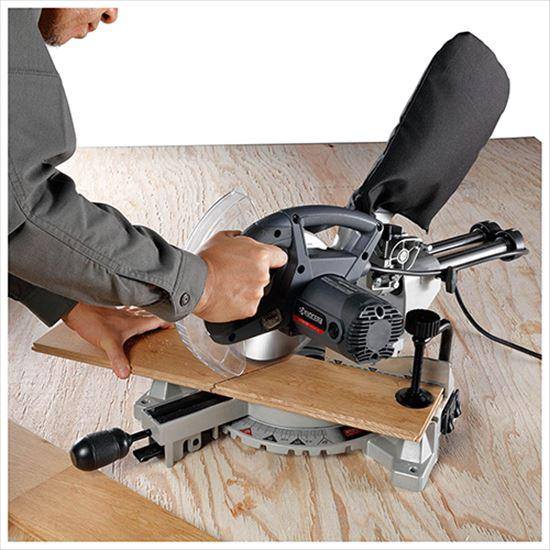
A miter saw is the first "real" power saw most DIY homeowners buy, and it's the one they're most likely to get wrong. Buy too little and you'll be flipping boards to finish a single cut on a deck project. Buy too much and you've spent an extra few hundred dollars on a 12-inch beast you'll never carry out of the garage again.
This is a research-based roundup, not a bench test — we drew on long-term owner reviews, contractor forums, and spec sheets to sort out what actually matters for homeowner work. Here's how to buy the right miter saw the first time.
The Four Decisions That Matter
Before you look at a single model, get these right. They narrow the field fast.
1. 10-inch vs 12-inch blade
This is the single most important choice, and it comes down to cutting capacity:
- 10-inch saws cut about 2 x 6 lumber flat and 4 x 4 posts, and crosscut roughly 8 inches (non-sliding). Blades are cheaper, the saws are lighter, and replacement blades are easy to find.
- 12-inch saws cut up to 2 x 8 flat and 4 x 6, and crosscut roughly 10 inches. Blades cost noticeably more — often 50–100% more — and the saw is heavier and bulkier.
The honest answer: a 10-inch saw handles the vast majority of homeowner work — trim, shelving, fencing, decking, furniture builds. Go 12-inch only if you regularly cut wide material (wide baseboard, large crown molding, 2x8s and 4x6s) and you're willing to pay more for blades and lug the extra weight.
2. Sliding vs non-sliding
A sliding saw mounts the blade head on rails so it can glide forward, extending crosscut capacity dramatically: a sliding 10-inch saw crosscuts about 12 inches (vs ~8 inches non-sliding), and a sliding 12-inch saw up to about 14–16 inches.
Sliders add cost, weight, and depth behind the saw (you need clearance for the rails). Non-sliding saws are more compact and hold alignment more easily. For trim work and typical DIY cuts, a non-sliding 10-inch is plenty. If you'll cut wide boards or flooring often, sliding is worth it.
3. Single vs dual bevel
A compound miter saw tilts the blade to cut bevels (angled cuts on the face of the board). A single-bevel saw tilts one way; a dual-bevel saw tilts both ways.
For crown molding or any molding where you need mirror-image cuts, dual bevel saves you from flipping the board — and flipping introduces the most common source of miscuts. Reviewers consistently call dual bevel one of the few upgrades genuinely worth paying for, and the price premium over single bevel is usually modest.
4. Corded vs cordless
Cordless miter saws exist and they're impressive, but for homeowners they're rarely the right call. Corded saws are cheaper, lighter, and never leave you waiting on a battery mid-project. Go cordless only if you're already deep in one battery platform and regularly cut away from an outlet.
What to Look For (the Specs That Actually Matter)
- Cutting capacity: check the crosscut numbers against the widest boards you plan to cut. Capacity you don't use is just cost and weight.
- Positive miter stops: look for crisp detents at 0°, 15°, 22.5°, 31.6°, and 45°. A saw that locks cleanly into common angles is faster and more accurate.
- Weight and portability: a 12-inch slider can push 60+ lbs, while a 10-inch non-sliding saw is typically under 35 lbs. Be honest about how often you'll move it.
- Fence quality: tall, flat fences support crown molding standing upright. Reviewers of budget models flag un-flat fences most often.
- Blade: the stock blade on most saws is mediocre. Budget for a quality 60- or 80-tooth blade for finish work — it transforms even a budget saw's cut quality.
The Top Picks
Each pick below is a representative example of its class — the kind of saw reviewers and contractors consistently recommend for that job.
Best Overall for DIY Homeowners: 12" Dual-Bevel Compound (DeWalt DWS779-style)
The DeWalt DWS779 is the benchmark 12-inch non-sliding dual-bevel compound saw — the consensus "just get this and be done" pick for homeowners who want one saw that handles everything.
Why reviewers consistently praise it:
- True dual-bevel compound action with clear, solid miter detents.
- Big, flat cast-aluminum base and tall sliding fences that handle crown molding standing upright.
- Excellent power-to-price ratio — it regularly undercuts 12-inch sliders while cutting just as cleanly.
The tradeoff is weight and bulk — at roughly 56 lbs it's a two-person lift onto a stand, and replacement 12-inch blades cost more. If you don't need the full 12-inch capacity, drop to a 10-inch dual-bevel equivalent and pocket the difference.
Check current price: DeWalt DWS779 miter saw
Pros: Huge capacity for the price; dual bevel; rock-solid fences; famously reliable long-term owner reviews. Cons: Heavy; 12" blades are pricier. Best for: Homeowners doing decks, fences, flooring, and general remodeling who want one saw that won't limit them.
Best Value 10": 10" Single-Bevel Compound (Metabo HPT C10FCGS-style)
Metabo HPT's 10-inch single-bevel compound saw is the budget pick that keeps showing up in "best cheap miter saw" roundups — compact, lightweight, and often priced well under the big-brand equivalents.
Reviewers consistently highlight:
- Light enough to carry anywhere (under 25 lbs) and small enough to store on a shelf.
- Surprisingly clean cuts once you swap in a decent blade — the stock blade is the weak link, not the motor.
The limitations are real: single bevel means flipping workpieces for mirrored cuts, and non-sliding 10-inch capacity tops out around an 8-inch crosscut. For baseboards, 2x4s, shelving, and furniture builds, that's fine.
Check current price: Metabo HPT C10FCGS miter saw
Pros: Very affordable; light and portable; accurate enough for basic work with a blade upgrade. Cons: Single bevel; limited crosscut width; stock blade is underwhelming. Best for: First-time buyers, tight budgets, and occasional projects like shelving and small repairs.
Best for Trim and Fine Work: 10" Dual-Bevel Sliding (Makita LS1019L-style)
Makita's 10-inch dual-bevel sliding saw is the trim carpenter's darling — reviewers praise its unusually smooth slide action and cut precision, plus a compact rail design that doesn't need feet of clearance behind the saw.
What stands out in owner reviews:
- Sliding 10-inch capacity (about 12-inch crosscut) handles wide trim and 1x12s without stepping up to a heavier 12-inch saw.
- Dual bevel plus laser and LED lighting for fine, repeatable trim cuts.
- Smooth, low-deflection slide rails — the most common complaint about cheap sliders is blade flex, which reviewers say this class avoids.
The cost sits noticeably above budget 10-inchers. But if your projects skew toward crown molding, baseboard, casing, and flooring, this is the class to buy.
Check current price: Makita LS1019L miter saw
Pros: Excellent cut precision for the class; sliding capacity without 12" weight; dual bevel; great out-of-the-box accuracy. Cons: Pricier than non-sliding 10" saws; heavier than a non-sliding 10". Best for: Trim carpentry, crown molding, flooring installs, and furniture builders.
Best Budget 12" Dual-Bevel: Skil 3821-01
If you want 12-inch dual-bevel capacity at a price that doesn't make you wince, the Skil 3821-01 is the value end of this class. You get a 15-amp motor driving a 12-inch blade at 4,500 RPM, with a dual-bevel range (47° left and right per the spec sheet) that handles crown molding and compound cuts without flipping the workpiece — a combination that's genuinely rare at this price.
What reviewers say:
- The built-in laser cutline guide, nine positive miter stops, and quick-mount system for fast stand changes are features you'd expect to pay twice the price for.
- Adequate accuracy for general DIY work once squared up out of the box (owners recommend checking factory alignment on budget saws); the die-cast aluminum fence and table extensions with rails are solid for the price.
Note this is a compound saw, not a slider — crosscut capacity is around 10 inches, so it won't replace a sliding saw for wide boards. But for trim, framing, and deck boards, it's the right tool at the right price.
Check current price: Skil 3821-01 miter saw
Pros: Cheapest path to a 12" dual-bevel saw; laser cutline, 9 positive miter stops, and quick-mount stand system included; decent accuracy after initial alignment. Cons: Fit and finish trail the premium brands; fence and detent feel less refined; laser needs calibration; plan on a blade upgrade. Best for: DIYers who want 12-inch dual-bevel capacity at the lowest price and will spend 20 minutes squaring it up.
Best Big-Capacity Upgrade: 12" Dual-Bevel Sliding (DeWalt DWS780-style)
The DeWalt DWS780-style 12-inch dual-bevel slider — the step up from the DWS779 with the XPS cutline light system — is what reviewers point to when capacity is the entire job: wide engineered lumber, large crown, and stacked material in one pass.
Notable points from owner reviews:
- About 14-inch crosscut capacity handles nearly anything a homeowner will throw at it.
- The XPS light system (shadow line, not a laser) shows the actual blade cut width — reviewers rate it above traditional lasers.
- Everything about it is oversized: base, fences, power. It weighs in north of 60 lbs and needs a stand or a permanent home.
Buy it for decks, major framing, or wide material — not because the bigger number feels safer.
Check current price: DeWalt DWS780 miter saw
Pros: Maximum capacity; excellent cutline system; dual bevel. Cons: Very heavy; expensive; 12" blades cost more; needs a stand and space. Best for: Serious remodelers, deck builders, and anyone who regularly cuts wide stock.
Miter Saw Comparison at a Glance
| Pick | Blade | Bevel | Sliding | Approx. Crosscut | Approx. Weight | Best For |
|---|---|---|---|---|---|---|
| DeWalt DWS779-style | 12" | Dual | No | ~10" | ~56 lbs | Do-everything homeowner saw |
| Metabo HPT C10FCGS-style | 10" | Single | No | ~8" | ~24 lbs | Budget / first saw |
| Makita LS1019L-style | 10" | Dual | Yes | ~12" | ~58 lbs | Trim and fine work |
| Skil 3821-01 | 12" | Dual | No | ~10" | ~42.5 lbs | Budget 12" dual-bevel |
| DeWalt DWS780-style | 12" | Dual | Yes | ~14" | ~62 lbs | Big-capacity projects |
FAQ
Should I get a 10-inch or 12-inch miter saw?
A 10-inch saw is enough for most homeowners — it cuts 2x6s flat, 4x4s, and trim cleanly, with cheaper, easier-to-find blades. Get a 12-inch only if you regularly cut 2x8s, wide trim, or large crown molding.
Is a sliding miter saw worth it?
Yes if you cut wide boards often — flooring, wide trim, 1x12 shelving. A sliding 10-inch saw roughly doubles crosscut capacity. No if your work is mostly 2x4s, baseboards, and standard trim: a non-sliding saw is cheaper, lighter, more compact, and holds alignment more easily.
Do I need dual bevel?
Strongly recommended for crown molding and trim work. Dual bevel lets you cut both halves of a mirrored cut without flipping the workpiece — flipping is the most common source of mistakes. The price premium over single bevel is usually small.
What blade should I use for trim vs framing?
A 60–80 tooth blade for trim, molding, and furniture — it leaves clean, splinter-free cuts. A 24–40 tooth blade for framing and rough carpentry, where speed matters more than finish. The stock blade is fine for rough work; buy a fine blade for finish work.
Can a miter saw replace a table saw or circular saw?
No. A miter saw makes fast, accurate crosscuts and angled cuts, but it can't rip boards lengthwise (a table saw's job) or cut sheet goods and make freehand cuts (a circular saw's job). The miter saw is usually the right first purchase if trim and crosscutting are the priority.
How do I keep my miter saw accurate?
Check that the blade is square to the fence and table when the saw is new, and re-check after moving it. Support long boards on both sides, and let the blade reach full speed before lowering it into the cut.
How long do miter saws last?
A quality corded miter saw used for homeowner-level work commonly lasts a decade or more. The blade is a consumable; beyond that, owner reviews of the established models above routinely report years of trouble-free use.
Do I need a miter saw stand?
You don't need one, but you'll want one. Long boards need support on both sides of the blade to cut safely and accurately — sawhorses work fine, and purpose-built stands fold up for storage.
Verdict
For most DIY homeowners, the answer is simpler than the options make it look:
- The one saw most people should buy: a 12-inch dual-bevel compound non-sliding saw like the DeWalt DWS779 — the capacity-per-dollar champion, with dual bevel that future-proofs you for trim work. The weight is the only real downside.
- On a budget or want portability: a 10-inch single-bevel compound like the Metabo HPT C10FCGS, plus a quality fine-tooth blade. It does 80% of what the big saw does at a fraction of the price.
- Trim-focused: a 10-inch dual-bevel slider like the Makita LS1019L — sliding capacity and precision without 12-inch bulk.
- Big projects (decks, framing, wide stock): a 12-inch dual-bevel slider like the DeWalt DWS780.
Whichever you choose, spend money on a good blade before you spend it on a fancier saw. The blade is the part that touches the wood — and it's the cheapest accuracy upgrade in the entire workshop.