Best Orbital Sander for Furniture Refinishing: A Buyer's Guide
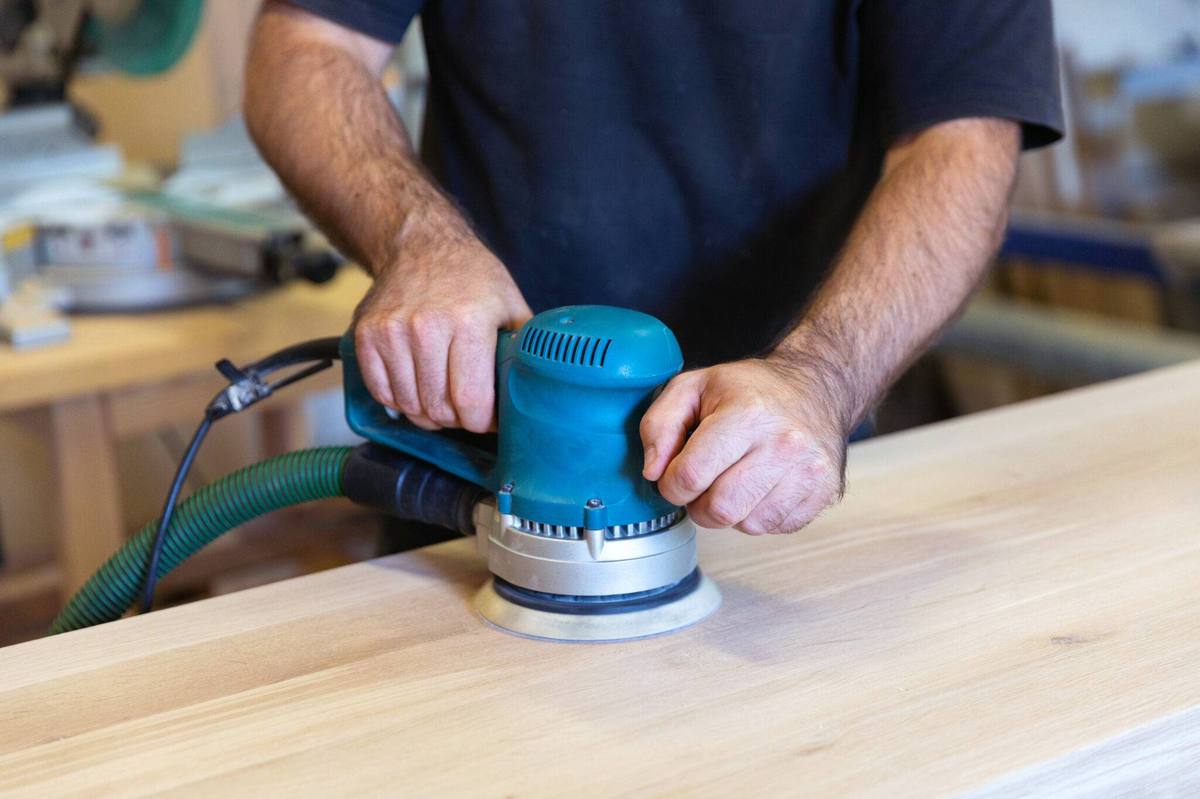
A refinished piece of furniture lives or dies at the sanding stage. Get it right and the stain soaks in evenly, the topcoat lays flat, and the grain pops. Get it wrong and you're staring at swirl marks and blotchy finish — forever.
You don't need a professional shop setup. The right random orbital sander, used with the right technique, gets you most of the way there. This guide covers what actually matters — orbit diameter, speed control, dust collection, ergonomics — plus top picks across budget tiers. Models below are representative examples based on consistently well-reviewed designs, not a sponsored list.
Random Orbit vs. Sheet Sanders: Which Do You Actually Need?
Both are "orbital" sanders, but they behave very differently on furniture.
Random orbital sanders (ROS) spin a round disc in a tight elliptical pattern that never repeats. That randomness is the whole point: it cuts aggressively without leaving the swirl marks that plague other sander types. They handle everything from stripping old finish at 80 grit to smoothing at 180 grit to prepping between coats at 220. For furniture refinishing, this is the sander you want in your hands first.
Sheet (finishing/palm) sanders vibrate a square or rectangular pad in small circles. They're gentler, use cheap quarter-sheet sandpaper, and reach inside corners a round disc can't. But they're slower at stock removal and more prone to swirls if you push them. Their niche on furniture is detail sanding — the inside of a drawer rail, a tight corner on a tabletop edge.
Bottom line: buy a random orbital sander as your main tool. Add a sheet sander later if you refinish pieces with lots of fiddly inside corners. For most dressers, tables, chairs, and nightstands, the random orbit sander does the real work.
What Actually Matters When Choosing One
Orbit diameter: the spec nobody explains
The "orbit" is how far the disc wobbles as it spins — typically around 1/16" on finish-oriented sanders or up to about 1/8" on aggressive ones. A smaller orbit cuts slower but leaves a finer, smoother finish; a larger orbit strips faster but works against you on final smoothing passes.
Most well-regarded furniture sanders land in the 3/32" to 1/8" range — a reasonable compromise. If you strip a lot of old finish but also want clean final sanding, a single sander is always a compromise: a dedicated stripping tool (belt sander or heat gun) plus a finish-oriented random orbit sander is the two-tool setup serious refinishers end up with.
Variable speed: don't buy without it
Furniture work is not full-speed work. You want low RPMs for veneer (where burn-through is a disaster), softwoods like pine, and final passes before finishing — and high speed for stripping old polyurethane or flattening a rough top. A 6,000–12,000 OPM (orbits per minute) dial gives you that range, and also controls heat: too fast on 220 grit and you're just melting finish onto the paper.
Dust collection: half the battle is staying clean
Sanding furniture means hours of fine dust. It clogs your sandpaper, coats the workpiece so you can't see what you're doing, and you breathe it. A good dust setup makes a bigger difference than most buyers expect.
Look for:
- A sealed dust canister or bag that stays attached while you move the tool around.
- Hole pattern matching your discs. Most 5" discs use an 8-hole pattern; some premium systems use multi-hole. Mismatched discs mean the dust ports do nothing.
- A dust port that accepts a shop vac hose. This is the real upgrade — connected to even a modest shop vacuum, a good sander leaves the workpiece nearly clean and dramatically extends disc life.
Pad size and ergonomics
5" pads are the standard and the right call for furniture. 6" pads cover ground faster but feel clumsy on chair legs and spindles, and everything is cheaper and easier to find in 5".
Ergonomics matter more than specs suggest. You'll run this tool for 30–90 minutes at a stretch. Reviewers consistently praise a low profile with a comfortable grip, rubberized overmolding that reduces vibration fatigue, reasonable weight (most are 3–4 lbs), and a rocker or paddle switch where your hand naturally rests.
Cheap sanders vibrate noticeably more, and after an hour your hands will tell you. Better-sealed bearings and counterbalanced designs run noticeably smoother. Since you can't feel this from a product page, weight reviewer comments on comfort heavily — consensus across dozens of reviews is more reliable than any single "I tested it" claim.
Corded vs. cordless
Corded sanders deliver unlimited runtime and consistent power at a lower price — for a home workshop, corded is the sensible default. Cordless models (usually 18V/20V) are convenient if you already own the batteries, and brushless versions perform nearly as well, but sander plus batteries costs well above a comparable corded tool.
Top Picks
Best Overall: DeWalt DWE6423-style 5" random orbit sander
The archetypal pick in this class — the tool woodworking forums recommend on autopilot. The design signature: a 3-amp motor, variable speed (roughly 8,000–12,000 OPM), a compact body with good rubber overmolding, and a sealed dust bag that performs better than most bags in its price class.
Who it's for: anyone refinishing tables, dressers, and chairs regularly — the safe default, with replacement pads and parts easy to find.
Pros: - Variable speed with a real low end for veneer and softwoods - Dust bag that's genuinely effective for its type - Consistently praised for low vibration and long-session comfort
Cons: - The dust bag fills quickly on heavy stripping work - Not the cheapest option in the class
Check current price: DeWalt DWE6423 random orbit sander
Best Value: Bosch ROS20VSC-style 5" random orbit sander
The budget pick that reviewers keep recommending, often undercutting DeWalt-style tools by a meaningful margin: 2.5-amp motor, variable speed (about 7,500–12,000 OPM), 5" pad, and a micro-filter dust canister instead of a bag.
Who it's for: occasional refinishers — a dresser here, a coffee table there. If you're doing fewer than a handful of projects a year, this is plenty of sander.
Pros: - Excellent price-to-performance ratio - Variable speed with a paddle switch that's easy to feather - Dust canister beats cheap bags and stays attached better
Cons: - 2.5-amp motor works harder on aggressive stripping — more passes at 80 grit - Slightly more vibration at top speed than pricier options
Check current price: Bosch ROS20VSC sander
Best Premium: Festool ETS 125-style random orbit sander
The "buy once, cry once" option. Premium sanders in this style (1/16" orbit, roughly 6,000–12,000 RPM) are engineered around finish quality first: extremely smooth operation and excellent stock dust extraction. The catch is price — typically two to three times the mid-range picks — and the strongest performance comes when paired with the manufacturer's dust extractor and abrasives.
Who it's for: people who refinish furniture constantly or sell pieces — if sanding is your regular workflow, the ergonomics justify themselves.
Pros: - Exceptional finish quality from the small orbit diameter - Near-best-in-class dust extraction, especially with a matched vacuum - Extremely smooth and quiet — reviewers consistently mention comfort over long sessions
Cons: - High upfront cost; the ecosystem lock-in adds more - Parts and abrasives cost more and are less commonly stocked locally
Check current price: Festool ETS 125 sander
Best Cordless: Makita XOB01Z-style 18V random orbit sander
The representative cordless pick for people already on a major 18V platform: brushless motor, variable speed, and runtime that comfortably covers a furniture project on a couple of 5Ah batteries, with no cord to drag across a fresh work area.
Who it's for: existing battery-platform owners, or anyone sanding in places with no convenient outlet — a garage, a driveway, an outdoor refinishing setup.
Pros: - No cord dragging across your workpiece - Brushless motor runs efficiently; speed holds under load - Batteries you may already own drop the effective price
Cons: - Bare-tool price hides the battery cost; full kit pricing approaches premium corded tools - Heavier than corded equivalents with a big battery attached
Check current price: Makita XOB01Z 18V random orbit sander
Honorable Mention: a cheap sheet sander for details
Once you own the random orbit sander, a basic quarter-sheet palm sander earns its keep for one job: inside corners, drawer boxes, and tight edges where the round disc can't reach. Inexpensive, and sandpaper costs pennies per sheet. Don't buy one as your primary tool — buy one when you find yourself hand-sanding corners every project.
Check current price: Black+Decker quarter sheet palm sander
Quick Comparison
| Pick | Type | Motor / Power | Speed Range | Orbit | Dust Collection | Best For |
|---|---|---|---|---|---|---|
| DeWalt DWE6423-style | 5" random orbit, corded | 3.0 amp | ~8,000–12,000 OPM | ~1/8" | Sealed dust bag | Regular furniture refinishers |
| Bosch ROS20VSC-style | 5" random orbit, corded | 2.5 amp | ~7,500–12,000 OPM | ~1/8" | Dust canister | Occasional projects, best value |
| Festool ETS 125-style | 5" random orbit, corded | ~250W | ~6,000–12,000 RPM | ~1/16" | Superior sealed extraction | Frequent/professional use |
| Makita XOB01Z-style | 5" random orbit, cordless | 18V brushless | ~7,000–11,000 OPM | ~1/8" | Dust bag | Battery-platform owners |
| Cheap palm sander | 1/4-sheet, corded | ~2.0 amp | ~12,000 OPM | Small | Basic dust bag | Corners and detail work |
Specs are approximate and representative of each class; check the current listing before buying.
Sanding Technique: The Part the Tool Can't Do For You
- Let the tool do the work. Pressing down harder doesn't remove material faster — it gouges, slows the pad, and overheats the abrasive. Guide it with light, even pressure.
- Keep it moving. Park the sander in one spot and you'll dish out a low spot. Slow, overlapping passes.
- Progress grits; don't skip. A common sequence is 80 → 120 → 150 → 180. Each grit's job is to remove the scratches the previous one left — jumping from 80 to 180 leaves visible 80-grit scratches under your finish.
- Don't oversand. For most film finishes (polyurethane, lacquer), stop at 180–220; finer than that and the finish bonds less well.
- Sand between coats. A light pass with 220 (or 320) knocks down nibs and gives the next coat grip. Wipe or vacuum the dust before recoating.
- Match your disc to your dust ports. Misaligned holes mean dust collection does nothing and discs clog twice as fast.
FAQ
What grit sequence should I use to refinish furniture? For stripping and flattening: 80 → 120 → 150 → 180, then finish at 180 or 220 before staining. For a light refresh, 150 or 220 alone is enough. Between coats, use 220 or 320 lightly.
Can a random orbit sander remove old paint and varnish? Yes, with 60–80 grit discs it strips old finish effectively on flat areas. For thick, gummy, or lead-based paint, use a heat gun or chemical stripper first — the sander then handles the residue and smoothing.
Will a random orbit sander leave swirl marks? Far less than other sander types, but it's not magic. Swirls still appear if you press too hard, use a clogged disc, or stop at too coarse a grit. Proper technique plus a full grit progression eliminates them.
Is a 5-inch or 6-inch sander better for furniture? 5-inch for nearly everyone: it reaches into curves and corners better, is easier to control one-handed, and discs are cheaper and more widely stocked. 6-inch only makes sense for large flat tabletops.
Do I need a dust extractor, or is the built-in bag enough? The built-in bag or canister is fine for occasional projects. If you sand regularly, hooking the sander to a shop vacuum is the biggest upgrade you can make: cleaner work, longer disc life, far less dust to breathe.
Can I sand veneer with an orbital sander? Carefully, yes. Lowest speed setting, 150 grit or finer, light pressure, and keep the pad flat and moving. Veneer is often under 1mm thick — burn-through can't be fixed.
Corded or cordless for furniture work? Corded for the workshop: unlimited runtime, consistent power, lower cost. Cordless if you already own the batteries or sand away from outlets.
The Verdict
If you only buy one sander for furniture refinishing, make it a 5-inch variable-speed random orbit sander with good dust collection. The DeWalt DWE6423-style tool is the default recommendation for good reason: capable, comfortable, and proven across thousands of real projects. On a tight budget, the Bosch ROS20VSC-style sander gets you most of the capability for less money. If furniture refinishing is your regular work rather than an occasional chore, the premium Festool ETS 125-style class pays for itself in comfort and finish quality.
Whichever you choose, the sander is only half the equation — work through your grits, let the tool do the cutting, and hook up dust collection.