The 5 Best Torque Wrenches for Lug Nuts and Auto Work (2026)
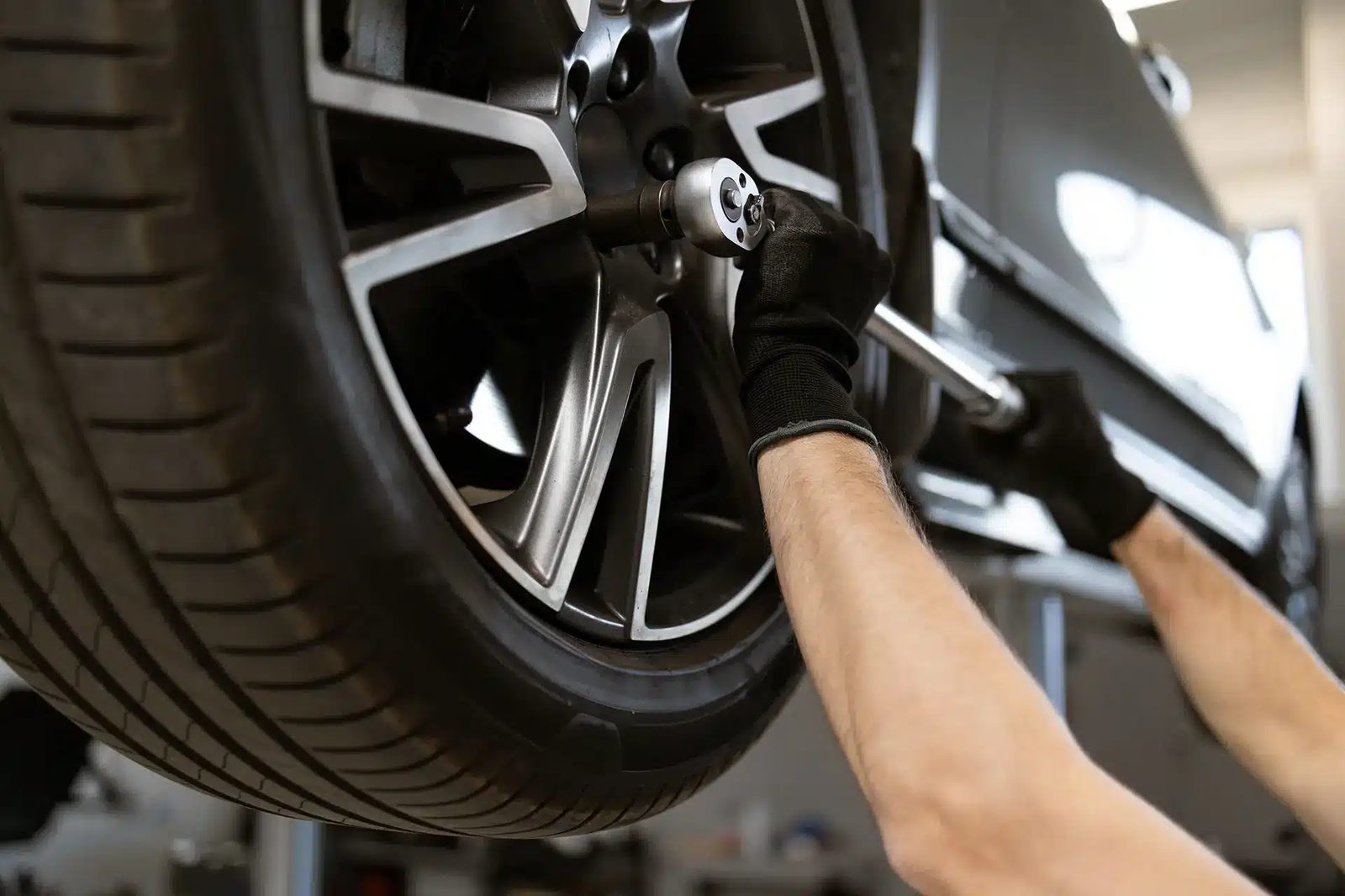
Lug nuts are the most commonly over-torqued fastener in America. The guy at the tire shop hits them with an impact wrench, you can't get them off on the side of the highway, and the warped brake rotors six months later are the receipt. A torque wrench is a $40–200 tool that prevents a $400 brake job. This guide covers 1/2-inch drive wrenches — the right size for lug nuts and most auto work.
This guide is research-based, not sponsored. Rankings come from manufacturer spec sheets, owner reviews across major retailers, and expert roundups. Nobody sent us free tools and nobody paid for placement. Here's what the data says actually matters, and which wrenches earn their keep.
What Actually Matters in a Torque Wrench
Range. Most passenger-car and truck lug nuts spec between 80 and 140 ft-lbs. A 10–150 ft-lb wrench covers nearly every lug nut job plus most suspension and engine work. A 40–250 or 30–250 ft-lb wrench adds headroom for trucks and larger fasteners but loses accuracy at the low end.
Accuracy. The honest standard for a click wrench is ±4% of the set value; good digital wrenches hit ±2–3%. For lug nuts, ±4% is plenty — the factory spec has more tolerance than that. What matters more is that the wrench holds its calibration over time.
Click vs. digital vs. split-beam. Click wrenches are the workhorse: set the value, pull until it clicks, done. Digital (electronic) wrenches give you a live readout and alerts, which is great for engine work with multi-stage torque sequences. Split-beam wrenches don't need to be turned down to zero after use and hold calibration longer — the pro's choice for a tool that gets used daily.
Length and leverage. A 1/2-inch drive torque wrench is typically 18–25 inches long. That length isn't a bug — it's what lets you hit 140 ft-lbs without straining. Don't buy a stubby torque wrench for lug nuts.
Calibration and care. Every click wrench should be stored turned down to its lowest setting (split-beams excepted — that's their party trick). Dropping a torque wrench can knock it out of calibration; treat it like the measuring instrument it is, not a breaker bar.
The Picks
TEKTON 24335 1/2-Inch Drive Click Torque Wrench
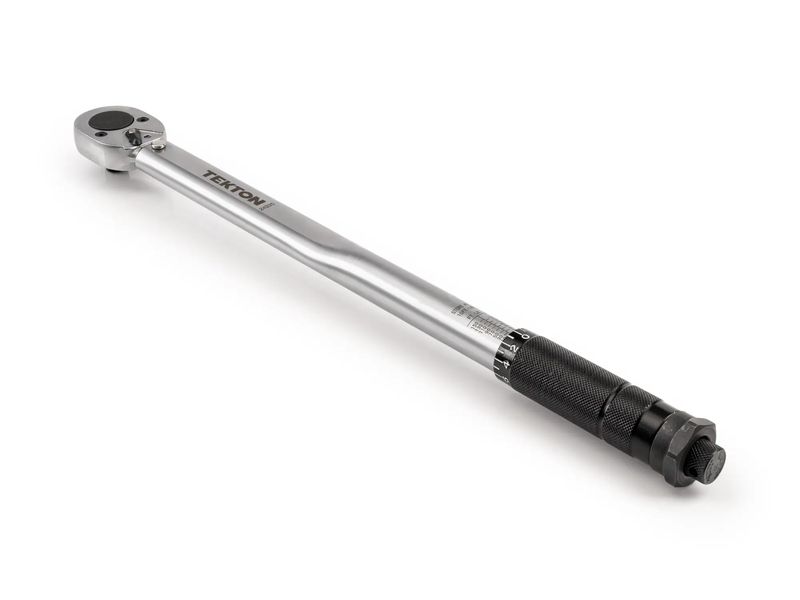
Why it wins overall. The TEKTON 24335 is the torque wrench that expert roundups and owner reviews keep recommending to normal humans, and the reasons are boring in the best way: 10–150 ft-lb range covering every lug nut spec you're likely to meet, ±4% accuracy, a reversible ratcheting head, and a dual-scale (ft-lb/Nm) readout that's actually legible. Owners consistently report years of reliable service with calibration that stays honest — the highest praise a measuring tool can get.
At around $40–50, it costs less than a single tire-shop visit and the all-steel construction with a knurled metal handle feels like a tool, not a toy. The click is crisp and unmistakable — no guessing whether you hit the value. TEKTON's warranty support gets consistently positive owner feedback, which matters for a tool you might own for decades.
Weaknesses. Like all click wrenches, it must be turned down to the lowest setting for storage or the spring takes a set and calibration drifts. The included case is basic. It's not the prettiest tool in the drawer, but it's the one that works.
Best for: The man buying his first (and possibly last) torque wrench for lug nuts, brakes, and general auto work.
Check current price: TEKTON 24335 1/2-Inch Drive Click Torque Wrench
EPAuto 1/2-Inch Drive Click Torque Wrench
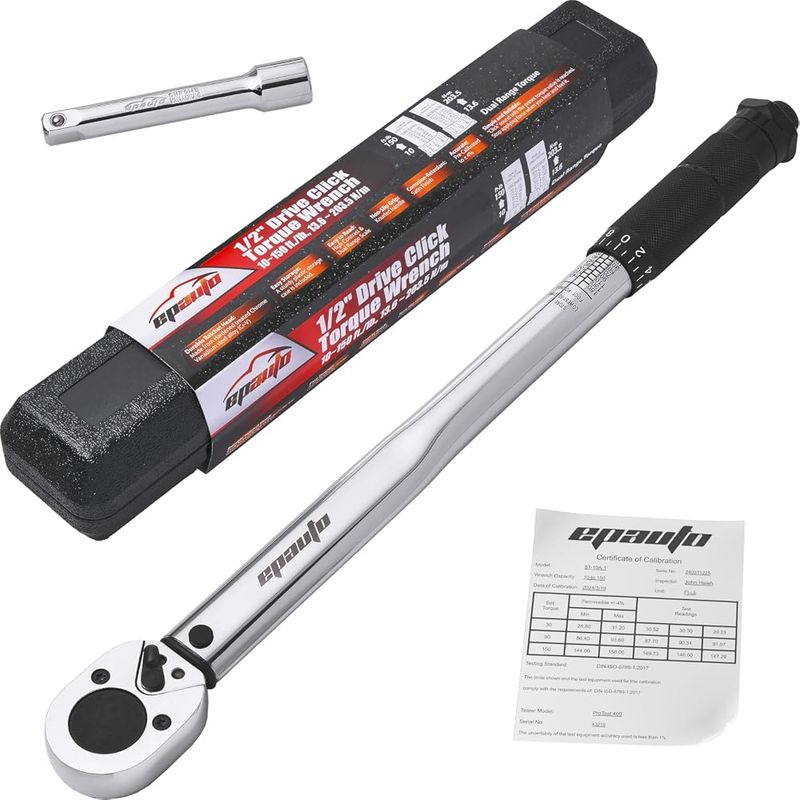
Why it wins for budget. The EPAuto 1/2-inch click wrench does the same core job as wrenches costing three times as much: 10–150 ft-lb range, ±4% accuracy, a clear dual-scale readout, and a solid click you can feel through gloves. It typically ships with a storage case and an extension bar included — accessories the bigger brands charge extra for.
Owner reviews, numbering in the tens of thousands across retailers, consistently report accurate-enough performance for lug nuts and routine auto work. For a tool that might get used four times a year for tire rotations, the value proposition is undeniable at around $25–35.
Weaknesses. Fit and finish is a step below the TEKTON — the knurling is rougher, the scale markings less crisp. Long-term calibration durability doesn't have the same track record as the established names. This is a buy-it-for-tire-rotations tool, not a buy-it-for-life tool.
Best for: The budget-conscious buyer who needs correct lug nut torque without spending more than a tank of gas.
Check current price: EPAuto 1/2-Inch Drive Click Torque Wrench
GEARWRENCH 85077 1/2-Inch Drive Electronic Torque Wrench
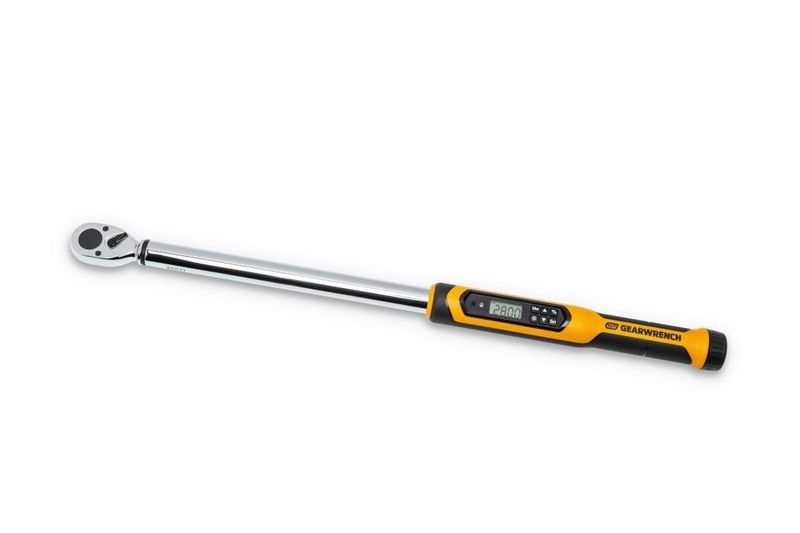
Why it wins for digital. The GEARWRENCH 85077 brings electronic precision to the home garage: 25–250 ft-lb range, ±2% accuracy clockwise (±3% counterclockwise), and a target-alert system — the handle vibrates, the buzzer sounds, and the LED changes as you approach the set value. For multi-stage engine torque sequences (torque to 30, then 60, then 90), the digital readout removes all guesswork.
The 72-tooth ratcheting head needs only 5 degrees of swing arc, which matters when you're torquing fasteners buried in an engine bay. Owners consistently report the alerts as genuinely useful rather than gimmicky, and the wider 250 ft-lb ceiling covers truck lug nuts and larger fasteners the 150 ft-lb wrenches can't. Around $200–250.
Weaknesses. It runs on batteries (AAA), and a dead battery mid-job is a special kind of frustration — keep spares. The 25 ft-lb minimum is too high for small fasteners; you'll still want a 3/8-inch wrench for low-torque work. Electronics and shop floors have a complicated relationship; treat it gentler than a click wrench.
Best for: Engine work, multi-stage torque sequences, and anyone who wants a number on a screen instead of a click in the dark.
Check current price: GEARWRENCH 85077 1/2-Inch Drive Electronic Torque Wrench
Precision Instruments PREC3FR250F 1/2-Inch Drive Split-Beam Flex-Head Torque Wrench
Why it wins for pros. The Precision Instruments PREC3FR250F is the wrench that working mechanics buy when they're done replacing cheap ones. The split-beam design is the headline: unlike click wrenches, it doesn't need to be turned down to zero after use — the mechanism doesn't rely on a compressed spring, so calibration holds longer and storage is foolproof. 40–250 ft-lb range, ±4% accuracy clockwise, flex head for awkward angles.
It's made in the USA, and owners — including a lot of professional techs — consistently report it as the most accurate-feeling wrench they've owned, with a click that's more of a positive break you feel in your hands. The satin chrome finish wipes clean of shop grime. Around $200.
Weaknesses. The 40 ft-lb minimum means it's not the wrench for small fasteners — pair it with a 3/8-inch drive for the low end. The flex head, while useful, is one more moving part. It's a specialist's tool at a specialist's price.
Best for: The serious DIYer or pro who uses a torque wrench weekly and is tired of babysitting a click wrench's spring.
CDI 2503MFRMH 1/2-Inch Drive Micrometer Torque Wrench
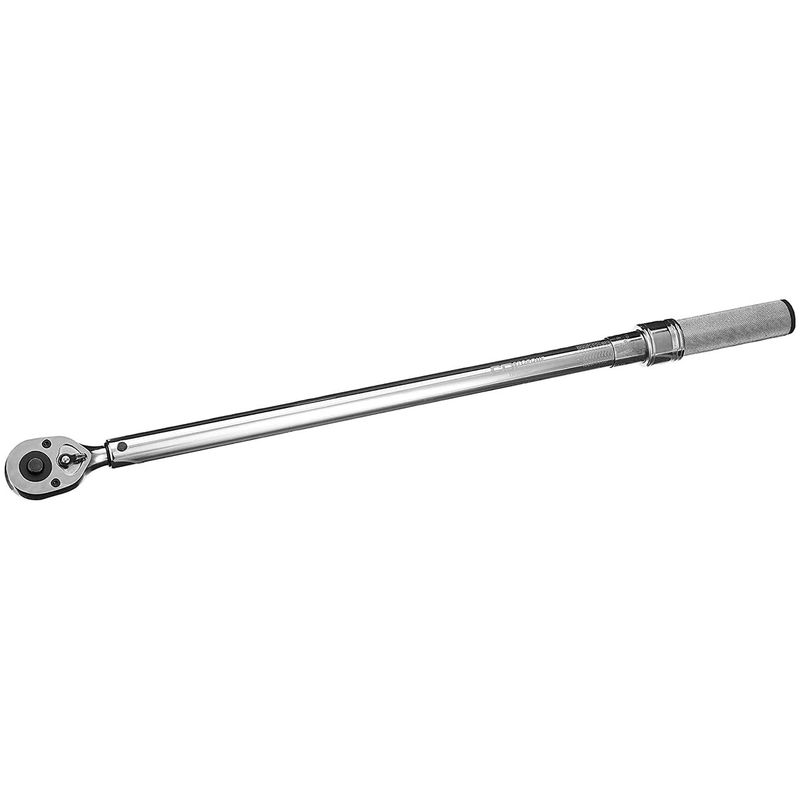
Why it wins for shop-grade precision. CDI is Snap-on's industrial torque division — the same engineering without the truck markup. The 2503MFRMH is a 30–250 ft-lb micrometer-style click wrench with the positive-locking adjustment ring that serious users swear by: set the value, lock it, and it cannot drift mid-job the way friction-lock collars can. It ships with a calibration certificate, which is the kind of documentation that matters in professional and aviation-adjacent work.
Owners consistently report the fit and finish as a clear step above consumer wrenches — the knurling, the laser-etched scale, the feel of the adjustment. The metal handle (no plastic grip to crack or absorb chemicals) is a shop-floor detail that matters. Around $180–220.
Weaknesses. You're paying for the certificate and the pedigree — for lug nuts alone, it's overkill versus the TEKTON. The 30 ft-lb minimum is fine for wheels but not for small engine fasteners. Availability runs through industrial suppliers more than big-box stores.
Best for: The man who wants Snap-on-grade engineering and documented calibration without the tool-truck price.
Check current price: CDI 2503MFRMH 1/2-Inch Drive Micrometer Torque Wrench
Head-to-Head Comparison
| Torque Wrench | Type | Range (ft-lb) | Accuracy | Standout Feature | Approx. Price |
|---|---|---|---|---|---|
| TEKTON 24335 | Click | 10–150 | ±4% | Best all-around value | ~$40–50 |
| EPAuto 1/2" | Click | 10–150 | ±4% | Cheapest that works, case included | ~$25–35 |
| GEARWRENCH 85077 | Electronic | 25–250 | ±2% CW / ±3% CCW | Target alerts, 72-tooth head | ~$200–250 |
| Precision Instruments PREC3FR250F | Split-beam click | 40–250 | ±4% CW | No turn-down needed, USA-made | ~$200 |
| CDI 2503MFRMH | Micrometer click | 30–250 | ±4% | Calibration certificate, positive lock | ~$180–220 |
Prices are approximate street prices and shift with sales. Specs from manufacturer data.
The 60-Second Decision Guide
- First torque wrench, mostly lug nuts and brakes → Buy the Check current price: TEKTON 24335 1/2-Inch Drive Click Torque Wrench. The default right answer.
- Tightest budget that still gets the job done → Buy the Check current price: EPAuto 1/2-Inch Drive Click Torque Wrench. Case and extension included.
- Engine work with torque sequences → Buy the Check current price: GEARWRENCH 85077 1/2-Inch Drive Electronic Torque Wrench. The digital alerts earn their keep.
- Weekly use, hate maintenance rituals → Buy the Check current price: Precision Instruments PREC3FR250F 1/2-Inch Drive Split-Beam Flex-Head Torque Wrench. Split-beam means no turn-down.
- Want documented, shop-grade calibration → Buy the Check current price: CDI 2503MFRMH 1/2-Inch Drive Micrometer Torque Wrench. The certificate matters.
- Whatever you buy → Store click wrenches turned down to minimum (split-beams excepted), never use a torque wrench as a breaker bar, and re-check calibration every year or two.
Frequently Asked Questions
Why do lug nuts need a torque wrench? Can't I just tighten them hard? Over-torqued lug nuts stretch studs, warp brake rotors, and seize in place — the classic "can't get the wheel off on the highway" scenario. Under-torqued lug nuts can loosen and let the wheel wobble. The factory spec (usually 80–140 ft-lbs) exists for a reason, and only a torque wrench hits it.
What torque spec do my lug nuts need? It varies by vehicle — most cars run 80–100 ft-lbs, trucks and SUVs 110–150 ft-lbs. Check your owner's manual or the sticker on the driver's door jamb. When in doubt, the manual wins over any chart on the internet.
Click vs. digital vs. split-beam — which type should I get? Click for simplicity and value (most buyers stop here). Digital for engine work with multi-stage sequences and anyone who likes a live readout. Split-beam for frequent users who want the most calibration-stable design and zero storage ritual.
Do I need to turn the wrench down after every use? For click and micrometer wrenches: yes, back it down to the lowest setting. Leaving the spring compressed causes calibration drift. Split-beam wrenches (like the Precision Instruments) are the exception — their mechanism doesn't load a spring, so no turn-down needed.
Can I use a torque wrench to loosen bolts? Don't. Loosening — especially breaking loose a seized fastener — can exceed the wrench's range and knock it out of calibration. Break bolts loose with a breaker bar, then finish with the torque wrench.
How often should a torque wrench be recalibrated? For home use, every 1–2 years or after any drop or overload. Professional shops calibrate annually. If the wrench ever "feels wrong" — the click comes too early or too late — stop trusting it and get it checked.
The Verdict
Buy the Check current price: TEKTON 24335 1/2-Inch Drive Click Torque Wrench if you want the one torque wrench that covers lug nuts, brakes, and general auto work at a price that makes skipping it indefensible — it's the default recommendation for a reason. If your work goes deeper, the Check current price: GEARWRENCH 85077 1/2-Inch Drive Electronic Torque Wrench earns its price on engine jobs, and the Check current price: Precision Instruments PREC3FR250F 1/2-Inch Drive Split-Beam Flex-Head Torque Wrench is the buy-it-for-life pick for anyone who torques fasteners weekly.
Whichever you choose, the rule is simple: torque your lug nuts in a star pattern, re-check them after 50–100 miles, and never let a tire shop's impact wrench be the last word. The Check current price: EPAuto 1/2-Inch Drive Click Torque Wrench costs less than a pizza night — there's no excuse left for guessing.