Best Workbench for a Small Garage: Buyer's Guide & Top Picks
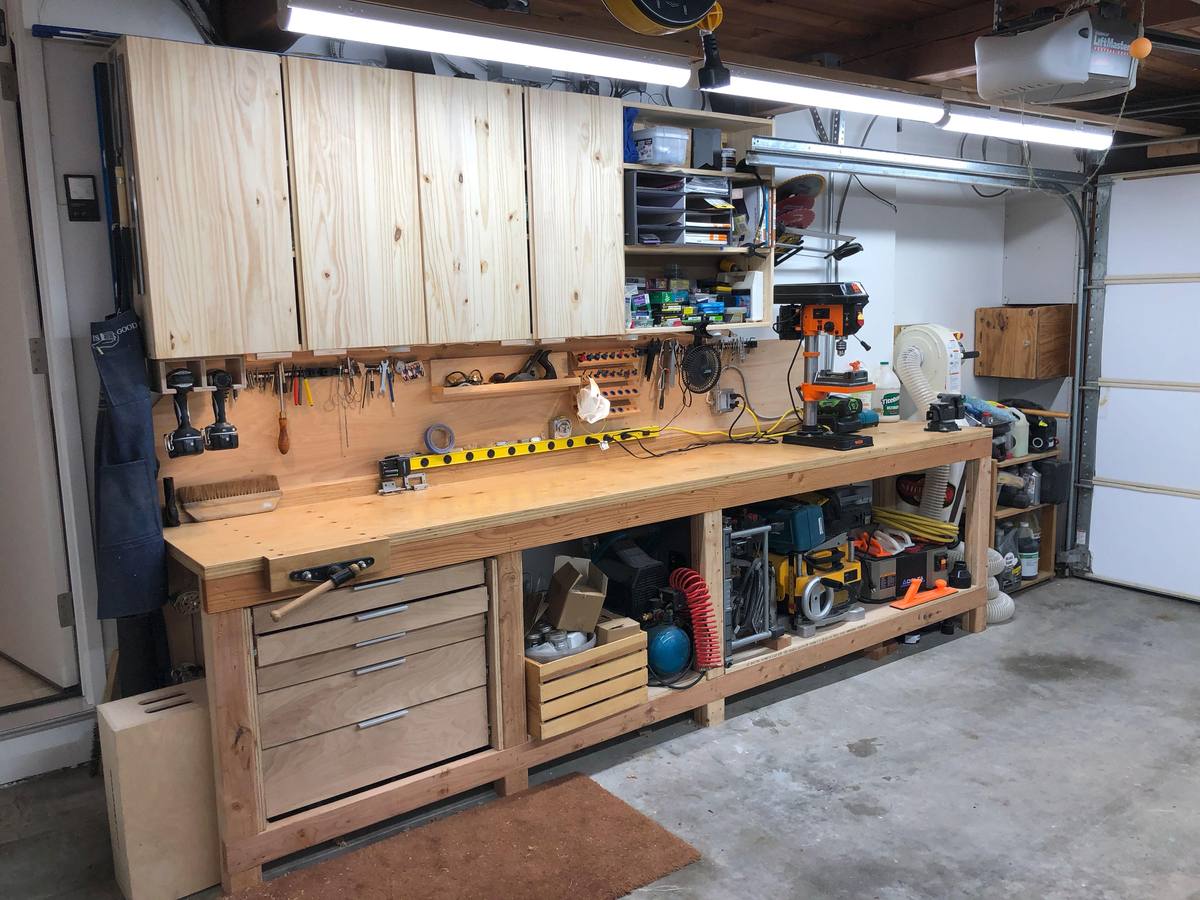
A workbench is the heart of any garage shop — but when your garage also holds the cars, the bikes, the holiday bins, and a decade of "I might need that someday," every square foot counts. Pick the wrong bench and it becomes an obstacle. Pick the right one and it disappears into the wall or rolls wherever the work is, then stands solid while you hammer, sand, and assemble.
This guide breaks down what actually matters when space is tight: the three workbench types worth considering, the specs that separate a rock-solid bench from a wobbly frustration, and our top picks across three budget tiers. Everything below is drawn from manufacturer specs, professional reviews, and patterns in owner reviews — honest, research-backed guidance.
The Three Types of Small-Garage Workbench
Folding / collapsible work tables
The classic example is the Keter-style folding work table: resin top, metal legs, folds flat in seconds and slides against a wall or hangs on a hook. These are the kings of tiny garages.
Best for: Occasional projects, renters, anyone whose car must park inside every night.
Trade-offs: Foldability means lighter weight and more flex than a stationary bench. Most handle 500–1,000 lbs static load, but don't expect to pound on them like an anvil.
Mobile benches (on locking casters)
Think Husky or Husky-style rolling tool cabinets and benches: steel frame, wood or butcher-block top, two or four swivel casters with brakes. You roll it to the driveway for dusty work, then tuck it into a corner.
Best for: People who do real projects but need the floor space back regularly.
Trade-offs: Even with locking casters, there's a hair more movement than a bolted-down bench. Good ones use double-locking casters (lock both wheel and swivel) to fix that.
Compact heavy-duty stationary benches
Smaller-footprint versions of the traditional bench — 4 to 5 feet wide, solid legs or a lower shelf, no casters. Some, like gorilla-rack-style benches, offer 2,000+ lb capacity in a compact footprint.
Best for: Dedicated shop corners where the bench can live permanently, and for heavy assembly or woodworking.
What to Look for When Space Is Tight
1. Weight capacity — and what it really means
Manufacturers quote static load capacity, which is the weight the bench can hold sitting still. Your hammering, planing, and clamping are dynamic loads — forces the spec doesn't capture. Rule of thumb: buy roughly twice the capacity you think you need. If you'll hold a 100-lb vise and a project, look for 500+ lbs minimum; for serious woodworking, aim for 1,000 lbs or more.
2. Work surface size and material
- Size: For a small garage, 4 feet wide × 2 feet deep is the sweet spot — enough for most projects, narrow enough to walk past. Measure your available wall or corner first, and leave room for you standing in front of it plus a few inches of elbow room.
- Material: Hardwood or butcher-block tops are the gold standard for durability and refinishability. Sealed MDF or resin tops are lighter and cheaper; resin (like the Keter folding table) shrugs off chemicals and moisture but can flex under heavy loads. Avoid thin particleboard if you can — it swells with humidity and sags over time.
3. Storage
Every drawer or shelf in your bench is one less thing on the garage floor. Mobile benches with built-in tool cabinets are brilliant space savers. If you go folding, plan on a separate wall cabinet or pegboard — which brings us to...
4. Pegboard and vise options
- Pegboard: Wall-mounted pegboard above the bench is usually better than a bench-attached panel — it keeps the bench repositionable and gives more vertical storage. If your bench needs to roll or fold away regularly, skip it.
- Vise: A front vise or clamp jaws turn a flat top into real workholding. Folding tables like the Keter include quick-clamp jaws; stationary benches usually take a separately mounted vise — factor its weight into your capacity math.
5. Portability: fold flat vs. roll away
Ask yourself the honest question: how often does this bench need to get out of the way? Daily (car parks inside) → folding. Weekly (weekend projects) → casters. Rarely → stationary. Buying more portability than you need costs you stability; buying less costs you floor space.
6. Height and ergonomics
Standard bench height is 34–36 inches, roughly matching kitchen counters. Adjustable-height benches are worth it if multiple family members share the shop.
Top Picks
Best Overall: A 46-inch mobile workbench with locking casters (Husky-style)
Why it wins: This is the category's sweet spot. Reviewers consistently praise this style of bench for arriving rock-solid once the casters are locked, with a butcher-block or sealed-wood top that takes a beating and a lower cabinet that swallows a surprising amount of tools. The 46-inch width fits a compact wall bay, and four double-locking casters keep it put under load but roll out for driveway work.
- Capacity: ~1,200 lbs static
- Top: ~46" × 24" sealed hardwood or butcher block
- Standout features: Locking tool cabinet, double-locking casters, power strip on some versions
Pros: - Stability rivals stationary benches once locked - Integrated storage eliminates a separate tool chest - Rolls out of the way in seconds
Cons: - Heavy (~150+ lbs) — not a true one-hand move - Premium pricing over folding tables
Who it's for: The serious weekend DIYer who does real projects but shares the garage with cars. Check current price: 46-inch mobile workbench
Best Folding Option: Keter folding work table
Why it wins: The Keter-style folding table is the benchmark for a reason: it folds flat in seconds, hangs on a wall, and sets up in under a minute. Owner reviews consistently call out its surprising sturdiness for a resin table and the built-in clamps that turn it into a decent sawhorse-plus-workholding combo.
- Capacity: ~1,000 lbs static
- Top: ~33" × 22" resin with dual clamp jaws
- Standout features: Folds to ~4" thick, integrated quick clamps, weather-resistant
Pros: - Stores in virtually no space — against a wall, behind a shelf - Clamps included; great for cutting and light assembly - Affordable and widely available
Cons: - Smaller work surface limits big projects - Resin top flexes under heavy hammering - No storage integration
Who it's for: Renters, apartment-garage dwellers, and anyone whose bench must vanish nightly. Check current price: Keter folding work table
Best Budget Stationary Bench: 4-foot steel-frame workbench (Gladiator-style)
Why it wins: If the bench never needs to move, a simple heavy-gauge steel frame with a hardwood top delivers the most capacity per dollar in this guide. These benches are dead simple — four legs, a lower shelf, a thick top — and that simplicity is the point. Reviewers praise their rigidity for the price.
- Capacity: ~1,500 lbs static
- Top: ~48" × 24" hardwood
- Standout features: Lower shelf for bulky storage, bolt-together assembly
Pros: - Maximum stability per dollar - Lower shelf adds genuinely useful storage - Simple, repairable construction
Cons: - Zero portability without modification - Assembly takes an hour plus a helper - Plain looks (if that matters to you)
Who it's for: The dedicated shop corner where the bench lives permanently and heavy work happens. Check current price: 4-foot steel frame workbench
Best Heavy-Duty Compact: 2,000-lb capacity adjustable workbench (gorilla-rack-style)
Why it wins: When your projects are genuinely heavy — engines, large woodworking assemblies, metal fabrication — nothing beats a compact bench engineered for 2,000+ lbs. These gorilla-rack-style benches pack industrial capacity into a 4-foot footprint and often include adjustable-height legs.
- Capacity: ~2,000 lbs static
- Top: ~48" × 24" thick hardwood or MDF
- Standout features: Height adjustability, massive leg braces, optional casters
Pros: - Enormous capacity in a small footprint - Adjustable height suits multiple users and tasks - Built like it will outlive you
Cons: - Overkill (and over-budget) for light DIY - Heavy and bulky to assemble - Height-adjustable hardware adds cost
Who it's for: Serious hobbyists doing heavy assembly, woodworking, or mechanical work in a permanent shop corner. Check current price: heavy-duty compact workbench
Best for Tiny Spaces: Wall-mounted fold-down bench
Why it wins: For the truly space-starved — a single-car garage, a parking pad with a storage nook — a fold-down bench that mounts to wall studs and collapses flush against the wall gives you a real work surface at zero floor cost when folded.
- Capacity: ~500 lbs static (varies widely by model and stud mounting)
- Top: ~40" × 20" typical; varies by model
- Standout features: Folds flush to the wall, optional integrated pegboard above
Pros: - Zero floor footprint when folded - Solid when mounted correctly into studs - Inexpensive
Cons: - Installation is permanent and must hit studs - Modest capacity — not for heavy pounding - Can't reposition once mounted
Who it's for: Single-car garages and renters-with-permission where every inch of floor is spoken for. Check current price: wall-mounted fold-down workbench
Comparison Table
| Pick | Type | Top Size | Capacity | Key Strength | Watch Out For |
|---|---|---|---|---|---|
| 46" mobile workbench | Mobile (casters) | ~46" × 24" | ~1,200 lbs | Storage + mobility | Heavy to move solo |
| Keter folding table | Folding | ~33" × 22" | ~1,000 lbs | Vanishes against a wall | Smaller surface, some flex |
| 4' steel-frame bench | Stationary | ~48" × 24" | ~1,500 lbs | Stability per dollar | Never moves; hour-long assembly |
| Heavy-duty compact | Stationary/adjustable | ~48" × 24" | ~2,000 lbs | Industrial capacity | Overkill price for light use |
| Wall-mounted fold-down | Fold-down | ~40" × 20" | ~500 lbs | Zero floor footprint | Needs solid stud mounting |
FAQ
How much weight capacity do I actually need in a garage workbench?
For light DIY — assembly, electronics, small repairs — 500 lbs static is plenty. For woodworking or holding a vise plus heavy stock, aim for 1,000+ lbs. For engines or heavy fabrication, 1,500–2,000 lbs. Remember static ratings don't account for dynamic forces, so buy headroom.
Is a folding workbench sturdy enough for real work?
For cutting, sanding, assembly, and light clamping: yes. Folding tables like the Keter are consistently praised by owners for punching above their weight. For heavy planing, hammering, or anything where the bench must not move a millimeter, a stationary or locked mobile bench wins.
What's the ideal workbench size for a small garage?
4 feet wide by 2 feet deep is the practical sweet spot for most small garages — enough surface for real projects while leaving walkway room. Measure your space first, then subtract standing room for yourself.
Should I get a workbench with a pegboard?
If your bench is against a wall anyway, a wall-mounted pegboard above it is usually better than a bench-attached one: it frees the bench for repositioning and gives you more vertical storage. Skip pegboard entirely if the bench needs to roll or fold away regularly.
Can I add a vise to a folding workbench?
Most folding tables include integrated clamp jaws that handle light workholding well. A real bolt-on vise needs a rigid, thick top — it's better suited to stationary or heavy mobile benches. Check the top thickness and material before bolting anything on.
Are locking casters stable enough for woodworking?
Good double-locking casters (locking both the wheel and the swivel) get a mobile bench very close to stationary stability, and reviewers consistently report minimal movement under load. For precision hand-planing, though, nothing beats four legs on the floor.
What workbench top material is best?
Sealed hardwood or butcher block is the best all-rounder: durable, refinishable, and heavy enough to add stability. Resin tops are lighter, cheaper, and weather-resistant — great for folding tables. Avoid thin particleboard in humid garages.
How do I keep a workbench from wobbling?
Tighten all hardware after the first month (fasteners settle), level the feet on your garage floor, and add weight to a lower shelf — sandbags or a toolbox do the trick. For mobile benches, engage every caster lock; a bench on partially locked casters will always walk.
Verdict
For most small garages, the 46-inch mobile workbench with locking casters is the best answer: it does real work, swallows your tools into its cabinet, and rolls out of the way when the car comes home. If your garage is so tight that even that won't fit — or your car must park inside every night — the Keter folding work table is the honest runner-up; it disappears completely and handles more than its size suggests.
Whichever you choose, measure your space first, buy more capacity than you think you need, and put casters or a folding mechanism on anything that has to share floor with a car. The best workbench for a small garage isn't the biggest or the strongest — it's the one that shows up when you need it and vanishes when you don't.