Milwaukee vs DeWalt: Which Cordless Platform Should You Buy Into?
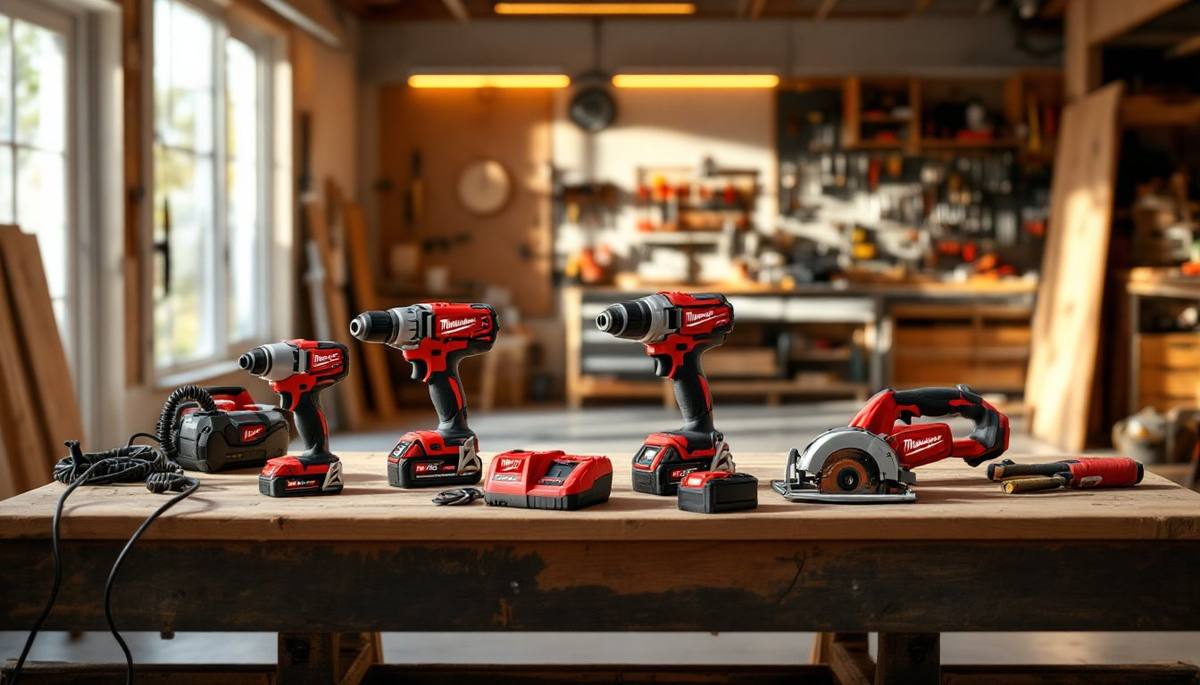
Buying a cordless drill is easy. Buying into a cordless platform is the decision that actually matters — because once you own three or four tools plus a stack of batteries and chargers, you've made an investment that's expensive to walk away from.
Milwaukee and DeWalt are the two dominant names in the cordless workshop world, and they're close enough in overall quality that the question isn't "which brand is better?" It's "which ecosystem is better for the work you do?" This guide compares the two platforms — battery systems, tool breadth, warranty, ergonomics, and price — so you can pick the one you'll be happy with five years from now.
The Platforms at a Glance
| Milwaukee | DeWalt | |
|---|---|---|
| Main cordless lines | M12 (12V), M18 (18V) | 20V MAX (18V nominal), FLEXVOLT (60V/120V), 12V MAX |
| Battery compatibility | M12 batteries fit all M12 tools; M18 batteries fit all M18 tools. Two separate systems | 20V MAX batteries fit all 20V MAX tools; FLEXVOLT batteries work on both 60V and 20V MAX tools. One-and-a-half systems |
| Flagship high-power line | M18 FUEL | 60V MAX FLEXVOLT / FLEXVOLT Advantage |
| Tool count (bare tools) | ~250+ across M12 + M18 | ~200+ across 20V MAX + FLEXVOLT |
| Warranty | 5 years on most tools, 2–3 years on batteries | 3 years on tools, 1 year free service, 90-day money-back |
| Ergonomics reputation | Compact grips, trade-focused feel | Chunky, durable, familiar controls |
| Price positioning | Slightly premium on flagship tools | Broad range; frequent holiday and combo-kit deals |
(Tool counts are approximate and grow constantly — treat them as "both are enormous," not as a final score.)
Battery Systems and Compatibility
This is where the real long-term differences live.
Milwaukee: M12 + M18, two clean lanes
Milwaukee runs two fully separate battery systems:
- M12 (12V): compact tools — drills, drivers, ratchets, inspection lights, heated jackets. Small, light, and genuinely useful rather than "compact as a compromise."
- M18 (18V): the full-size workhorse line, from drills and impacts up to rotary hammers, miter saws, and lawn equipment.
M18 batteries work in every M18 tool, and M12 batteries work in every M12 tool. That's it — no cross-compatibility between the two voltages, which is the one thing to internalize: if you buy both M12 and M18 tools, you own two battery inventories. Many pros do exactly this, because an M12 impact driver for quick jobs and an M18 rotary hammer for the heavy stuff is a genuinely great pairing. But a DIY buyer should think carefully before straddling both lines.
The standout in Milwaukee's battery story is the M12 line itself — it's the deepest 12V system in the industry by a wide margin. No other brand offers this many serious 12V tools, and reviewers consistently praise M12 tools for doing real work at a fraction of the weight.
DeWalt: 20V MAX with FLEXVOLT on top
DeWalt's system is a little more layered:
- 20V MAX (18V nominal): the core line. Drills, impacts, saws, nailers, grinders — the vast majority of what most people buy.
- FLEXVOLT (60V/120V): higher-voltage tools for demanding applications like table saws, large grinders, and rotary hammers. The clever part: FLEXVOLT batteries automatically step down and work in 20V MAX tools, so one battery type serves both lines.
- 12V MAX: a smaller compact line — decent, but nowhere near as deep as Milwaukee's M12.
DeWalt's big structural advantage is that backward-compatible design. A FLEXVOLT battery slots into a 20V MAX drill and just works. That makes upgrading to high-power tools cheaper and simpler: buy the tool, and your existing FLEXVOLT batteries come along. Reviewers also consistently rate DeWalt's batteries as robust, with the newer higher-capacity packs (like the XR and POWERSTACK lines) drawing particular praise for runtime in compact form factors.
Bottom line on batteries: Milwaukee gives you the best 12V system in the business, at the cost of managing two battery inventories. DeWalt gives you one mostly unified system where the high-voltage batteries still work in your standard tools.
Breadth of the Tool Lines
Both brands make essentially everything: drills, drivers, impacts, circular saws, reciprocating saws, grinders, nailers, sanders, routers, shop vacs, lights, radios, and outdoor equipment.
Where they diverge is at the edges:
- Milwaukee's edge — specialty and trade-specific tools. Milwaukee is famous for going deep into niches: plumbing tools (ProPEX expanders, press tools), electrical tools (knockout punches, cable staplers), M12 installation drivers, and a huge lighting lineup. If you work in a trade with specialty tools, Milwaukee probably makes the cordless version of the thing you need. Their PACKOUT storage system, while technically separate from the tool platform, is widely considered the best modular tool storage on the market and a genuine ecosystem draw.
- DeWalt's edge — high-power and woodworking/construction staples. FLEXVOLT gives DeWalt a credible answer to corded tools in demanding categories — table saws, miter saws, large angle grinders — without needing a second full voltage line. DeWalt's ToughSystem storage is also excellent, and their outdoor/yard equipment line is broad.
For a general DIYer buying drills, saws, sanders, and the usual suspects, both lines are more than deep enough. The difference only bites when you need something unusual — and then it usually bites in Milwaukee's favor.
Warranty and Support
- Milwaukee: 5-year limited warranty on most power tools; batteries typically carry 2–3 years depending on the line. The longer tool warranty is a real, concrete advantage — five years is among the best standard warranties in the industry.
- DeWalt: 3-year limited warranty on tools, plus 1 year of free service and a 90-day money-back guarantee. Solid, standard, unremarkable.
Neither brand is known for warranty nightmares, but if warranty length is a tiebreaker, Milwaukee wins on paper. One caveat: both warranties apply to tools bought through authorized retailers — gray-market or suspiciously cheap third-party listings can complicate claims.
Ergonomics and Feel
This is subjective, but patterns emerge across enough reviews to be worth stating:
- Milwaukee tools tend to feel compact and dense, with grips that reviewers describe as comfortable for extended overhead or repetitive work. The M18 FUEL line in particular gets consistent praise for power-to-size ratio.
- DeWalt tools tend to feel a bit larger and more "traditional" in the hand — chunky housings, positive-feeling switches, controls that are easy to operate with gloves on. Some find the drills slightly top-heavy with big batteries; others call the substantial feel confidence-inspiring.
If you can, hold both brands' flagship drills at a store before committing. Ergonomics is the one factor no spec sheet captures, and it's the factor you'll notice every time you pick the tool up.
Price
Street prices move constantly, so think in patterns: Milwaukee's flagship (M18 FUEL) tools tend to sit at a slight premium, while DeWalt is the king of the aggressive combo-kit and holiday deal — often the cheaper entry point into a full kit. Over a full build-out (6–8 tools plus batteries), the total gap is usually smaller than any single sale makes it look. Pick the ecosystem first, then buy during a sale.
Pros and Cons
Milwaukee
Pros: - Deepest 12V (M12) system in the industry — compact tools that do real work - Widest range of trade-specific and specialty tools - 5-year tool warranty, among the best standard coverage available - Excellent power-to-size ratio in the M18 FUEL line - PACKOUT storage ecosystem is best-in-class
Cons: - M12 and M18 are fully separate — straddling both means two battery inventories - Flagship tools carry a slight price premium - Fewer blockbuster combo-kit deals than DeWalt
DeWalt
Pros: - Mostly unified battery system — FLEXVOLT batteries work in 20V MAX tools - Strong high-voltage (60V) line for demanding, near-corded performance - Frequent aggressive sales and combo-kit pricing - Chunky, glove-friendly ergonomics many users prefer - Deep lineup of core construction and woodworking tools
Cons: - 12V MAX line is thin compared to Milwaukee's M12 - 3-year warranty is standard, not standout - Some tools feel bulky with high-capacity batteries attached
Who Should Pick Which?
Pick Milwaukee if: - You want the best compact (12V) tools available — for tight spaces, overhead work, or just lighter kits - You work in a trade with specialty tools (plumbing, electrical, HVAC) — Milwaukee likely makes your niche tool - Warranty length matters to you - You're building a system that includes both compact and full-size tools and you don't mind two battery types
Pick DeWalt if: - You want one battery system that scales from a drill to a table saw without a second voltage line - You're drawn to high-voltage tools for heavy cutting and grinding - You're starting from zero and want to catch a great combo-kit deal - You prefer a heftier, glove-friendly feel
For most DIY buyers: honestly, either platform will serve you well for years. The deciding questions are simple — do you care about having great compact 12V tools (Milwaukee), or do you want the simplest possible battery story with a path to 60V power (DeWalt)?
Is It Worth Switching Platforms?
If you already own several tools and batteries in one ecosystem, switching is almost never worth it for incremental reasons. The math is brutal: you'd need to replace every tool, every battery, and every charger, and the performance gap between Milwaukee and DeWalt's current flagship lines is narrow — reviewers consistently describe it as a wash for most common tools.
Switching is worth considering when:
- You need a tool category your current platform barely covers (e.g., you want Milwaukee's M12 depth or DeWalt's FLEXVOLT high-power line)
- You're starting a genuinely new category — like moving into yard equipment — and the other brand's offering is clearly better
- Your existing tools are aging out anyway, so the "replacement cost" is happening regardless
A common middle path: keep your main platform and buy a single starter kit (tool + battery + charger) in the other brand for the one or two tools you can't get otherwise.
FAQ
Can Milwaukee M18 batteries be used in M12 tools? No. M12 and M18 are completely separate systems with different battery interfaces. You need batteries for each line you buy into.
Can DeWalt 20V MAX batteries be used in FLEXVOLT tools? No — but it works the other way. FLEXVOLT batteries automatically step down to power 20V MAX tools; 20V MAX batteries cannot power 60V FLEXVOLT tools, which need the higher voltage.
Is DeWalt 20V MAX actually 20 volts? Nominally, no — 20V MAX is the maximum voltage; the nominal (working) voltage is 18V, the same as Milwaukee's M18. The "20V MAX" name is marketing. In practice, the two 18V-class lines compete head-to-head on power.
Which brand is better for a beginner DIYer? Either works. DeWalt often wins on entry price thanks to frequent combo-kit sales, while Milwaukee's M12 line is the friendliest on-ramp if you want small, light tools. Pick based on which starter kit looks better when you're ready to buy.
Which platform has better outdoor/yard tools? Both have expanded significantly here. DeWalt's 60V FLEXVOLT outdoor tools get strong marks for gas-like performance; Milwaukee's M18 outdoor line is also well reviewed. Check the specific tool you need rather than deciding on brand reputation.
Do I really need to stay loyal to one battery platform? Mostly, yes — that's where the savings are. But a single cross-platform starter kit for a specialty tool is a reasonable, common compromise.
Which has the better warranty? Milwaukee, on paper: 5 years on most tools vs. DeWalt's 3 years (plus 1 year free service). Both honor claims through authorized retailers without much drama.
Are Milwaukee and DeWalt owned by the same company? No. Milwaukee is owned by TTI (Techtronic Industries), which also owns Ryobi and others. DeWalt is owned by Stanley Black & Decker. They're independent competitors.
Verdict
Milwaukee and DeWalt are both excellent platforms, and there's no wrong answer here — only a better fit answer.
Choose Milwaukee if you want the deepest, most refined cordless ecosystem: the unmatched M12 compact line, the broadest selection of trade-specific tools, and the industry's best standard warranty. It's the platform for people who want the right specialized tool to exist, whatever the job.
Choose DeWalt if you want the simplest battery story and the most straightforward path to serious power: one largely unified system where your high-voltage batteries still run your drill, a strong 60V line for the heavy stuff, and some of the best combo-kit deals in the business. It's the platform for people who want maximum capability with minimum complexity.
If you're still on the fence, start with the starter kit, not the brand debate: compare a Check current price: Milwaukee M18 FUEL drill/driver kit against a Check current price: DeWalt 20V MAX XR drill/driver kit at current sale prices, hold both in a store if you can, and let ergonomics and price break the tie. Whichever you choose, buy into it fully — the platform is the purchase.