Traeger vs Pit Boss: Which Pellet Grill Should You Buy?
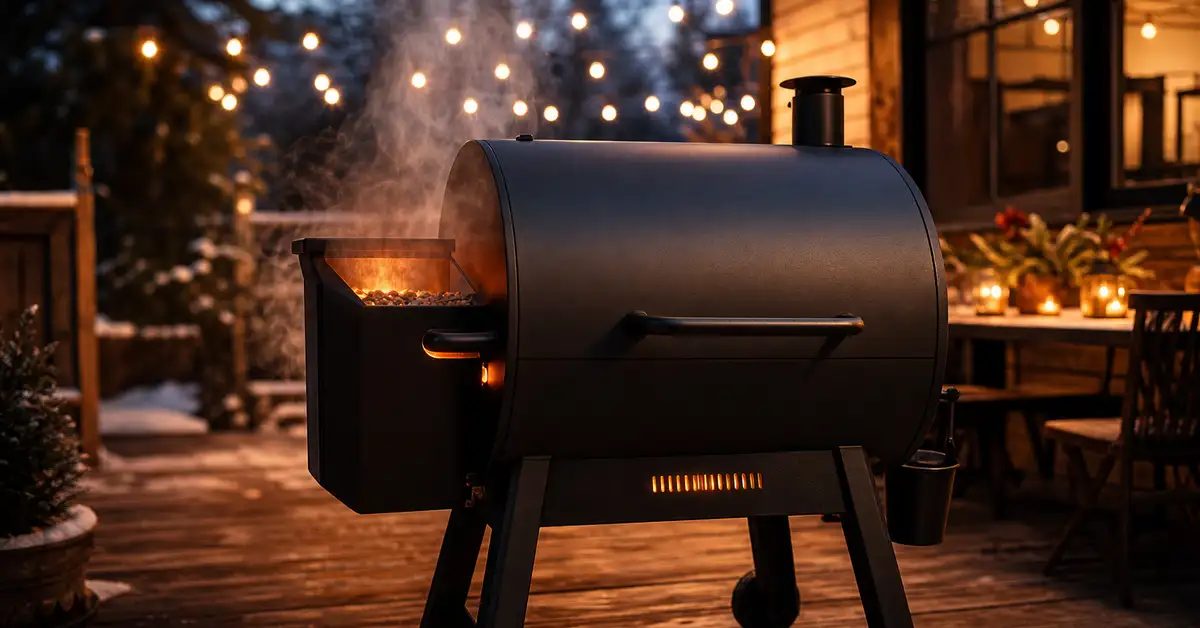
This is the Ford vs Chevy of the pellet grill world. Traeger invented the category and sells the premium experience. Pit Boss sells enormous cooking area for half the money and dares you to care about the difference.
This comparison is built from manufacturer spec sheets, current 2026 lineups, and long-term owner reviews — no sponsored rankings, no hands-on claims. One lineup note: Traeger discontinued the Pro 575 and Pro 780 in early 2025, so the current Traeger representatives are the Westwood and the Ironwood 650. Pit Boss's lineup is stable, led by the 850DX and the Competition Series 850.
The Contenders at a Glance
| Traeger Ironwood 650 | Traeger Westwood | Pit Boss 850DX | Pit Boss Competition Series 850 | |
|---|---|---|---|---|
| Cooking area | 650 sq in | 653 sq in | 840 sq in | 850 sq in |
| Hopper | 20 lb | 18 lb | 21 lb | 22 lb |
| Temp range | 165–500°F | 180–450°F | 180–500°F | 180–500°F |
| Direct-flame sear | No | No | Yes, 1,000°F | Yes, 1,000°F |
| App | WiFIRE (best-in-class) | WiFIRE (best-in-class) | Pit Boss app | Pit Boss app |
| Warranty | 3 years | 3 years | 5 years | 5 years |
| Approx. price | ~$1,100+ | ~$700 | ~$550 | ~$700 |
Build Quality and Materials
Traeger builds the tighter grill. The Ironwood 650 has double sidewall insulation, a downdraft exhaust system, and a fit and finish owners consistently describe as a cut above — lids seal well, paint holds up, and the whole unit feels engineered rather than assembled. The Westwood is simpler and lighter-duty, but still carries Traeger's typically clean manufacturing.
Pit Boss builds the bigger grill for less money, and you can feel where the savings went. The steel is thinner, there's no double-wall insulation on the standard models, and owners report more temperature fluctuation in wind and cold. The porcelain-coated grates and heat diffusers need more attentive maintenance to stave off rust. It's not fragile — thousands of owners get years out of these — but it's built to a price, and the price shows.
Edge: Traeger, especially at the Ironwood level. If your grill lives outside year-round in a cold climate, the insulation gap matters.
Temperature Control and Controllers
Both brands now use PID controllers, which is the important part — no more wild temperature swings of the old non-PID days. The Traeger's D2 drivetrain with TurboTemp heats faster and recovers quicker after you open the lid, and the Ironwood's Super Smoke mode is a genuine differentiator for low-and-slow flavor.
The Pit Boss holds its own on temperature stability in fair weather, and its secret weapon is the flame broiler lever: slide a plate aside and you're cooking over direct flame at up to 1,000°F. No Traeger at any price does that. But the Traeger's tighter construction means it holds temperature better when conditions turn ugly, and independent owner testing consistently shows Pit Boss grills burning more pellets per cook — the cost of thinner walls.
Edge: Traeger for consistency and efficiency; Pit Boss for searing. Pick your priority.
Cooking Area
This is Pit Boss's home turf and it isn't close. The 850DX gives you 840 square inches and the Competition Series 850 gives you 850 — roughly 30% more cooking space than either Traeger listed here — for hundreds of dollars less. Pit Boss's entire brand identity is square inches per dollar, and they dominate that metric across the industry.
Traeger's cooking areas are honest but modest: 650–653 square inches on both models here. The two-tier layouts use the space well, and for a family of four it's plenty. But if you regularly cook for a crowd, the math is brutal — you'd need to spend significantly more on a Traeger to match the Pit Boss's capacity.
Edge: Pit Boss, by a wide margin.
App and Smart Tech
Traeger's WiFIRE app is the gold standard of grill apps — clean interface, deep recipe library, reliable connectivity, probe alerts, and remote temperature control that actually works. Owner reviews across every platform rate it the best in the category, and it's a meaningful part of what you're paying for.
The Pit Boss app covers the basics — monitoring, temperature adjustment, timers — but owner feedback consistently describes it as less polished, with more connectivity complaints and a thinner feature set. It gets the job done. It just doesn't delight anyone.
Edge: Traeger, decisively. If remote cook management matters to you, this alone can justify the premium.
Price and Value
Pit Boss wins on sticker price at every tier. The 850DX delivers more cooking area than the Ironwood 650 for roughly half the money. The Competition Series 850 matches the Westwood's price while offering 200 more square inches and direct-flame searing.
But value isn't just the sticker. The Traeger's better insulation means lower pellet consumption over time — owner testing suggests the fuel savings add up to real money over years of regular cooking. Traegers also tend to hold resale value better. Still, the upfront gap is so large that most buyers will never close it on fuel savings alone.
Edge: Pit Boss on purchase price; Traeger narrows the gap on total cost of ownership.
Warranty and Support
Pit Boss offers a 5-year warranty against Traeger's 3 years — a clear spec-sheet win. Traeger counters with the largest dealer and parts network in the business; replacement parts for even decade-old Traegers are easy to find, and their customer support operation is the most established in the category.
Owner feedback on warranty claims is mixed for both — Pit Boss's longer warranty is only as good as the claims process behind it. But on paper and in practice, five years beats three.
Edge: Pit Boss on warranty length; Traeger on parts availability and support infrastructure.
Representative Models
Traeger Ironwood 650
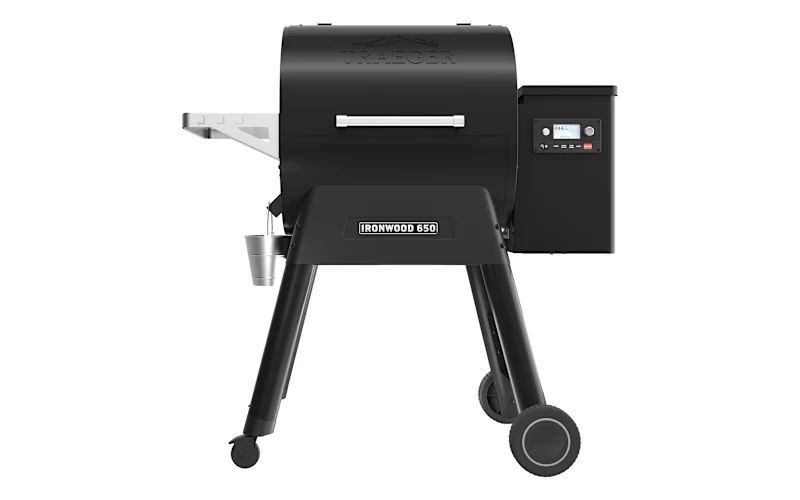
The sweet spot of the Traeger lineup and the grill the brand's reputation rests on. The spec sheet lists 650 square inches across two tiers, a 20-pound hopper, 165–500°F range, WiFIRE, D2 drivetrain, Super Smoke mode, double sidewall insulation, and a pellet sensor. Owner reviews — hundreds of them, still rolling in through 2026 — consistently praise its temperature consistency and smoke flavor.
It's the most expensive grill in this comparison at around $1,100+, and it can't sear. But as a pure smoking and roasting machine with the best app in the business, it's the benchmark everything else is measured against.
Check current price: Traeger Ironwood 650 Pellet Grill
Traeger Westwood
Traeger's 2025 answer to the budget question after discontinuing the Pro Series. Around $700 gets you 653 square inches, an 18-pound hopper, 180–450°F, and full WiFIRE connectivity with the P.A.L. accessory rail. Owners report it nails Traeger fundamentals — steady temps, good smoke, great app — while cutting Super Smoke, Keep Warm mode, and the pellet sensor.
It's the cheapest way to get the Traeger experience, and for many buyers it's all the Traeger they need. Just know the 450°F ceiling before you buy.
Check current price: Traeger Westwood Pellet Grill
Pit Boss 850DX
The value king of pellet grills. Around $550 buys 840 square inches, a 21-pound hopper, 180–500°F with a PID controller, WiFi and Bluetooth, and the flame broiler lever for 1,000°F direct-flame searing. Owner reviews are voluminous and largely enthusiastic — the cooking-area-per-dollar ratio is simply unmatched.
The compromises are real: thinner steel, higher pellet consumption, a less polished app. But as a pure cooking-value proposition, nothing in this comparison touches it.
Check current price: Pit Boss 850DX Wood Pellet Grill
Pit Boss Competition Series 850
The step-up Pit Boss for buyers who want the value story with better appointments. Around $700 gets you 850 square inches, a 22-pound hopper, WiFi and Bluetooth PID control, the flame broiler lever, a collapsible front shelf, and a side shelf with tool hooks. It's the Pit Boss for someone who cross-shopped the Traeger Westwood and wanted more grill for the same money.
Owner feedback highlights the upgraded cart, shelving, and overall sturdiness over the base models. Same Pit Boss trade-offs on insulation and app polish, but a meaningfully nicer package.
Check current price: Pit Boss Competition Series 850 Wood Pellet Grill
Pros and Cons
Traeger
Pros: - Best app and smart tech in the pellet grill category - Tighter construction and double-wall insulation (Ironwood) for consistent temps - Super Smoke mode for genuine low-and-slow flavor - Largest dealer network and easiest parts availability - Strong resale value
Cons: - Significant price premium at every tier - No direct-flame searing on any model - Shorter 3-year warranty - Westwood lacks Super Smoke, Keep Warm, and pellet sensor
Pit Boss
Pros: - Unmatched cooking area per dollar - Flame broiler lever enables real 1,000°F open-flame searing - 5-year warranty beats Traeger's - Wide retail availability — buy it today at a big-box store - Larger hoppers on step-up models
Cons: - Thinner steel and less insulation means higher pellet consumption - App is functional but far less polished than WiFIRE - More temperature swing in cold and wind - Porcelain-coated components need diligent maintenance
Who Should Pick Which?
Pick Traeger if: you want the best app experience, you smoke in cold weather and need insulation, you value fit and finish and long-term parts support, or you're buying the Ironwood 650 as a dedicated smoking machine and already own something that sears.
Pick Pit Boss if: cooking area per dollar is your top metric, you want one grill that both smokes and genuinely sears, you're feeding a crowd on a budget, or the idea of paying double for an app and insulation offends you.
The honest middle ground: plenty of owners end up with a Pit Boss for capacity and value, then admit the Traeger app makes them jealous. And plenty of Traeger owners admit the Pit Boss flame broiler makes them jealous. There is no wrong answer here — only different priorities.
FAQ
Is Traeger actually better quality than Pit Boss?
In construction and consistency, yes — tighter seals, better insulation on premium models, and more refined controllers. Whether that quality gap is worth the price gap is the real question, and for many buyers the answer is no. A Pit Boss cooks excellent barbecue; it just does it with thinner walls and a cheaper app.
Do Pit Boss grills really use more pellets?
Owner testing consistently shows yes — thinner, less-insulated cook chambers lose more heat, so the auger feeds more pellets to hold temperature. The gap is modest in summer and meaningful in winter. Over years of heavy use, a Traeger's efficiency advantage translates to real fuel savings, though rarely enough to erase the upfront price difference.
Can either brand actually sear a steak?
Pit Boss, easily — the flame broiler lever exposes food to direct flame at up to 1,000°F, and it's the best searing solution on any pellet grill near these prices. Traeger can't match it; the Ironwood tops out at 500°F indirect heat. If sear marks matter, that's a point for Pit Boss no Traeger can counter.
Which has the better WiFi app?
Traeger's WiFIRE, and it's not close. It's the most polished, most reliable grill app in the category — better recipes, better connectivity, better interface. The Pit Boss app handles monitoring and basic control fine, but owner reviews consistently rank it a tier below.
How do the warranties compare?
Pit Boss offers 5 years; Traeger offers 3. On paper, Pit Boss wins. In practice, Traeger's massive dealer network and parts availability mean you're less likely to need the warranty in the first place — and more likely to find parts for an old grill years down the road.
Should I buy a used or closeout Traeger Pro 575/780 instead?
Traeger discontinued both in early 2025, and closeout inventory has mostly cleared. A used Pro in good shape at the right price is still a fine grill — parts remain widely available. But don't pay near-new prices for a discontinued model when the Westwood exists with current software support.
Verdict
Here's the uncomfortable truth: most buyers will be happier with the Pit Boss. The Check current price: Pit Boss 850DX Wood Pellet Grill gives you 840 square inches, genuine 1,000°F searing, and a 5-year warranty for around $550 — roughly half the price of the Traeger Ironwood 650. Unless you have a specific reason to pay the Traeger premium, the value math is overwhelming.
But the Traeger premium buys real things. The Check current price: Traeger Ironwood 650 Pellet Grill is the better-engineered machine — tighter, better insulated, more efficient, with Super Smoke and the best app in the business. If you're a cold-weather smoker, an app-driven cook, or someone who buys the best version of a thing and keeps it for a decade, it's worth the money. And the Check current price: Traeger Westwood Pellet Grill at around $700 narrows the price gap enough to make the Traeger argument on a budget — especially against the Check current price: Pit Boss Competition Series 850 Wood Pellet Grill, its most direct rival.
Buy the Pit Boss for value and versatility. Buy the Traeger for refinement and the ecosystem. Either way, you're eating well.