Best Air Compressor for a Home Garage: What to Buy and Why
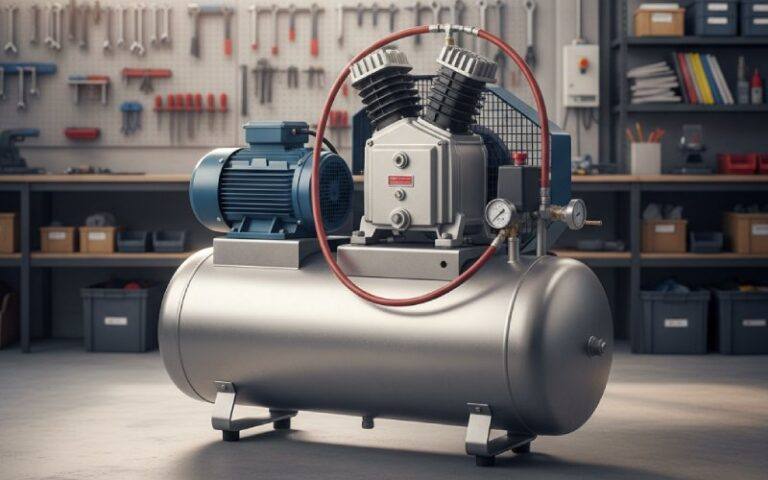
The air compressor is one of those garage purchases that's easy to get wrong. Buy too small and you'll wait for the tank to recover between bursts. Buy too big and you're paying for capacity — and noise, weight, and wiring — you'll never use. This guide breaks down the specs that matter, matches them to the tools you plan to run, and gives representative top picks in every tier, drawn from aggregated reviews and owner feedback.
What Actually Matters When Buying a Garage Compressor
Forget horsepower ratings — manufacturers measure "HP" inconsistently, and it's a poor predictor of real performance. These are the specs worth your attention.
Tank Size
The tank is your air reserve. Bigger means the motor cycles on less often and you get longer bursts before pressure drops.
- 6 gallons: Fine for nailers, inflation, and short bursts with a blow gun. The classic portable "pancake" size.
- 8–20 gallons: The sweet spot for most home garages. An 8-gallon tank runs nailers, ratchets, and short impact-wrench bursts comfortably; 20 gallons adds reserve for more demanding work.
- 30–60 gallons: Stationary territory, for continuous-air tools like spray guns and sanders. A 60-gallon unit is a permanent fixture, not something you wheel around.
A bigger tank doesn't help if the pump can't keep up — which brings us to the most important number.
CFM (SCFM) at 90 PSI
CFM — cubic feet per minute — is how much air the pump delivers. The "at 90 PSI" part matters because most air tools are rated at 90 PSI, and output drops as pressure rises.
The rule of thumb: your compressor's CFM at 90 PSI should meet or exceed the CFM requirement of the most demanding tool you run. If your impact wrench needs 4 CFM and your compressor delivers 2.6, you'll work in short bursts with long pauses while the tank recovers. That gets old fast.
Oil vs. Oil-Free Pumps
- Oil-free: Lighter, cheaper, zero maintenance. The tradeoff is noise and a generally shorter service life. Fine for intermittent DIY use.
- Oil-lubricated: Heavier and needs occasional oil checks, but runs cooler, quieter, and lasts much longer. The better choice for hard use or a compressor you want to keep for a decade. Keep oil-lubed units upright — tilting can send oil where it shouldn't go.
Noise (dB)
The decibel scale is logarithmic, so small differences are big: 60 dB is roughly normal conversation; 80 dB is roughly a vacuum cleaner; 90 dB is lawn-mower territory where hearing protection becomes advisable.
Typical ranges: quiet oil-free designs run 56–65 dB; standard pancakes 78–83 dB; oil-lubricated belt-drives 70–80 dB. If your garage shares walls with living space, prioritize 65 dB or below.
Portability
A 30-pound pancake goes anywhere. An 80-pound 20-gallon unit is "portable" in theory but you'll dread moving it. A 60-gallon stationary unit stays where you put it. Buy for where the air needs to go.
What Tools Can a Home Compressor Actually Run?
Here's a rough map of common air tools and what they demand. "Intermittent" tools (nailers, impact wrenches used in bursts) are far more forgiving than "continuous" tools (sanders, spray guns) that need sustained airflow.
| Tool | Typical CFM @ 90 PSI | Usage pattern | Compressor that handles it |
|---|---|---|---|
| Brad/finish nailer | 0.3–1 | Intermittent | 6-gal pancake |
| Framing nailer | 2–2.5 | Intermittent | 6-gal pancake and up |
| Tire inflator / blow gun | 2–4 | Short bursts | 6-gal pancake and up |
| 3/8" impact wrench | 3–4 | Intermittent | 8–20 gal, 3+ CFM |
| 1/2" impact wrench | 4–6 | Intermittent | 20 gal+, 4+ CFM |
| Die grinder | 4–6 | Continuous | 20–30 gal, 5+ CFM |
| Dual-action sander | 6–8 | Continuous | 30–60 gal, high CFM |
| HVLP spray gun | 8–15 | Continuous | 60 gal stationary |
The pattern is clear: intermittent tools are easy; continuous-air tools are hard. If you want to spray cars or run a DA sander all day, you need a big stationary unit — full stop.
Our Top Picks
These are representative picks drawn from consistently well-reviewed models in each tier. Specific models change over time, but the spec profiles and tradeoffs stay roughly constant — shop by the specs, not just the badge.
Best Overall: Quiet 8-Gallon Oil-Free (California Air Tools 8010-style)
- Specs: 8-gallon tank, ~2.2 CFM at 90 PSI, 120 max PSI, 60 dB, oil-free dual-piston pump, ~48 lbs with wheels
- Best for: Nailers, tire inflation, blow guns — while holding a conversation
- Check current price: California Air Tools 8010 compressor
Most garage work is intermittent, and noise is what ruins the experience — this category solves both. Reviewers consistently praise this class for being genuinely conversation-quiet (testers have measured it under the rated 60 dB). The 8-gallon tank gives meaningfully more reserve than a pancake, and aluminum-tank versions resist rust, the main failure mode of neglected steel tanks.
Pros: - Quiet enough to run indoors without hearing protection - 8-gallon tank handles nailers and short impact bursts well - Oil-free means no maintenance beyond draining the tank
Cons: - 2.2 CFM at 90 PSI can't run continuous-air tools - 120 PSI max is lower than some competitors' 150–165 PSI - You pay a premium for the quiet pump technology
Best Budget: 6-Gallon Pancake (Craftsman / Porter-Cable-style)
- Specs: 6-gallon pancake tank, ~2.6 SCFM at 90 PSI, 150–165 max PSI, ~78–80 dB, oil-free, ~30 lbs
- Best for: First compressor; trim work, nailing, inflation, light automotive use
- Check current price: Craftsman 6-gallon pancake air compressor kit
The pancake is the best-selling home compressor for a reason: cheap, light, and runs every intermittent tool a homeowner owns. Reviewers note these punch above their weight for nailing and inflation, and kits including a nailer and hose are genuinely good value. The high max PSI compensates somewhat for the small tank.
Pros: - Affordable — the cheapest way into compressed air - Light and easy to carry anywhere - Handles nailers, inflators, and blow guns without strain
Cons: - Loud — ~80 dB is fatiguing in an enclosed garage - Small tank means frequent motor cycling with air-hungry tools - Oil-free pancake pumps have shorter service lives than oil-lubed designs
Best for Automotive & Demanding Tools: Twin-Stack Oil-Lubricated (Makita MAC2400-style)
- Specs: 4.2-gallon twin-stack tank, 4.2 CFM at 90 PSI, 130 max PSI, 79 dB, oil-lubricated cast-iron pump, ~77 lbs
- Best for: Impact wrenches and ratchets — output over tank size
- Check current price: Makita MAC2400 twin-stack air compressor
The pick for people who find pancakes underpowered. 4.2 CFM at 90 PSI is nearly double what budget pancakes deliver — the difference between an impact wrench that works and one that sputters. Owners consistently praise this class for durability: the oil-lubricated cast-iron pump runs at low RPM and shrugs off years of hard use. The roll-cage design is genuinely jobsite-tough.
Pros: - Highest CFM in any portable form factor — runs impact wrenches properly - Oil-lubricated cast-iron pump lasts far longer than oil-free designs - Two quick couplers for running two tools at once
Cons: - Heavy at ~77 lbs — portable in name more than in spirit - Still loud at 79 dB - Needs periodic oil checks and changes
Best Quiet Mid-Size: 20-Gallon Quiet Compressor (Stealth-style)
- Specs: 20-gallon tank, ~4–4.5 CFM at 90 PSI, ~65 dB, oil-free, ~95–105 lbs
- Best for: Real capacity without the noise penalty of traditional 20-gallon units
- Check current price: 20-gallon ultra-quiet air compressor
The quiet 20-gallon class combines low-RPM quiet-pump technology with a tank and pump large enough for 1/2" impact wrenches, ratchets, and light painting. Owner feedback consistently highlights that these disappear into the background — you hear the air tool, not the compressor.
Pros: - 20-gallon tank plus 4+ CFM covers nearly all intermittent garage tools - ~65 dB is dramatically more pleasant than traditional units this size - Still rolls on wheels as a garage fixture
Cons: - Heavy and bulky — needs a dedicated corner of the garage - Costs significantly more than an 8-gallon quiet unit - Still not enough sustained CFM for serious spray painting or sanding
Best for Spray Painting & Continuous Tools: 60-Gallon Stationary (Ingersoll Rand-style)
- Specs: 60-gallon vertical tank, ~11+ CFM at 90 PSI, 135–175 max PSI, belt-drive oil-lubricated pump, typically requires 230V
- Best for: HVLP spray guns, DA sanders — anyone whose tools run continuously
- Check current price: Ingersoll Rand 60-gallon stationary air compressor
The endgame compressor. Continuous tools need more air than any portable pump can produce, so if your plan includes automotive painting or hours of sanding, nothing smaller will do. Reviewers praise the belt-drive cast-iron pumps for lasting decades with basic oil maintenance, and the 60-gallon reserve means infrequent cycling even under load.
Pros: - Enough CFM and reserve for any tool a home shop will ever run - Belt-drive oil-lubricated pumps are the longest-lived design available - Vertical footprint fits in a garage corner
Cons: - Requires 230V wiring — a real installation cost if you don't have it - Weighs 200+ lbs and is permanently placed once delivered - Overkill if you only run nailers and inflators
Comparison Table
| Pick | Tank | CFM @ 90 PSI | Max PSI | Noise | Pump | Weight | Best for |
|---|---|---|---|---|---|---|---|
| Quiet 8-gal (CAT 8010-style) | 8 gal | 2.2 | 120 | 60 dB | Oil-free | ~48 lbs | General DIY, low noise |
| 6-gal pancake (Craftsman-style) | 6 gal | 2.6 | 150–165 | ~78 dB | Oil-free | ~30 lbs | Budget first compressor |
| Twin-stack (Makita MAC2400-style) | 4.2 gal | 4.2 | 130 | 79 dB | Oil-lube | ~77 lbs | Impact wrenches, durability |
| Quiet 20-gal (Stealth-style) | 20 gal | ~4.5 | 150 | ~65 dB | Oil-free | ~100 lbs | Capacity + quiet |
| 60-gal stationary (IR-style) | 60 gal | 11+ | 135–175 | ~75 dB | Oil-lube belt-drive | 200+ lbs | Spray guns, sanders |
FAQ
What size air compressor do I need for a home garage? For most people, 8–20 gallons with 2.5–4 CFM at 90 PSI covers nailers, inflation, blow guns, and intermittent impact-wrench use. Size up to 30 gallons if you run air tools regularly, and to 60 gallons with 10+ CFM only for spray painting or continuous tools like DA sanders.
Is a 6-gallon pancake compressor enough? For nailers, tire inflation, and blow guns — yes, comfortably. For impact wrenches and anything continuous, no. Pancakes are great first compressors because they're cheap and light, but many owners eventually add a larger unit and keep the pancake as a portable second compressor.
Oil or oil-free — which is better for a home garage? Oil-free if you want zero maintenance and low weight; fine for occasional DIY use. Oil-lubricated if you want the compressor to last many years of regular use — it runs cooler and quieter. Either way, drain the tank after each use; moisture is what kills tanks.
How loud is too loud for a garage compressor? If the compressor runs while family is home or you work at night, aim for 65 dB or below. Standard pancakes at ~80 dB are tolerable outdoors but fatiguing in an enclosed garage. Sustained exposure above 85 dB warrants hearing protection.
Can I run an impact wrench on a small compressor? A 3/8" impact wrench runs on most compressors 8 gallons and up; a 1/2" impact wrench really wants 4+ CFM and a 20-gallon tank. On smaller units, the wrench works in short bursts but loses power as tank pressure drops — fine for occasional lug nuts, frustrating for a brake job.
What does SCFM vs CFM mean? SCFM is CFM measured under standardized conditions, so it's comparable across manufacturers. Plain "CFM" ratings may not be standardized. When comparing models, make sure you're comparing at the same pressure — 90 PSI is the standard for tool ratings.
Do I need 230V for a home garage compressor? No — every portable compressor in this guide runs on standard 120V outlets. Only large stationary units (typically 60 gallons and up) require 230V, which usually means an electrician running a dedicated circuit. Factor that cost in if your garage doesn't already have one.
How do I make my compressor last? Drain the tank after every use (condensation causes rust, the #1 tank killer). For oil-lubricated units, check and change the oil per the manual. Keep the intake filter clean, and don't exceed the duty cycle — if the pump runs constantly without shutting off, your tools are outrunning it.
Verdict
Most home garages are best served by a quiet 8-gallon oil-free compressor in the California Air Tools 8010 mold: quiet enough to live with, capable enough for the nailers and inflators that make up most home use, and maintenance-free. Check current price: California Air Tools 8010 compressor
If budget decides, a 6-gallon pancake kit does the same core jobs louder and cheaper — the right first compressor if you're unsure how much you'll use it. Check current price: Craftsman 6-gallon pancake air compressor kit
If your work centers on automotive repair and impact tools, step up to a twin-stack oil-lubricated unit like the Makita MAC2400 class: 4+ CFM is the threshold where impact wrenches actually perform, and the cast-iron pump will outlast everything else here. Check current price: Makita MAC2400 twin-stack air compressor
And if you plan to spray paint or sand for hours, skip the portables and budget for a 60-gallon stationary unit with proper 230V wiring — it's the only class that feeds continuous-air tools, and buying small first just delays the inevitable. Check current price: Ingersoll Rand 60-gallon stationary air compressor